


In Light of Bhagavad Gita By Brahm Bodhi

Discover how to find God amidst
household duties through the wisdom
of the Bhagavad Gita. Learn practical
ways of meditation, name-chanting,
and offering daily actions as worship
to attain peace and liberation.

Discover why God chose Bharat (India)
for His divine incarnations. Explore the
unique geography, spiritual heritage, and
sacred culture that made India the eternal
land of Vedas, sages, and divine manifestations.
यात्रा-वृतांत : मेरे होस्ट और मित्र राहुल सूर
5, 6 दिसंबर, 2025
सूरज धीरे-धीरे ऊपर चढ़ रहा है।
यूरोप और अमेरिका में लगभग सभी घरों में हीटिंग होती है, इसलिए बाहर की ठंड का अनुमान घर के भीतर नहीं होता; जैसे ही बाहर निकलते हैं, मौसम का असली स्वरूप सामने आ जाता है—दिसंबर की रातों में तापमान कई बार शून्य से नीचे।
आज, कमरे की बड़ी-बड़ी खिड़कियों से उज्ज्वल धूप भीतर आ रही है और वातावरण को गरमाहट दे रही है।
राहुल अभी थोड़ी देर के लिए बाहर गए हैं। मैं ड्रॉइंग रूम में बैठा हूँ और राहुल जी की श्रीमती, मीना जी, किचन में हल्का-फुलका काम कर रही हैं। किचन, ड्रॉइंग रूम का ही एक हिस्सा है।
मीना जी, संयुक्त राष्ट्र के न्यूयॉर्क स्थित मुख्यालय में कार्यरत हैं—सप्ताह में तीन-चार दिन कार्यालय जाती हैं और शेष दिनों में घर से काम करती हैं।
राहुल जी की अनुपस्थिति में अपने एक संबंधी की बात करते हुए हँसते हुए कहती हैं—
“जरा सोचिए, कोई अतिथि शाम को घर आए और कोई आदमी बिना वाई-फाई का पासवर्ड दिए सोने चला जाए—क्या यह समझदारी है? मेरे भाई ने एक बार ऐसा ही किया। पता नहीं, आदमियों को अक़्ल कब आएगी!”
“आदमी” से उनका आशय, स्पष्टतः, पुरुषों से है।
मैं मन ही मन सोचता हूँ—कल रात यही काम तो उनके पति, मेरे मित्र राहुल ने भी मेरे साथ किया था! क्या यह तीर अप्रत्यक्ष रूप से उन्हीं पर चलाया गया है? निश्चय ही चलाया गया है।
कल रात, बिना वाई-फाई पासवर्ड दिए वे सोने चले गए, और मैं अपने लंदन या भारत के परिजनों को यह सूचना अभी तक न दे सका कि मैं सुरक्षित न्यूयॉर्क पहुँच गया हूँ।
मीना जी की बात का समर्थन करते हुए मैं कह देता हूँ कि—
“सचमुच, आदमियों को ईश्वर ने कॉमन सेंस थोड़ी कम ही दी है, चाहे वे अपने पेशे में कितने ही दक्ष क्यों न हों।”
पर उसी क्षण याद आता है— सर्वतोऽक्षि-शिरोमुखम्—ईश्वर की आँखें और कान हर ओर हैं। वे यह सब देख-सुन रहे होंगे कि मैं मीना जी का समर्थन कर अपने ही मित्र को उनकी अनुपस्थिति में लक्ष्य बना रहा हूँ—और साथ ही, सारे “आदमियों” को भी! और ईश्वर का कृष्ण रूप तो अत्यंत नटखट है। उनके साथ मेरा थोड़ा मित्र भाव भी रहता है।
थोड़ी देर बाद मैं अपने कमरे में जाकर अपना सूटकेस खोलने का प्रयास करता हूँ क्योंकि मेरे सारे कपड़े उसी में बंद हैं। सूटकेस में वह ताला है, जिसे दबाते ही लॉक हो जाता है—चाबी घुमानी नहीं पड़ती। इसकी छोटी-सी चाबी मेरे हैंडबैग में रहती थी, मगर अब उसमें मिल ही नहीं रही।
मैं मीना जी से ताला तोड़ने के लिए कोई औज़ार माँगता हूँ। वे ताला तोड़ने से मना करती हैं और कहती हैं—
“छोटे ताले प्रायः एक ही चाबी से खुल जाते हैं।”
वे एक छोटी चाबी ला कर मुझे देती हैं—और सचमुच, ताला खुल जाता है!
मैं पाता हूँ कि मैंने वही चाबी, अनजाने में, सूटकेस के भीतर ही रख दी थी—और बाहर से ताला बंद कर दिया था।
जो टिप्पणी “आदमियों” पर की गई थी और जिसे मैंने राहुल की ओर मोड़ दिया था—भगवान ने तुरंत दिखा दिया कि वह केवल राहुल पर लागू नहीं होती।
मैं मीना जी से विनती करता हूँ—
“कृपया मेरी इस हरकत की सूचना घर पर न भेज दीजिएगा। वहाँ तो पहले से मेरे ऐसे कई विचित्र कृत्यों की लंबी सूची रखी हुई है—इसमें एक और कथा जुड़ जाएगी – चाबी बक्से के अंदर रखकर बाहर से वही ताला बंद।”
कुछ महीने पहले राहुल सूर जी भारत आए थे और मुझसे मिलने वृंदावन भी पहुँचे थे। न्यूयॉर्क आने का मुझे निमंत्रण भी कई बार दिया। निमंत्रण देते समय मैंने उनसे पूछा था—
“क्या आपके पास वहाँ कोई ड्राइवर है?”
उन्होंने कहा—“ना ड्राइवर है, ना कार। कार पार्क करने का शुल्क ही 500 डॉलर प्रतिमाह है—यानी लगभग पचास हजार रुपए। यह सब अधिकारी-वर्ग के वश की बात नहीं।”
फिर मैंने पूछा—“कोई हाउस-हेल्प?”
वे बोले—“मीना ऑफिस जाती हैं, मैं रिटायर्ड हूं। अतः बाकी धर का, बाजार का काम मैं ही करता हूँ। मैं ही ‘बहादुर’ हूँ।”
तब मुझे विश्वास नहीं हुआ था। पर यहाँ आकर देख रहा हूँ कि यह बिल्कुल सही है।
अभी मीना जी घर में हैं। राहुल सब्जियाँ काट रहे हैं और मीना जी भोजन बना रही हैं। सचमुच, वे वही बहादुरी का काम कर रहे हैं जिसका दावा उन्होंने किया था।
खिचड़ी और राहुल की ‘कुकर-कथा’
मीना जी कार्यालय चली जाती हैं। मैं और राहुल घर में हैं। हालांकि मीना जी खाना बना कर गई हैं लेकिन मुझे खिचड़ी खाने की इच्छा हो रही है—इंग्लैंड में एक दिन भी नहीं मिली।
एक और कारण है—वृंदावन में राहुल ने पहली बार आलू का चोखा खाया था और इतना पसंद किया कि सब खत्म कर दिया। मैंने हल्की-सी चुटकी ली थी—“थोड़ा मेरे लिए भी छोड़ देते तो अच्छा होता।”
आज मैं स्वयं खिचड़ी और चोखा बनाकर अपने मित्र को खिलाना चाहता हूँ। उन्हें ना तो खिचड़ी बनाने आती है ना चोखा बनाने। पंजाब के लोग हैं, और शायद पंजाब में इन चीजों का प्रचलन नहीं। मगर राहुल को दोनों चीजें बहुत पसंद है।
मुझे खाद्य पदार्थों में सिर्फ खिचड़ी बनाने आती है।
मैं उनसे कुकर लाने को कहता हूँ। वे तीन कुकर ले आते हैं। मैं एक में दाल-चावल डालता हूँ, दूसरे में आलू।
वे खिचड़ी बनाना सीखने को उत्सुक हैं। मैं उन्हें सिखाता हूँ—
दो मुट्ठी भर दाल और एक मुट्ठी भर चावल
नमक, हल्दी
पानी दाल-चावल की सतह से एक इंच ऊपर
एक तेज सिटी, फिर दो मध्यम सिटी
दस मिनट में खिचड़ी तैयार हो जानी चाहिए।
परंतु…
बीस मिनट बीत जाते हैं—किसी कुकर से सिटी की आवाज नहीं।
कोई भी कुकर स्टीम पकड़ने को तैयार नहीं।
राहुल तीसरा कुकर लाते हैं—उसकी सीटी इस पर, उसकी रबर-रिंग उस पर…
यह अदला-बदली कई बार चलती है—फिर भी सभी कुकर एक समान शांत।
“मीना तो कुकर में ही पकाती हैं। पता नहीं क्या हो गया इन्हें”, वे बुदबुदाते हैं।
वे कहते है कि तीनों कुकर वे फेंक देंगे। मैं उन्हें समझाता हूं कि कभी-कभी कुकर में नहीं कुक में दिक्कत होती है।
मैं कहता हूँ—
“रहने दीजिए भाई, बिना सिटी के ही पकने दीजिए—जैसे पुराने ज़माने में होता था।”
एक घंटे बाद खिचड़ी तैयार।
ओवरकुक्ड—पर अपनी बनाई हुई थी है, इसलिए स्वादिष्ट।
चोखा भी ठीक-ठाक—आलू पुराने थे।
आइसक्रीम और ‘बोधिवृक्ष’ का रहस्य
तीसरे दिन राहुल बाजार जा रहे थे। मैं साथ हो लिया। देखूं, न्यूयॉर्क का बाजार कैसा होता है! लौटते वक्त
उनके हाथ में तीन झोले—मैं एक थाम लेता हूँ।
कृतज्ञता-स्वरूप वे मुझे रास्ते में एक आइसक्रीम पार्लर में ले जाते हैं।
“कौन सी आइसक्रीम खाएंगे आप”, वह पूछते हैं।
मैं कहता हूँ—“कोई भी वेज आइसक्रीम।”
वे दो अलग-अलग प्रकार की आइसक्रीम की कप ले आते हैं।
दोनों अपने-अपने कप लेकर बैठ जाते हैं।
राहुल एक चम्मच खाते हैं—
“नॉट ए गुड टेस्ट।”
फिर मुझसे कहते हैं—
“मुझे पसंद नहीं आई। क्या आप अपनी वाली देंगे? आप मेरी ले लीजिए।” फिर वे अपनी कप मेरी ओर बढ़ा देते हैं।
मैं उनकी और आश्चर्य और अविश्वास की नजर से देखता हूं!
और उसी क्षण मुझे समझ आता है कि उनकी श्रीमती जी ने उनकी कुर्सी के ऊपर बोधि-वृक्ष क्यों लगा रखा है! और किस आशा में!
Discover how to find God amidst
household duties through the wisdom
of the Bhagavad Gita. Learn practical
ways of meditation, name-chanting,
and offering daily actions as worship
to attain peace and liberation.
Discover why God chose Bharat (India)
for His divine incarnations. Explore the
unique geography, spiritual heritage, and
sacred culture that made India the eternal
land of Vedas, sages, and divine manifestations.
5–6 December, 2025
The sun is slowly climbing upward.
In Europe and America, almost all homes have central heating, so one does not feel the cold from outside while indoors. But the moment you step out, the true nature of the weather reveals itself—December nights often fall well below zero.
This morning, bright sunlight is streaming in through the large windows and warming the room.
Rahul has stepped out for a short while. I am seated in the drawing room, and his wife, Meena, is doing some light work in the kitchen. The kitchen is a part of the same open space.
Meena ji works at the United Nations Headquarters in New York at a high level—she goes to the office three or four days a week and works from home on the others.
In Rahul’s absence, speaking of one of her relatives, she says with a laugh,
“Just imagine—an evening guest arrives, and the man of the house goes to sleep without giving him the Wi-Fi password. What kind of sense is that? My brother once did exactly this. I don’t know when men will learn!”
By “men” she clearly means males.
I think to myself—her husband, my friend Rahul, did precisely this to me last night! Was that remark aimed indirectly at him? Certainly it was.
Since I had no Wi-Fi password, I could not inform my family and well-wishers in London or India last evening that I had reached New York safely.
(In fact, till now I do not have the pass word with me. Meena ji alone remembers the pass word, which she gives me).
Supporting her comment, I say,
“It is true—God seems to have given men a little less common sense, no matter how competent they may be in their professions.”
And immediately I remember—sarvato’kṣi-śiro-mukham—God’s eyes and ears are everywhere. He must be listening to me siding with Meena and making her husband the target in his absence—and along with him, all “men”! And Krishna, in particular, is delightfully playful. My relationship with Him carries a trace of friendly familiarity.
A little later, I go to my room and try to open my suitcase, because all my clothes are inside. The suitcase is secured with a lock that snaps shut with pressure—no key-turning required. Its small key normally stays in my handbag, but now I cannot find it.
I ask Meena ji for some tool to break the lock. She refuses and says,
“Small locks often open with the same kind of key.”
She brings a tiny key—
and to my surprise, the lock opens instantly.
I discover that I had unknowingly placed the original key inside the suitcase and then shut the lock from outside.
The remark made about “men”—which I had neatly redirected towards Rahul—was shown by God to apply equally to me!
I request Meena ji,
“Please don’t send news of this incident home. They already maintain a long list of my peculiar blunders. This will become one more addition—the key inside the box and the lock outside!”
A few months earlier, Rahul had visited India and come to meet me in Vrindavan. He had invited me to New York many times. While accepting the invitation, I had asked him,
“Do you have a driver there?”
He said, “Neither a driver nor a car. Parking alone costs 500 dollars a month—around fifty thousand rupees. This is not something even high officials can easily afford.”
Then I asked, “Any house-help?”
He replied, “Meena goes to the office, and I am retired. So I handle the housework and the shopping. I am the ‘bahadur’.” (“Bahadurs” are house helps and house guards from a neighboring country, whose names often carry the surname “Bahadur”.)
I didn’t quite believe this then. But now, seeing him at work here, I realise it was entirely true.
Today, Meena ji is at home. Rahul is cutting vegetables while she prepares the meal. Indeed, he is doing exactly the “bahadur’s” work he claimed.
Khichdi and Rahul’s ‘Cooker Chronicle’
The next morning, Meena ji leaves for the office while Rahul ji and I remain at home. Although she has already cooked for the whole day, I feel like eating khichdi—I didn’t get it even once in England.
There is another reason—when Rahul visited Vrindavan, he tasted aloo ka chokha (potato mash) for the first time and liked it so much that he finished it all. I had jokingly teased him, “It would have been nice if you had left a little for me!”
Today I want to cook khichdi and chokha myself and serve my friend. Rahul does not know how to make either dish. Being from Punjab, perhaps these items are not common there. But he loves both.
As for me, the only thing I can cook well is khichdi.
I ask him to bring a pressure cooker. He brings three of them. I put dal and rice in one, and potatoes in another.
He is keen to learn how to make khichdi. I explain:
Two handfuls of dal and one of rice
Salt and turmeric
Water one inch above the grains
One strong whistle, then two gentle ones
In ten minutes the khichdi should be ready.
But…
Twenty minutes pass—no whistle from any cooker.
None of them is able to build steam.
Rahul brings the third cooker—puts its whistle on the first, its rubber ring on the second…
This swapping operation continues several times, but all cookers remain equally silent.
“Meena cooks in these very cookers. I don’t know what’s wrong with them today,” he mutters. “I will throw them out today itself.”
“The fault may not be with the cookers; it may be with the cooks,” I say.
I further say,
“Let it be, brother. Let it cook without whistles—just like in the old days.”
After one hour, the khichdi is finally ready.
Overcooked—but tasty, because we made it ourselves.
The chokha too is decent, though the potatoes were a bit old.
Ice Cream and the Secret of the Bodhi Tree
On the third day, Rahul was going to the market. I joined him—I wanted to see what a New York market looks like.
On the way back, he is carrying three heavy shopping bags; I take one from him.
Perhaps in appreciation, he stops at an ice cream parlour and offers to treat me.
“What flavour would you like?” he asks.
“Any vegetarian ice cream, without eggs,” I say.
He brings two cups—two different flavours.
We sit down with our ice creams.
Rahul takes one spoonful—
“Not a good taste,” he declares.
Then he says,
“I didn’t like mine. Will you give me yours? You can take mine,” and extends his cup towards me.
I look at him in disbelief.
The empirically verified non-tasty ice cream—to a guest?
At that moment I finally understand the real reason for Meena ji placing a Bodhi Tree above his chair!
(The “Bodhi Vriksha” is the tree under which Buddha got enlightenment.”)
Discover how to find God amidst
household duties through the wisdom
of the Bhagavad Gita. Learn practical
ways of meditation, name-chanting,
and offering daily actions as worship
to attain peace and liberation.
Discover why God chose Bharat (India)
for His divine incarnations. Explore the
unique geography, spiritual heritage, and
sacred culture that made India the eternal
land of Vedas, sages, and divine manifestations.
गुरुदेव प्रणाम। 🙏🙏
क्या प्रभु की आराधना करने के लिए धूप, दीप, अगरबत्ती, कपूर आदि की आवश्यकता होती है, या इनके बिना भी भगवान की पूजा-अर्चना की जा सकती है?
क्योंकि आजकल प्रिंट और सोशल मीडिया के माध्यम से सनातन धर्म का इतना अधिक दुष्प्रचार किया जा रहा है कि बहुत-से सनातनी असमंजस में पड़ जाते हैं कि क्या करें और क्या न करें।
उत्तर
प्रभु की पूजा अनेक प्रकार से की जाती है, और लोग अनेक कारणों से पूजा करते हैं। इन कारणों को समझ लेने के बाद यह प्रश्न कि धूप, दीप, कपूर आदि आवश्यक हैं या नहीं—अपने आप स्पष्ट हो जाता है।
1) परंपरा के कारण की जाने वाली पूजा
घर-परिवार में जो दिखाई देता है—मंदिर जाना, दीप-धूप जलाना, आरती करना—उसी की नकल बच्चे भी करने लगते हैं।
उद्देश्य का ज्ञान प्रायः नहीं होता; परंपरा मात्र चलती रहती है।
कई पुजारी भी, शास्त्रों के गहन अध्ययन के अभाव में, ज्ञान के बजाय परंपराओं के आधार पर ही निर्देश देते हैं।
2) मानसिक शांति या भय दूर करने के लिए पूजा
बहुत-से लोग भीतर ही भीतर चिंताओं से घिरे रहते हैं। उन्हें लगता है कि दीप या धूप जलाने से भगवान प्रसन्न होंगे, दुर्भाग्य दूर होगा और भाग्य सुधरेगा।
ऐसी भावना से वे घर या मंदिर में दीपक जलाते हैं।
3) केवल भगवान से जुड़ने की सरल इच्छा से होने वाली पूजा
कुछ लोग न तो दुर्भाग्य दूर करने के लिए पूजा करते हैं और न सिर्फ परंपरा के कारण। वे इसलिए पूजा करते हैं कि उन्हें लगता है कि भगवान से जुड़ने के लिए कुछ न कुछ अवश्य करना चाहिए।
दीपक या अगरबत्ती जलाना उन्हें सहज लगता है।
यह भावना पवित्र है, भले ही अभी प्रारंभिक अवस्था में हो।
4) वे साधक जो सही मार्गदर्शन पाकर मोक्ष की ओर बढ़ते हैं
कुछ लोग—जिन्हें सच्चा शास्त्रज्ञान और उचित मार्गदर्शन मिलता है—जीवन का अंतिम लक्ष्य दुःखों से मुक्ति और मोक्ष-प्राप्ति मानते हैं।
वे भगवान के धाम के नित्य आनंद के आकांक्षी होते हैं।
ऐसे साधकों के लिए दीप-धूप न तो आवश्यक हैं और न अनिवार्य।
वे गीता के बताए किसी भी मार्ग का अनुसरण करते हैं—
कर्म-योग, ज्ञान-योग, भक्ति-योग, जप-योग, या शरणागति-योग।
तो क्या दीप-धूप आवश्यक हैं?
उत्तर सरल है:
यदि भक्ति के साथ किया जाए तो थोड़ा दीप-धूप जलाना ठीक है;
और न जलाना भी उतना ही उचित है।
क्यों?
क्योंकि मुख्य शास्त्रों में इसका कोई अनिवार्य विधान नहीं है, और भगवान की कृपा का केन्द्र बाहरी वस्तुएँ नहीं—आंतरिक भावना और आध्यात्मिक ज्ञान है।
वैदिक दृष्टि
वैदिक साहित्य में दीप-धूप को आवश्यक नहीं माना गया है।
वहाँ अग्नि-केंद्रित यज्ञ प्रमुख हैं, जिनमें आहुति अग्नि में दी जाती है।
परंतु भगवद् गीता कहती है:
“ज्ञान-यज्ञ सभी द्रव्य-यज्ञों से श्रेष्ठ है।” (4.33)
भगवान गीता शास्त्र-अध्ययन—सुनना, पढ़ना, समझना और जीवन में लागू करना—को ही ज्ञान-यज्ञ बताते हैं।
इस दृष्टि से:
यदि आप भगवद् गीता, रामचरित, या भागवत-पुराण का अध्ययन करते हैं,
तो वही ज्ञान-यज्ञ है—दीप-धूप से कहीं अधिक श्रेष्ठ।
यदि फिर भी आप पवित्र वातावरण बनाना चाहते हैं, तो एक-दो अगरबत्तियाँ जला सकते हैं, किन्तु तेल-दीपक रोज़-रोज़ जलाने से बचें।
भक्ति-योग के दृष्टिकोण से
भक्ति की गहराई दीप-धूप में नहीं, भावना में होती है; फिर भी आरंभ में वे भावना जगाने में सहायक हो सकते हैं।
समर्पण, स्मरण, ध्यान, दान, सेवा और भगवान के नाम का जप—ये भगवान को अधिक प्रिय हैं।
जब हृदय निर्मल होता है, तो कभी-कभी आँखों में आँसू भर आते हैं।
ऐसे दो आँसुओं में दो हज़ार दीपकों से अधिक आध्यात्मिक शक्ति होती है।
कर्म-योग और जप-योग के दृष्टिकोण से
कर्म-योग में किसी बाहरी साधन की आवश्यकता नहीं।
हर कर्म को ईश्वर-अर्पण मानकर—निष्काम भाव से, अनासक्त भाव से—करना ही मुक्ति की ओर ले जाता है।
जप-योग में भी दीप-धूप की आवश्यकता नहीं।
“राम” या “कृष्ण” का एक सच्चा, हृदयपूर्ण उच्चारण, दर्जनों दीपक जलाने से श्रेष्ठ है।
निष्कर्ष
भक्ति, ज्ञान, या मोक्ष—किसी के लिए भी दीप-धूप अनिवार्य नहीं हैं।
यदि प्रारंभ में आप इनका उपयोग करते हैं, तो कुछ बातों का ध्यान रखें:
चूँकि ये केवल बाहरी साधन हैं, इसलिए दीपक का उपयोग न्यूनतम हो (जैसे सिर्फ आरती में), क्योंकि दुर्घटना की आशंका रहती है। आरती में भी यदि कपूर का प्रयोग हो तो वह आरती के बाद बुझ जाता है जिससे दुर्घटना की संभावना है नष्टहो जाती।
लगातार धुआँ दीवारें काली कर देता है, और तेल का व्यय भी है।
वही धन यदि दान में—चिड़ियों को दाना डालने या किसी ज़रूरतमंद की मदद में—लगा दें, तो अधिक कल्याण होता है।
सुगंध के लिए बस दो अगरबत्तियाँ पर्याप्त हैं।
बहुत-से लोग नदियों में दीप-दान करते हैं; वही धन यदि गरीबों को दे दिया जाए, तो उसका फल कहीं अधिक होता है।
कुछ पुराणों ने दीप-दान की प्रशंसा की है, परंतु गीता जैसे ग्रंथ इस प्रकार की विधियों को प्रोत्साहित नहीं करते।
भगवान वास्तव में क्या चाहते हैं?
निर्मल हृदय,
श्रद्धा, ज्ञान,
प्रेम,
स्मरण, दान,
पर-सेवा,
और समर्पण।
यदि आप गीता, भागवत-पुराण और रामचरित का नियमित अध्ययन करेंगे,
तो शीघ्र ही यह स्पष्ट हो जाएगा कि भगवान तक पहुँचने का मार्ग बाहरी वस्तुओं से नहीं, बल्कि आंतरिक भावना और आध्यात्मिक ज्ञान से प्रकाशित होता है।
इसका अर्थ यह नहीं कि बाहरी प्रतीकों को पूरी तरह छोड़ देना चाहिए;
केवल इतना कि उनका उपयोग न्यूनतम होना चाहिए।
हरि शरणम्।
Discover how to find God amidst
household duties through the wisdom
of the Bhagavad Gita. Learn practical
ways of meditation, name-chanting,
and offering daily actions as worship
to attain peace and liberation.
Discover why God chose Bharat (India)
for His divine incarnations. Explore the
unique geography, spiritual heritage, and
sacred culture that made India the eternal
land of Vedas, sages, and divine manifestations.
Gurudev, my respectful pranam. 🙏🙏
Is it necessary to use incense, lamps, agarbatti, camphor and similar items for the worship of God, or can one worship and pray without them as well?
Because nowadays, through print and social media, Sanatan Dharma is being misrepresented to such an extent that many Hindus are confused about what they should do and what they should avoid.
Answer
Worship of God is practiced in many ways, and people approach it for different reasons. Once these reasons are understood, the question of whether incense, lamps, camphor and similar items are necessary becomes naturally clear.
1) Worship performed out of tradition
What children see at home—visiting temples, lighting lamps and incense, doing ārati—they begin to imitate.
The purpose is often not understood; the tradition simply continues.
Many priests too, lacking deeper study of the scriptures, offer instructions based on custom rather than knowledge.
2) Worship performed for mental peace or to remove fear
Many people live with inner anxieties. They feel that lighting incense or lamps will please God, ward off misfortune, and improve their destiny.
With this belief, they light lamps at home or in temples.
3) Worship arising from a simple wish to connect with God
Some do not worship to avoid misfortune, nor merely out of tradition. They worship because they feel that something must be done to connect with God.
Lighting a lamp, or incense sticks seems easy to them.
This intention is pure, though still in its early stage.
4) Those who, with proper guidance, pursue liberation
A few—who receive true scriptural knowledge and genuine guidance—hold the final goal of life to be freedom from sorrow and attainment of liberation.
They long for eternal joy in God’s abode.
For such seekers, lamps and incense are neither necessary nor compulsory.
They follow one of the authentic paths taught in the Gita—
Karma Yoga, Jnana Yoga, Bhakti Yoga, Japa Yoga, or Sharanagati Yoga.
So, are lamps and incense necessary?
The answer is simple:
Lighting lamps and incense is fine, to a small extent, if devotion accompanies the act;
and not lighting them is equally appropriate.
Why?
Because the primary scriptures prescribe no such compulsion, and the centre of divine grace is spiritual knowledge and inward feeling, not external objects.
The Vedic perspective
In Vedic literature the emphasis is on fire centred yajñas, in which offerings are placed into fire.
But the Bhagavad Gita declares: “The knowledge-yajña is superior to all material yajñas.” (4:33)
The Lord calls the study of sacred knowledge—listening, reading, understanding, and applying it in life—a form of jnana-yajña.
From this standpoint:
If you study the Bhagavad Gita, the Ramcharit, or the Bhagavata Purana,
then that is jnana-yajña, far more fruitful than lighting lamps or incense.
If you still wish to create a sacred atmosphere, you may light one or two sticks of incense, avoiding the regular lighting of oil lamps.
From the standpoint of Bhakti Yoga
The depth of devotion lies not in lamps or incense, but in feeling. Yet they can, in the beginning, help to create that feeling.
Surrender, remembrance, meditation, charity, service, and chanting the Lord’s name—these are more dear to God.
When the heart becomes pure, tears may arise now and then.
Two such tears have more spiritual power than two thousand lamps.
From the standpoint of Karma Yoga and Japa Yoga
In Karma Yoga, no external instrument is required.
Perform every action as an offering to the Lord—selflessly and without attachment.
This alone leads to liberation.
In Japa Yoga too, lamps and incense are unnecessary.
A single heartfelt utterance of “Rama” or “Krishna” is superior to lighting dozens of lamps.
Conclusion
Lamps and incense are not mandatory for bhakti, for knowledge, or for liberation.
If you choose to use them at first, a few points may be kept in mind:
Since they are only external aids, the use of oil lamps should be minimal (as in ārati), for accidents can occur.
Continuous smoke can blacken walls, and oil for lamps is an added expense.
That money, if used in charity—feeding birds or helping the needy—brings far greater good.
For fragrance, you may light a couple of incense sticks.
Many people offer lamps in rivers (dīpa-dāna). If the same money is given to a needy person, the benefit is much greater.
Some Purāṇas encouraged dīpa-dāna, but texts like the Gita do not promote such practices.
What does God truly seek?
A pure heart,
faith, knowledge,
love,
remembrance, charity,
service of others,
and surrender.
If you regularly study the Gita, the Bhagavata Purana, and the Ramcharit,
you will soon see that the path to God is illuminated not by external objects, but by inner feeling and spiritual knowledge.
This is not to say that external symbols must be rejected; only that they should be kept minimal.
Hari Sharanam.
Discover how to find God amidst
household duties through the wisdom
of the Bhagavad Gita. Learn practical
ways of meditation, name-chanting,
and offering daily actions as worship
to attain peace and liberation.
Discover why God chose Bharat (India)
for His divine incarnations. Explore the
unique geography, spiritual heritage, and
sacred culture that made India the eternal
land of Vedas, sages, and divine manifestations.
5 December 2025
When I arrived in New York yesterday and reached my friend Mr. Rahul’s home in Manhattan from John F. Kennedy Airport, it was already quite late. It was time to sleep. After a short conversation, we both went to our respective rooms.
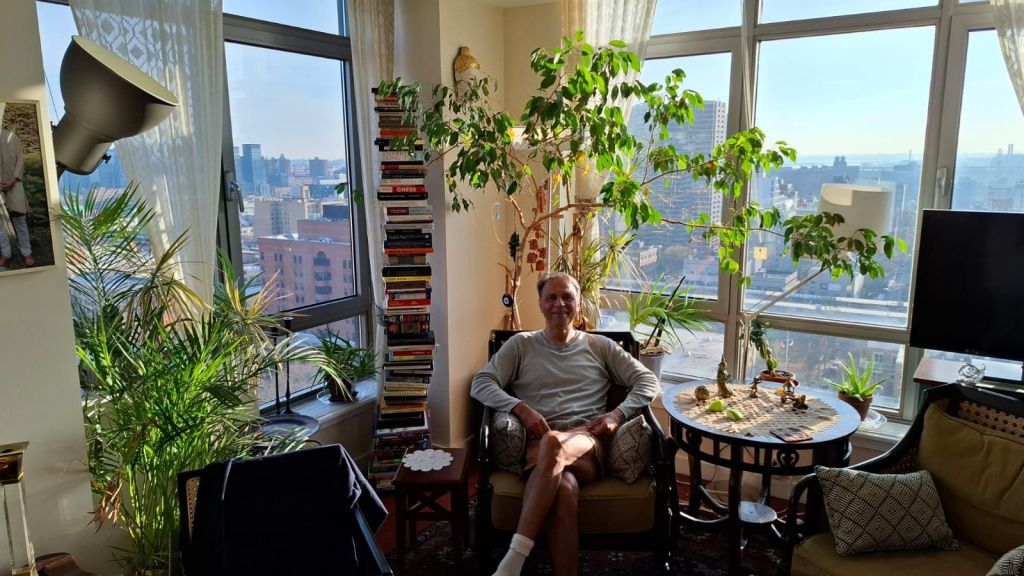
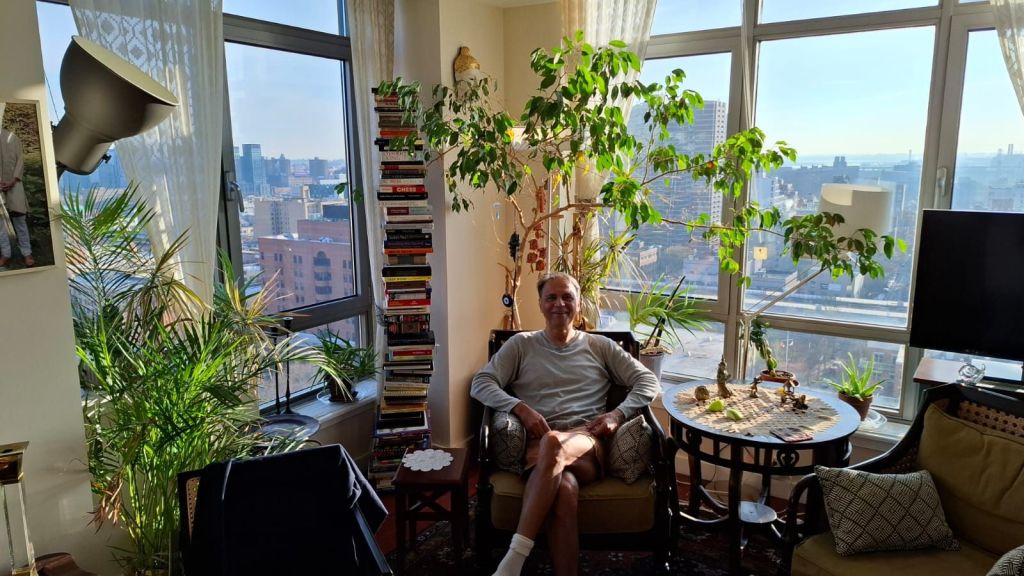
This morning, after waking up, I walk into the living room. It is a large hall that includes the kitchen, the dining space, and an additional seating area.
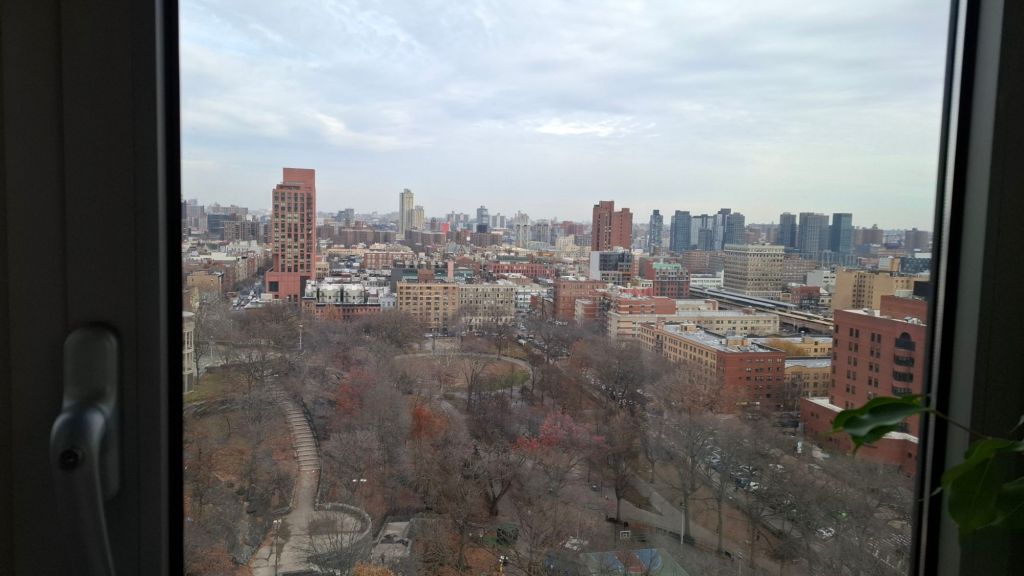
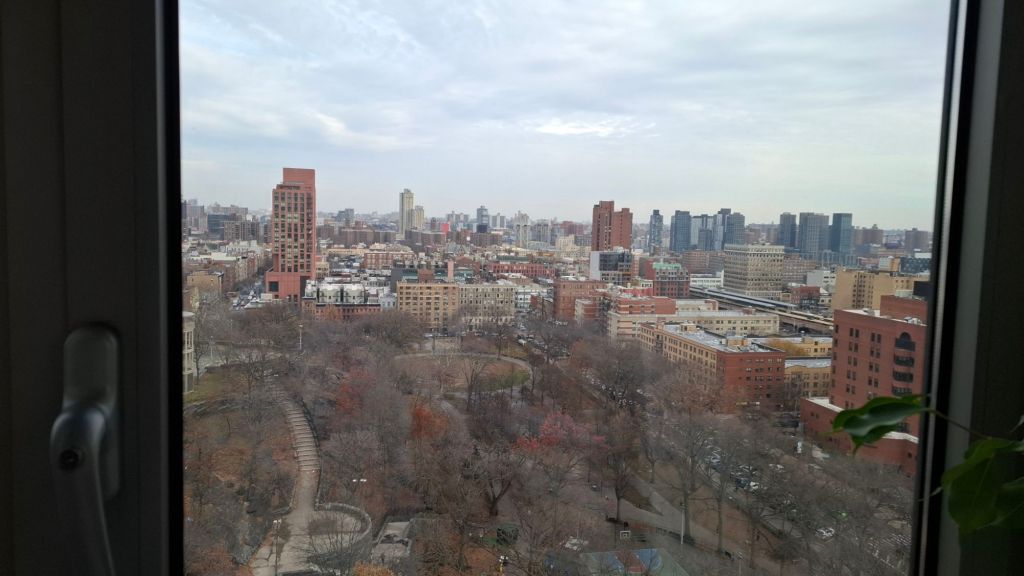
The living room—what we in India also call the drawing room—has two outer walls fitted with large glass windows through which the dense buildings of New York City can be seen. My friend’s apartment is on the 19th floor of a tall building, so the city’s architecture is imprinting itself on my mind for the first time.
New York’s architecture is very different from that of London. At first sight, it reminds me of Patna in India—small and large buildings of varied styles standing close to one another, without the harmonious aesthetic that London naturally offers. The sky too lacks London’s soft, grey-white chains of clouds.
Here a small house, next to it a large one; somewhere red brick, somewhere yellow; somewhere exposed brick, somewhere fully plastered. For a mind arriving from London, this scene is almost an aesthetic jolt. In London’s quiet residential areas, most homes are exposed brick, of similar height and design; no tall structure suddenly rises among them.
Here, it seems as if everyone has built whatever they wished.
As I let my eyes wander across the horizon, the Statue of Liberty appears, holding aloft the torch of freedom—like a semi-transparent image. For a moment, it seems as if her lips are moving, and a voice echoes in my ears:
“I see the surprise on your face. You are comparing England with America. England is a still country; America is a running one.
We do not wish to pause, spellbound by beauty. For us, beauty is secondary to utility.
The use of land, the use of sky—these are our primary values.
Our highest value is freedom. This torch symbolises that freedom.
Here, a person lives largely as he wishes.
Freedom to say anything, to do anything—you will see it at every step. Prepare yourself for it; only then will you understand our spirit.”
Before I can respond, the image of the Statue of Liberty dissolves into the sky and becomes formless.
I cast a deep glance across Rahul’s living room. A beautiful, serene space with an elegant sense of design. Nothing extravagantly expensive, yet the walls carry large oil paintings that reveal someone’s deep attraction to art.
This home belongs to a couple who, though from a middle-class background, possess a refined taste for beauty and grace. Mr. Rahul was a senior IPS officer, who left his service to join the United Nations, and has lived here since then. His wife is also employed with the UN; she is still in service, while Mr. Rahul has now retired.
As I stand admiring the paintings on the walls, Rahul walks in. He asks me to sit on a single-seater sofa in one corner. Above it stands a large potted plant, shaped almost like a Bodhi tree, and nearby hangs a picture of the Buddha. Perhaps this is where he sits and reads.
I think to myself: the sofa is inviting, but when I stand up, the branches might brush against my head—an experience I have had many times before. So instead I sit on the sofa beside it. Rahul takes a seat across from me on a longer sofa.
On two sides of the room stand tall towers of books. These are shelves where the books have not been placed vertically but horizontally—stacked from bottom to top—so that the piles look like two towers and the bookshelves themselves disappear from sight.
A remarkable sense of aesthetics!
When I praise the room’s simplicity and artistic decor, Rahul tells me that the entire arrangement is the creation of his wife, Meena. She planted the Bodhi-like tree and placed it above the reading sofa where Rahul usually reads.
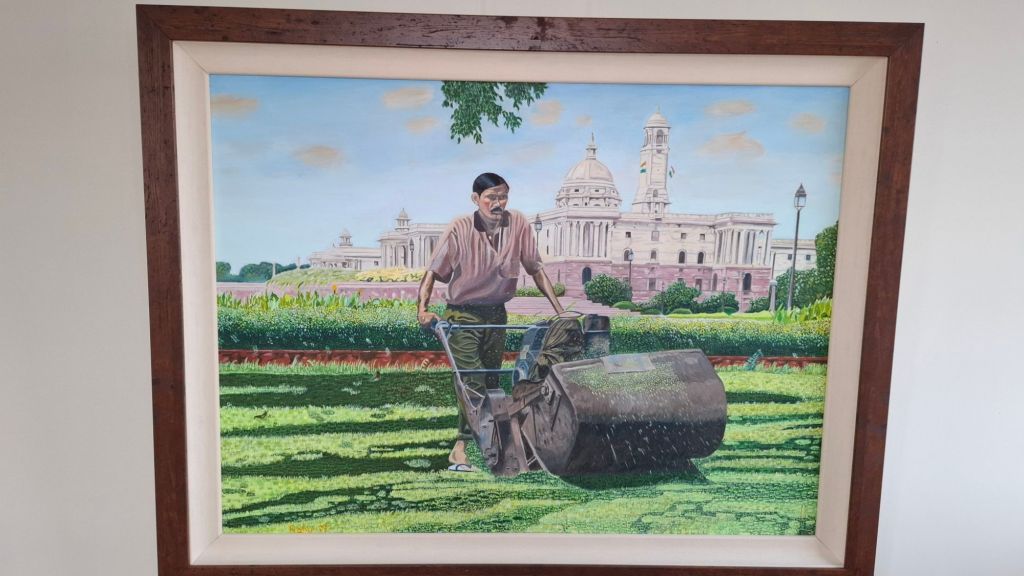
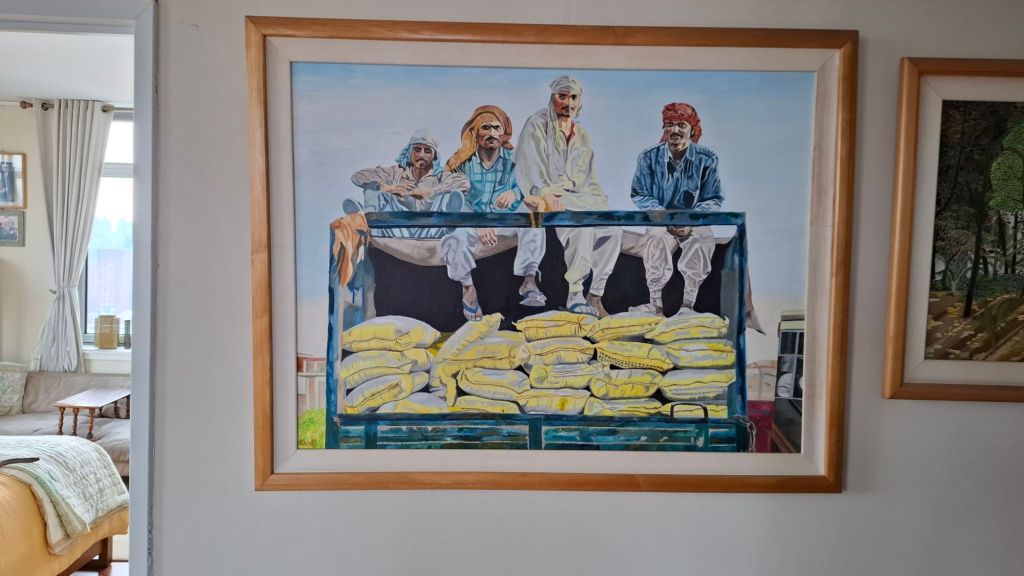
Only the oil paintings on the walls are Rahul’s own work, though their placement is decided entirely by Meena.
Rahul laughs and says that every decision about what object will be placed where, and in which colour, is made by his wife. I easily recognise the universal husbandly sentiment hidden in his tone, and reassure him that this is not his personal experience alone—it is a universal one.
As for the paintings, I have not seen so many beautiful oil paintings made by a man in any home. They carry not only artistic skill but deep sensitivity—especially toward the working class.
One painting shows a labourer cutting grass with a machine in front of Delhi’s North Block; another shows workers sitting in a row, their feet resting on cement sacks. A painting in the corridor depicts a young Black African labourer.
In recent years, Rahul has developed a deep inclination toward spirituality—which is what connects us. For many years he has been inviting me to New York, urging me to begin my spiritual work here as well. It is on his insistence and affection that I have come, and I am now staying with him.
A human being contains many layers that remain unknown for years. In the Hyderabad Police Academy, Rahul was known as a “brown Englishman”—one of the fastest speakers of English. People even called him a coconut—brown on the outside, white on the inside.
But within him lived an artist and a spiritual seeker—something neither I nor anyone else realised, though I was one of his closest friends in the Academy.
Sitting in the living room, I share with him my experiences from London, and then speak of my plans to expand my mission in America.
Our conversation slowly begins to gather momentum…
Discover how to find God amidst
household duties through the wisdom
of the Bhagavad Gita. Learn practical
ways of meditation, name-chanting,
and offering daily actions as worship
to attain peace and liberation.
Discover why God chose Bharat (India)
for His divine incarnations. Explore the
unique geography, spiritual heritage, and
sacred culture that made India the eternal
land of Vedas, sages, and divine manifestations.
5 दिसंबर 2025
कल जब मैं न्यूयॉर्क पहुँचा और जॉन एफ. कैनेडी एयरपोर्ट से मैनहैटन स्थित अपने मित्र श्री राहुल और उनके घर पहुँचा तो काफ़ी देर हो चुकी थी। सोने का समय हो गया था। थोड़ी-सी बातचीत के बाद हम दोनों अपने-अपने कमरों में चले गए थे।
आज सुबह उठकर मैं लिविंग रूम में आता हूँ। यह एक बड़ा-सा हाल है, जिसमें किचन, डाइनिंग स्पेस और एक अलग बैठने की भी व्यवस्था है।
लिविंग रूम—जिसे भारत में ड्रॉइंग रूम भी कहते हैं—की दो बाहरी दीवारों पर बड़ी-बड़ी शीशे की खिड़कियाँ लगी हैं, जिनसे न्यूयॉर्क शहर की सघन इमारतें दिखाई देती हैं। मित्र का घर एक ऊँची इमारत के 19वें फ़्लोर पर है, इसलिए नगर का स्थापत्य मेरे मन में प्राथमिक रूप से अंकित हो रहा है।
न्यूयॉर्क का स्थापत्य लंदन से बहुत भिन्न है। प्रथम दृष्टि में यह भारत के पटना नगर की याद दिलाता है—विविध स्थापत्य वाली छोटी-बड़ी इमारतें, एक-दूसरे से सटी हुई, जिनका कोई समन्वित सौंदर्य-बोध नहीं बनता जैसा लंदन में सहज बन जाता है। आसमान में लंदन जैसी श्वेत-श्याम मेघ-मालाएँ भी अनुपस्थित हैं।
कहीं छोटा मकान, उसके पास बड़ा; कहीं लाल रंग, कहीं पीला; कहीं एक्सपोज़्ड ब्रिक, कहीं प्लास्टर किया हुआ। लंदन से आए हुए मन के लिए यह दृश्य मानो एक सौंदर्य-शास्त्रीय आघात है। लंदन के चैरिंग रिहायशी इलाकों में लगभग सभी घर एक्सपोज़्ड ब्रिक के, एक-सी ऊँचाई और एक-से स्थापत्य में बने होते हैं; कोई ऊँची इमारत बीच में अचानक नहीं उभरती।
यहाँ, मानो जिसने जो चाहा, वैसा बना लिया।
जब मैं चारों ओर दृष्टि दौड़ाता हूँ तो क्षितिज पर स्वतंत्रता की मशाल थामे हुई स्टैच्यू ऑफ़ लिबर्टी प्रकट होती है—एक अर्ध-पारदर्शी बिंब की तरह। उसी क्षण प्रतीत होता है कि होठ हिल रहे हैं और मेरे कानों में एक आवाज गूँजती है—
“मैं तुम्हारे चेहरे की हैरानी देख रही हूँ। इंग्लैंड से तुलना कर रहे हो। इंग्लैंड ठहरा हुआ देश है, अमेरिका भागता हुआ देश।
हम सौंदर्य पर मोहित होकर रुकना नहीं चाहते। हमारे लिए सौंदर्य से अधिक महत्त्वपूर्ण है—उपयोगिता।
जमीन का उपयोग, आसमान का उपयोग—यही हमारे प्रमुख जीवन-मूल्य हैं।
हमारा सर्वोच्च मूल्य है स्वतंत्रता। यह स्वतंत्रता की मशाल है,
यहाँ व्यक्ति बहुत हद तक अपनी मर्जी से जी सकता है।
कुछ भी कहने, कुछ भी करने की स्वतंत्रता—तुम धीरे-धीरे इसे हर कदम पर देखोगे। अपने आप को तैयार करो, तभी हमारी आत्मा को समझ पाओगे।”
मैं प्रतिक्रिया दे पाता, उससे पहले ही स्टैच्यू ऑफ़ लिबर्टी का वह बिंब आकाश में घुल का निराकार हो जाता है।
मैं श्री राहुल के लिविंग रूम पर एक गहरी दृष्टि डालता हूँ। बड़ा सुंदर, शांत, सौंदर्य-बोध से युक्त कक्ष। कोई अत्यधिक महँगी वस्तु नहीं, पर दीवारों पर बड़े-बड़े तैल-चित्र लगे हैं, जो चित्रकला के प्रति किसी के गहन आकर्षण को व्यक्त कर रहे हैं।
यह घर एक ऐसे दंपती का है जो मध्यम-वर्गीय पृष्ठभूमि से आते हुए भी सौंदर्य और सुरुचि का परिष्कृत भाव रखते हैं। श्री राहुल एक वरिष्ठ आईपीएस अधिकारी थे, जिन्होंने सेवा छोड़कर संयुक्त राष्ट्र में कार्य स्वीकार किया और तब से यहीं रहते हैं। उनकी धर्मपत्नी भी संयुक्त राष्ट्र में कार्यरत हैं। वे अभी भी सेवा में हैं, जबकि श्री राहुल सेवानिवृत्त हो चुके हैं।
जब मैं दीवारों पर टँगे चित्रों को निहार रहा होता हूँ, तभी राहुल वहाँ आ जाते हैं। वे मुझे एक कोने में रखे उस सिंगल-सोफ़े पर बैठने के लिए कहते हैं, जिसके ऊपर एक बोधि-वृक्ष जैसा गमले में लगा एक बड़ा सा पेड़ है, और पास ही बुद्ध की एक तस्वीर भी। शायद यहीं राहुल बैठ कर पढ़ते हैं।
मैं सोचता हूँ—सोफ़ा तो अच्छा है, पर उठते समय मेरी ऊँचाई के कारण वृक्ष की डालियाँ शायद मेरे सिर से टकराएँ—यह अनुभव मुझे जीवन में कई बार हुआ है। इसलिए मैं उसके बगल वाले सोफ़े पर बैठ जाता हूँ। राहुल भी मेरे सामने एक लंबे सोफे पर बैठ जाते हैं।
कमरे में दो ओर किताबों की मीनारें हैं। ये ऐसे बुकशेल्फ़ हैं जिनमें किताबें खड़ी नहीं बल्कि क्षैतिज रखी गई हैं—नीचे से ऊपर तक—मानो पुस्तकों की दो ऊँची मीनारें हों और बुकशेल्फ़ स्वयं ओझल हो गया हो।
अद्भुत सौंदर्य-बोध!
जब मैं कमरे की सादगी और कलात्मक साज-सज्जा की प्रशंसा करता हूँ, तो राहुल बताते हैं कि यह सारी सजावट उनकी धर्मपत्नी मीना जी की रचना है। बोधि-वृक्ष भी उन्हीं ने लगाया है और इसी के नीचे बैठकर राहुल प्रायः पुस्तकें पढ़ते हैं।
केवल दीवारों पर लगे तैल-चित्र राहुल के बनाए हुए हैं; पर उनका कहाँ लगना है, यह निर्णय मीना जी का ही होता है।
राहुल हँसते हुए कहते हैं कि घर में किस रंग की वस्तु कहाँ रहेगी—यह सब उनकी पत्नी ही तय करती हैं। मैं उनकी इस वाक्य में छिपी उस सर्वमान्य पति-वेदना को सहज समझ जाता हूँ और उन्हें आश्वस्त करता हूँ कि यह केवल उनकी नहीं, एक सार्वभौम अनुभूति है।
जहाँ तक चित्रों का प्रश्न है—किसी भी घर में किसी पुरुष द्वारा बनाए गए इतने सारे सुंदर तैल-चित्र मैंने पहले नहीं देखे। उनमें केवल कला नहीं, बल्कि संवेदना भी है—विशेषकर श्रमिक-वर्ग की।
एक चित्र में दिल्ली के नॉर्थ ब्लॉक के सामने मशीन से घास काटता मजदूर है; दूसरे में मजदूरों की पंक्ति बैठी है, जिनके पैरों के नीचे सीमेंट की बोरियाँ रखी हैं। कॉरिडोर में लगे एक चित्र में एक ब्लैक अफ्रीकन युवा श्रमिक की तस्वीर है।
श्री राहुल में धर्म का गहरा रुचि-बोध विकसित हुआ है—और यही हमें एक करता है। वे कई वर्षों से मुझे न्यूयॉर्क आमंत्रित कर रहे थे कि मैं यहाँ भी अपना धर्म-कार्य प्रारंभ करूँ। उन्हीं के आग्रह और प्रेम पर मैं यहाँ आया हूँ और उन्हीं के घर ठहरा हूँ।
मनुष्य के भीतर अनेक रूप छिपे होते हैं, जिनका पता वर्षों बाद चलता है। हैदराबाद की पुलिस अकादमी में राहुल एक ‘ब्राउन अंग्रेज’ कहे जाते थे—सबसे तेज़ गति से अंग्रेज़ी बोलने वालों में एक। लोग उन्हें ‘कोकोनट’ तक कहते—बाहर से भूरा भारतीय, भीतर से श्वेत अंग्रेज़।
पर उनके भीतर एक कलाकार और एक धर्मप्रिय व्यक्ति भी था—यह न मैंने जाना था, न किसी और ने—जबकि अकादमी में मेरा उनसे अत्यंत निकट संबंध था।
लिविंग रूम में बैठकर मैं लंदन के अपने अनुभव उनके साथ साझा करता हूँ, और फिर अमेरिका में अपने मिशन को आगे बढ़ाने की योजनाएँ बताता हूँ।
हमारी वार्ता धीरे-धीरे गति पकड़ने लगती है…


Discover how to find God amidst
household duties through the wisdom
of the Bhagavad Gita. Learn practical
ways of meditation, name-chanting,
and offering daily actions as worship
to attain peace and liberation.
Discover why God chose Bharat (India)
for His divine incarnations. Explore the
unique geography, spiritual heritage, and
sacred culture that made India the eternal
land of Vedas, sages, and divine manifestations.
4 December, 2025
“Please fasten your seat belt”—with this announcement, the movement of my thoughts pauses for a moment, though the aircraft begins to race down the runway at a swift pace. Within moments it pierces the clouds and seems to converse with the sky. Below us lies a dense expanse of cloud.
After a short while, the drinks trolley arrives. Various bottles are arranged upon it; I do not know what they contain. So I take only water and orange juice. Then an air hostess comes to me a little perturbed and perplexed, and asks only me, “Have you ordered a special meal?”
I reply, “I am a vegetarian, so I would like a vegetarian meal. I don’t know what a special meal means.”
I merely clarify that I am vegetarian and would prefer a vegetarian dish.
She appears somewhat puzzled and walks away. I am confident, however, that while booking the ticket my son must have opted for a vegetarian meal; so I feel assured that the meal will be available.
I have travelled to many countries—England, France, South Korea, Hong Kong, Thailand, and Japan—and have found vegetarianism extremely limited. I usually avoid eating outside. Sometimes I managed with condensed milk and bread; sometimes with powdered milk. At a party in South Korea, a sandwich seemed safe, yet inside it I saw a red slice of meat; I ate nothing.
Since then I have learnt that the safest companion in foreign travel is sattu—roasted gram flour. It needs no spices, no cooking. Mix it in water anywhere; add salt or sugar, and one is full. Fruits too are a very safe option worldwide for vegetarian travellers.
In most countries outside India, compassion toward animals has not evolved. It is Sanatan Dharma alone that has deeply articulated the principle of “reverence for all life.” I have read the principal scriptures of all major non-Indian religions as well; all faiths that arose outside India contain the idea that animals exist for human use and that killing and eating them is not wrong. In some countries—especially atheist nations like China—almost every creature is eaten. In parks, dogs are hung and roasted alive, and this is considered a delicacy. The suffering and pain of birds and animals carries no weight.
In such an environment, a thought-system centered on vegetarianism, like India’s, could not naturally develop. Yes, through cultural mixing with foreign traditions, meat-eating in India has increased, but even today India ranks lowest on the OECD list in combined per-capita fish and meat consumption.
However, vegetarianism is now rising globally—not mainly out of compassion, but because science has conclusively shown that meat-eaters live, on average, six years less, due to meat-related diseases. One survey found that the Seventh-day Adventists—a Christian group that avoids meat, fish, and tobacco—live the longest.
When I was a student—about fifty years ago—there was a debate whether vegetarian food contained all amino acids. I had read the entries in both Encyclopaedia Britannica and Children’s Britannica. One confirmed that all amino acids were present; the other expressed a little doubt.
Now this debate is settled. Harvard Health and the Mayo Clinic clearly state that a fully vegetarian diet lacks no amino acid.
It would be wrong to say that India never had violence toward animals। Meat-eating existed; the Vedas mention animal sacrifice. Some modern Vedic scholars deny this, but Manusmriti contains both partial approval and prohibition of meat.
In this context, the Bhagavata Purana gives two observations:
(1) that those who perform animal sacrifices go to hell, and
(2) that some priests promoted sacrifice out of self-interest, so that under the name of “offering to God,” they too could eat meat.
But in the Bhagavad Gita, there is a clear instruction of friendliness and compassion toward all beings, and of a sattvic diet.
After some time, the dinner trolley arrives. A sharp and unpleasant smell—perhaps of meat—spreads. I cannot bear it, so I cover my nose with a handkerchief. I ask the hostess whether a vegetarian meal is available. She says she will check.
A British woman seated beside me says that she needs a vegan meal—plant-based and completely dairy-free. This is reassuring.
In the West a small movement called “animal rights” has begun—not rooted in religion, but in humanity—which regards animal-killing as inhuman.
My plane has landed at J. F. K. Airport, New York. I pass immigration and reach the baggage claim area. Suitcases keep circling on the round belt. Some people at home fear that I may mistakenly pick up someone else’s similar suitcase and walk away with that. For this reason, a little red paint has been put on the lock of my suitcase. This fear is imaginary—there is no empirical evidence that I have ever made such a mistake. However, I may agree that it helps identification, for today innumerable suitcases look alike.
I recognise my suitcase and lift it, then walk toward the row of trolleys kept nearby. A white guard is standing there. He says, “Six dollars.”
I am surprised—trolleys are free in India, and in England too. Is America so short of my funds? Or is it simply a completely commercial nation? Even the trolley carries a 600% tariff!
I reflect: I have little luggage, and the suitcase has wheels. So why would I need a trolley?
I set the suitcase upright and take out my mobile to inform home that I have arrived safely. India is not a person-centric but a family-centric country; families remain deeply connected; concern is their natural disposition. So everyone will be worried. It is necessary to inform them, and also my well-wishers in London, that I have reached New York.
But JFK’s free Wi-Fi does not connect—one advertisement after another. Finally, through those layered ads, I manage to connect and send a message to a few people, then move to exit.
Even before accessing free Wi-Fi, advertisements—and more advertisements!
A remarkable commercial nation.
I have reached the home of my batchmate and friend, Mr. Rahul Sur, in Manhattan, New York. On the way, amid light and darkness, the city does not present any clear image.
Even after reaching home I cannot send a message, because I need the Wi-Fi password. My friend has forgotten to give me the password and gone to sleep, so I too retire to my room.
His daily routine is disciplined and regular. He avoids late-night wakefulness entirely—a pleasant thing to see.
Discover how to find God amidst
household duties through the wisdom
of the Bhagavad Gita. Learn practical
ways of meditation, name-chanting,
and offering daily actions as worship
to attain peace and liberation.
Discover why God chose Bharat (India)
for His divine incarnations. Explore the
unique geography, spiritual heritage, and
sacred culture that made India the eternal
land of Vedas, sages, and divine manifestations.
4 दिसंबर, 2025
“कृपया अपनी सीट-बैल्ट बाँध लें”—इस घोषणा के साथ मेरे विचारों की गति क्षणभर रुक जाती है, पर विमान रनवे पर तीव्र वेग से दौड़ पड़ता है। कुछ ही पलों में वह बादलों को चीरता हुआ आकाश से बातें करने लगता है। नीचे सघन मेघ-मंडल फैला हुआ है।
थोड़ी देर बाद ड्रिंक्स सर्व करने वाली ट्रॉली आती है। विभिन्न बोतलें रखी हैं; उनमें क्या है, मैं नहीं जानता। इसलिए केवल पानी और संतरे का रस लेता हूँ। उसके बाद एक विमान-परिचारिका आकर केवल मुझसे पूछती हैं, “हैव यू ऑर्डर्ड ए स्पेशल मील?”
मैं उत्तर देता हूँ, “I am a vegetarian, so I would like a vegetarian meal. I don’t know what a special meal means”
मैं सिर्फ यह स्पष्ट करता हूँ कि मैं शाकाहारी हूँ और शाकाहारी भोजन चाहता हूँ।
परिचारिका कुछ भ्रमित-सी दिखती हैं और लौट जाती हैं। मुझे विश्वास है कि टिकट बुक करते समय मेरे बेटे ने वेजिटेरियन मील का विकल्प अवश्य दिया होगा; अतः भोजन उपलब्ध होने का भरोसा है।
मैं अनेक देशों में जा चुका हूँ—इंग्लैंड, फ्रांस, साउथ कोरिया, हांगकांग, थाईलैंड और जापान—और शाकाहार का प्रचलन अत्यंत सीमित पाया। बाहर का भोजन ग्रहण करने से मैं प्रायः बचता रहा। कभी कंडेंस्ड मिल्क और ब्रेड से काम चलाता, कभी सूखा दूध काम आता। दक्षिण कोरिया में एक पार्टी में सैंडविच सुरक्षित लगा, पर उसमें भी मांस की लाल स्लाइस दिख गई; मैंने कुछ नहीं खाया।
तब से मैंने यह सीख लिया कि विदेश यात्राओं में मेरा सबसे सुरक्षित साथी सत्तू है—भुने चने का पाउडर—न मसाले की जरूरत, न पकाने की। कहीं भी पानी में घोलिए, नमक या चीनी मिलाइए, और पेट भर जाता है। फल भी विश्व में शाकाहारी यात्रियों के लिए बहुत सुरक्षित विकल्प हैं।
भारत के बाहर अधिकांश देशों में पशुओं के प्रति करुणा का भाव विकसित नहीं हुआ। सनातन धर्म ने ही ‘रेवरेंस फॉर लाइफ’—जीवन के प्रति आदर—का भाव गहराई से प्रतिपादित किया। मैंने विदेशी उत्स के सभी प्रमुख धर्मग्रंथ भी पढ़े हैं; भारत के बाहर उत्पन्न सभी धर्मों में यह लिखा मिलता है कि पशु मनुष्य के उपयोग हेतु बने हैं और उन्हें मारकर खाने में कोई दोष नहीं है। कुछ देशों—विशेषकर चीन जैसे नास्तिक देशों—में तो लगभग हर जीव खाया जाता है। पार्कों में कुत्तों को लटका कर जीवित जला कर खाना भी ‘डेलिकेसी’ माना जाता है। जीवो को होने वाले कष्ट और पीड़ा का कोई मोल नहीं होता।
ऐसे वातावरण में भारत जैसा शाकाहार-केंद्रित विचार स्वाभाविक रूप से विकसित ही नहीं हो सकता था। विदेशी संस्कृतियों और धर्मों से मिश्रण के बाद भारत में मांसाहार बढ़ा अवश्य है, पर आज भी O.E.C.D. की सूची में प्रति-व्यक्ति मछली और मांस का संयुक्त उपभोग भारत में सबसे कम है।
हालाँकि, अब विश्व में शाकाहार का चलन बढ़ रहा है। यह करुणा के कारण नहीं, बल्कि इसलिए कि विज्ञान ने निर्णायक रूप से बताया है कि मांसाहारियों की आयु औसतन छह वर्ष कम हो जाती है—मांस-प्रधान रोगों के कारण। एक सर्वेक्षण में तो यह पाया गया कि ईसाइयों के बीच जो एक संप्रदाय है सेवंथ डे एड्वेंटिस्ट, जिसमें मांस मछली तंबाकू आदि वर्जित है, सबसे लंबा जीता है।
जब मैं विद्यार्थी था—लगभग पचास वर्ष पहले—एक विवाद था कि क्या शाकाहारी भोजन में सभी अमीनो अम्ल होते हैं। मैंने उस समय एनसाइक्लोपीडिया ब्रिटानिका और चिल्ड्रेन्स ब्रिटानिका दोनों में इस विषय की प्रविष्टियाँ पढ़ीं थीं। एक में सभी अमीनो एसिड्स होने की पुष्टि थी; दूसरे में थोड़ी शंका।
अब यह विवाद समाप्त हो गया है। हार्वर्ड हेल्थ और मेयो क्लिनिक दोनों की साइटों पर स्पष्ट लिखा है कि पूर्ण शाकाहार में किसी अमीनो एसिड की कमी नहीं होती।
भारत में भी मांसाहार रहा है; ऐसा कहना गलत होगा कि यहाँ कभी पशु-हिंसा नहीं हुई। वेदों में पशु-बलि का उल्लेख है। कुछ आधुनिक वैदिक विद्वान इस बात का खंडन करते हैं, पर मनुस्मृति में भी मांसाहार का आंशिक समर्थन और निषेध दोनों मिलते हैं।
इस संदर्भ में भागवत पुराण में दो बातें मिलती हैं—
(1) पशु-बलि देने वालों के नरक में जाने का वर्णन,
(2) तथा यह कि कुछ पुरोहितों ने अपने स्वार्थ से बलि-प्रथा को बढ़ावा दिया ताकि ‘भगवान के प्रसाद’ के नाम पर उन्हें भी मांस का स्वाद मिले।
किन्तु भगवद गीता में—सभी प्राणियों के प्रति मैत्री, करुणा और सात्त्विक आहार का स्पष्ट उपदेश है।
कुछ देर बाद रात्रि-भोजन की ट्रॉली आती है। एक तीखी, अप्रिय गंध—शायद मांसाहारी भोजन की—उठती है। वह मुझसे सहन नहीं होती, इसलिए मैं नाक पर रूमाल रख लेता हूँ। मैं परिचारिका से पूछता हूँ कि क्या शाकाहारी भोजन उपलब्ध है। वह जाँचकर बताने को कहती है।
मेरे बगल में बैठी एक ब्रिटिश महिला कहती हैं कि उन्हें वीगन भोजन चाहिए—अर्थात पौधा-आधारित और पूरी तरह दुग्ध-रहित। सुन कर संतोष मिलता है।
पश्चिम में अब एक ‘एनिमल राइट्स’ नाम का छोटा सा आंदोलन चल पड़ा है—धर्म से नहीं, बल्कि मानवता की दृष्टि से—जो पशु-हत्या को अमानवीय मानता है।
मेरा विमान जे. एफ. के. एयरपोर्ट, न्यूयॉर्क पर उतर चुका है। मैं इमीग्रेशन चेक से निकलकर बैगेज क्लेम पर पहुँचता हूँ। गोल-गोल घूमती बेल्ट पर सूटकेस आते जा रहे हैं। लोग आशंकित रहते हैं कि कहीं किसी और का मिलता-जुलता सूटकेस न उठा लें। इसी कारण मेरे सूटकेस के ताले पर लाल रंग की थोड़ी-सी पेंट लगा दी गई है। यह भय काल्पनिक है—ऐसा मैंने कभी किया हो, इसका प्रमाण नहीं। पर यह सही है कि पहचान में सुविधा अवश्य हो जाती है, क्योंकि आजकल एक ही रंग और प्रकार के सूटकेस बहुत बनते हैं।
मैं अपना सूटकेस पहचानकर उठाता हूँ और पास ही रखी कतार में से एक ट्रॉली लेने बढ़ता हूँ। वहाँ एक श्वेतवर्ण गार्ड खड़ा है। वह कहता है, “सिक्स डॉलर्स।”
मैं चकित होता हूँ—भारत में ट्रॉली निःशुल्क मिलती है, इंग्लैंड में भी। तो क्या अमेरिका में इतना धन-संकट है? या यह पूर्ण व्यापारी देश है? ट्रॉली पर भी 600% टैरिफ!
मैं सोचता हूँ—मेरे पास सामान भी सीमित है, और सूटकेस में पहिए भी हैं—तो ट्रॉली की आवश्यकता क्या है?
मैं सूटकेस खड़ा कर मोबाइल निकालता हूँ ताकि घर पर सूचना दे सकूँ कि मैं सुरक्षित पहुँच गया हूँ। भारत व्यक्ति-प्रधान देश नहीं, परिवार प्रधान देश है; इसलिए वहाँ परिवार परस्पर गहरे जुड़े रहते हैं; चिंता करना उनके स्वभाव का अंग है। अतः सभी चिंतित होंगे—उन्हें और लंदन में अपने हितैषियों को बताना आवश्यक है कि मैं न्यूयॉर्क पहुँच गया।
पर जे.एफ.के. का फ्री वाई-फाई कनेक्ट नहीं होता—एक के बाद एक विज्ञापन। अंत में उन परत दर परत विज्ञापनों के बीच से मुश्किल से से वाई-फाई कनेक्ट करता हूँ और एक आध लोगों को संदेश भेजकर बाहर निकलने को बढ़ता हूँ।
फ्री वाई-फाई तक पहुँचाने से पहले भी विज्ञापन—और विज्ञापन!
अद्भुत व्यापारी देश है।
मैं न्यूयॉर्क, मैनहट्टन स्थित अपने सहपाठी, मित्र श्री राहुल सूर के घर पहुँच चुका हूँ। रास्ते में अंधकार और रोशनी के बीच शहर की कोई स्पष्ट छवि नहीं बन पाती।
घर पहुँचकर भी सूचना नहीं दे पाता, क्योंकि घर के वाई-फाई का पासवर्ड चाहिए। मेरे मित्र सोने चले गए हैं, इसलिए मैं भी अपने शयन-कक्ष में चला जाता हूँ।
उनकी दिनचर्या समयबद्ध और नियमित है। रात्रि-जागरण से पूर्णतः मुक्त—देखकर अच्छा लगता है।
Discover how to find God amidst
household duties through the wisdom
of the Bhagavad Gita. Learn practical
ways of meditation, name-chanting,
and offering daily actions as worship
to attain peace and liberation.
Discover why God chose Bharat (India)
for His divine incarnations. Explore the
unique geography, spiritual heritage, and
sacred culture that made India the eternal
land of Vedas, sages, and divine manifestations.
4 November 2025.
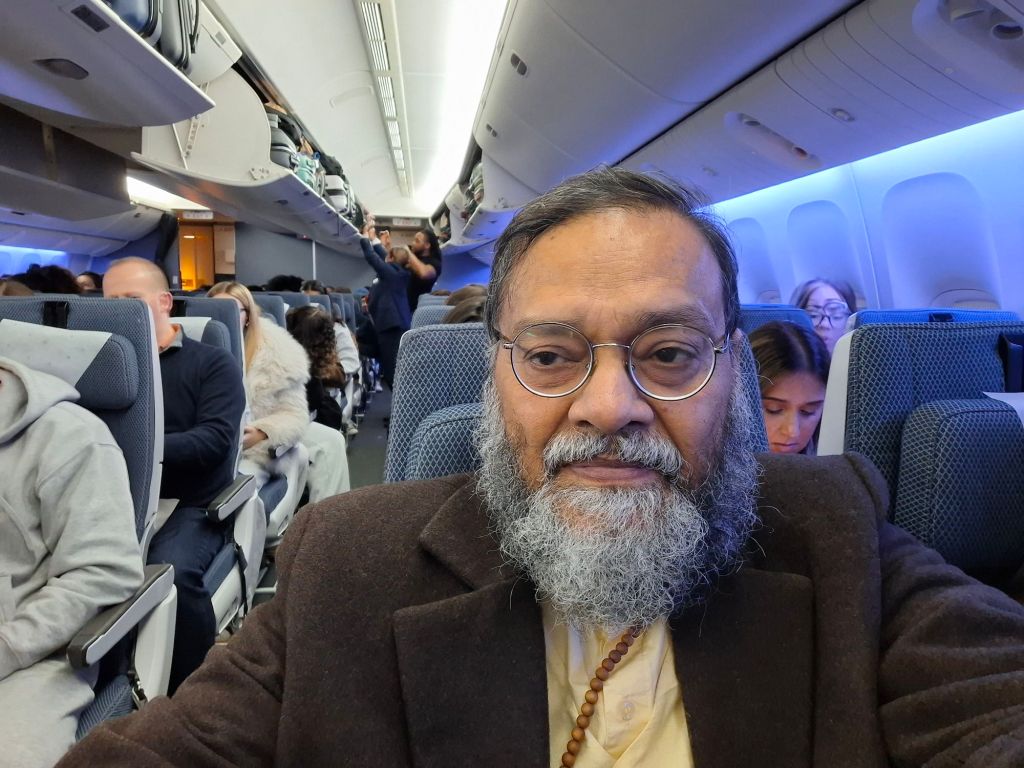
After bidding farewell to London, and completing the immigration process and security checks, I enter the large British Airways aircraft.
The aircraft is divided into three sections. As one enters, the highest category (Business Class) appears first, where the space equivalent to two seats is designed like a small personal office—comfortable seating and, beside it, a neat platform to place a laptop and other items.
After that comes the middle section, and finally the Economy Class.
The Puranas, the Ramayana and other ancient texts mention aerial travel, but the use of those aircraft was limited even among the most privileged individuals. No person sitting in this aircraft today would have been allowed to sit in those ancient aircraft. This capability has been given to human beings only by science and technology.
But science has also brought with it many other things—whose consequences humanity has had to suffer. The reason is simple: if wisdom does not accompany knowledge, knowledge too becomes dangerous.
At this moment I recall the essay “Knowledge and Wisdom” by Bertrand Russell, which I had read during my student days. In today’s education system, the discussion on ‘wisdom’ has receded far behind; only ‘knowledge’—which, in reality, is merely ‘information’—has come to dominate.
The Bhagavad Gita is a great source of wisdom.
The aircraft is awaiting takeoff. Meanwhile many thoughts arise in the mind.
How did science progress so rapidly in the past five or six centuries?
Why was all this not possible earlier, when—as scientists say—the human brain, even two million years ago, was almost the same in size as it is today?
In other words, the hardware existed; only the software that is installed on this hardware today was absent.
In place of free and impartial thinking, another software prevailed—belief in every statement of religious books without any inquiry or examination. This blind faith shackled human reasoning and research capability for thousands of years.
Those whose thinking broke free from the chains of blind belief—primarily the people of Europe—gained a new strength. This was not spiritual power; it was the strength of independent intellect.
And with this independent thinking, they were able to discover the laws of nature. On the basis of those very laws, aircraft capable of carrying hundreds of people at a time could be built.
Aircraft fly only because human beings identified the natural laws of aerodynamics and applied them to machines.
In London I observed that most temples, mosques and gurdwaras being established now are created by purchasing church buildings where Christians no longer come to pray.
And it is equally true that these very societies—who no longer attend church—are the same societies that created this aircraft and thousands of other instruments through which human beings began to gain mastery over nature.
Conversely, the communities that clung blindly to their religious books are almost invisible in the list of scientists. They too are seated in this aircraft, but they had no contribution in building it.
In Africa, Boko Haram issued a fatwa that schools must not teach that rain occurs due to evaporation—because this did not match the statement in their scripture. When schools did not follow this order, they killed almost five thousand children, according to various reports.
On one side is such blind faith in a religious book, and on the other side is the extreme reaction of discarding an entire book merely because some of its statements have been scientifically disproven—both are extreme responses of the human mind.
The Gita saves one from both.
It says that without faith, knowledge cannot be attained—
“śraddhāvān labhate jñānam…” (Gita 4.39)
Meaning: Only a faithful and disciplined person attains knowledge.
And it gives another warning—
“ajñaś cāśraddadhānaś ca saṁśayātmā vinaśyati.” (Gita 4.40)
Meaning: A person who is ignorant, faithless, and full of doubt is destroyed.
But it must be remembered that both these verses apply to spiritual knowledge, not to worldly science. Even in spiritual matters the Gita never obstructs human thought.
For the Gita also presents a new dimension in which God Himself grants human beings the freedom to think—
(Gita 18.63)
“iti te jñānam ākhyātaṁ… vimṛśyaitad aśeṣeṇa yathecchasi tathā kuru.”
Meaning: I have told you my view; now reflect on it thoroughly and then act as you wish.
This is a clear declaration of freedom of choice—and also a reminder that before accepting something as divine revelation, one must examine whether it is truly divine, or whether some human beings may have inserted their own interests in the name of God.
Therefore, acquire as much scientific knowledge as you wish, but do not fall into blind belief—retain your discernment. Avoid such sweeping generalisations as “Whatever is not in the Vedas is nowhere.”
The balance of intellect and faith, knowledge and discernment—such a framework I have not seen elsewhere. Aside from this, nowhere else except the Gita have I seen such clear statements: that there are many paths to reach God (“ye yathā māṁ prapadyante…”), that nonviolence is a divine virtue and violence an asuric trait, that war is the last resort, that the same God resides as the Self within all beings, all humans…
This is why I have embarked on a global journey to propagate the Gita—to prepare the ground, plant seeds, and build teams in various countries.
When the seeds sprout, I shall return in the next journey to nurture the growing plants.
My chain of thoughts suddenly breaks when the flight attendants announce that the aircraft is about to take off and seat belts must be fastened.
I fasten my belt and gently fold away the kite of thoughts, placing it in a corner of the mind.
As my thoughts halt, the aircraft itself gathers speed on the runway.
Discover how to find God amidst
household duties through the wisdom
of the Bhagavad Gita. Learn practical
ways of meditation, name-chanting,
and offering daily actions as worship
to attain peace and liberation.
Discover why God chose Bharat (India)
for His divine incarnations. Explore the
unique geography, spiritual heritage, and
sacred culture that made India the eternal
land of Vedas, sages, and divine manifestations.
 Swami Brahm Bodhi