• गुरुदेव प्रणाम🙏🙏
    एक मन मे आशंका है कि क्या लड्डू गोपाल जी को लहसुन और प्याज वाले साग सब्जियों का भोग लगा सकते है…हमारे क्षेत्र में बिना लहसुन और प्याज के कोई भी सब्जी व दाल नही बनती..
    हमारे घर मे भी केवल दशमी, एकादशी व द्वादशी को लहसुन प्याज नही ढलता…
    अतः मार्गदर्शन करें🙏🙏

    उत्तर (ब्रह्म बोधि)
    सबसे पहले यह समझ लेना आवश्यक है कि ईश्वर-साधना में सबसे अधिक महत्व किस बात का है।
    भक्ति-मार्ग में सर्वोच्च स्थान ईश्वर के प्रति प्रेम और भक्ति का है—भाव का है। उसके बाद ही किसी अन्य वस्तु या विधि का स्थान आता है।

    जब यह प्रेम और भक्ति अपनी चरम अवस्था में पहुँच जाती है, तब ईश्वर और भक्त के बीच कोई औपचारिक मर्यादा शेष नहीं रहती। पर ऐसा प्रेम, और ऐसी कोटि की भक्ति, कितने लोगों में होती है?

    तारापीठ के प्रसिद्ध संत वामा खेपा, रामकृष्ण परमहंस के समकालीन थे। वे माँ काली के अनन्य भक्त थे। वे किसी मर्यादा को नहीं जानते थे—गाली-गलौज करते थे, और कभी-कभी माँ काली के मंदिर के भीतर मूत्र भी कर देते थे। यह सब उनके बाल-भाव के कारण था। जैसे कोई बालक माता की गोद में ही पेशाब कर देता है और माता उस पर क्रोधित नहीं होती—वैसा ही उनका संबंध था।

    एक बार किसी व्यक्ति ने श्री रामकृष्ण परमहंस के पास जाकर पुत्र की कामना की।
    रामकृष्ण परमहंस ने माँ काली से निवेदन किया। माँ ने उत्तर दिया कि उस याचक की नियति में पुत्र नहीं है; इसलिए पुत्र देना संभव नहीं। रामकृष्ण परमहंस ने वही बात याचक को बता दी।

    वह व्यक्ति इसके बाद वामा खेपा के पास गया और वही प्रार्थना की। वामा खेपा ने बिना किसी संकोच के उसे पुत्र-प्राप्ति का आशीर्वाद दे दिया—और उसे पुत्र हो भी गया।

    कुछ समय बाद वही सज्जन पुनः रामकृष्ण परमहंस के पास आए और बोले—
    “आपने तो कहा था कि मेरे भाग्य में पुत्र-योग नहीं है, फिर वामा खेपा ने मुझे पुत्र कैसे दे दिया?”

    रामकृष्ण परमहंस पुनः माँ काली के पास गए और पूछा—
    “माँ, आपने मुझे ऐसा क्यों कहा कि उसे पुत्र नहीं हो सकता?”

    माँ काली ने उत्तर दिया—
    “देखो, तुम मेरे समझदार पुत्र और भक्त हो, और वामा खेपा मेरा एक नासमझ भक्त है। उसने बिना मुझसे पूछे पुत्र-प्राप्ति का आशीर्वाद दे दिया। अब उसकी मर्यादा बनाए रखना मेरा दायित्व था।”

    इससे स्पष्ट होता है कि जो परम सिद्ध भक्त होते हैं, उनके लिए मर्यादाएँ नहीं रहतीं। वे ईश्वर से कुछ भी दे सकते हैं, कुछ भी ले सकते हैं। यद्यपि वे स्वेच्छा से ऐसा करते नहीं, पर उनके लिए निषेध नहीं होता।

    अब भगवद्गीता के तीसरे अध्याय को स्मरण कीजिए। वहाँ प्रजापति ब्रह्मा बताते हैं कि सृष्टि-चक्र को चलाने के लिए देवताओं और मनुष्यों के बीच यज्ञ के माध्यम से परस्पर लेन-देन होना चाहिए। परंतु भगवान श्रीकृष्ण इस कथन को अत्यंत सूक्ष्मता और सौम्यता से सीमित करते हैं।

    वे कहते हैं कि जो आप्त-काम, आत्म-तुष्ट और सिद्ध योगी है, उसके लिए कोई कर्म न तो बाध्यकारी होता है, न ही स्वैच्छिक। यज्ञ आदि कर्म सामान्य लोगों के लिए हैं—उनके लिए, जो अभी सिद्ध अवस्था तक नहीं पहुँचे हैं।

    भगवान श्रीकृष्ण के वचन हैं—

    यः तु आत्म-रतिः एव स्यात् आत्म-तृप्तः च मानवः,
    आत्मनि एव च सन्तुष्टः तस्य कार्यं न विद्यते ॥ (3:18)

    अर्थात—
    जो मनुष्य आत्म-स्वरूप में ही रमण करने वाला, अपने-आप में तृप्त और संतुष्ट है, उसके लिए कोई करणीय कर्म नहीं रहता—यहाँ तक कि ब्रह्मा द्वारा बताए गए यज्ञादि कर्म भी नहीं।

    आगे भगवान कहते हैं—

    नैव तस्य कृतेनार्थो नाकृतेनेह कश्चन।
    न चास्य सर्वभूतेषु कश्चिदर्थव्यपाश्रयः ॥ (3:18)

    अर्थात—
    कर्मयोग से सिद्ध हुए व्यक्ति के लिए न कर्म करने की आवश्यकता रह जाती है, न न करने का कोई कारण। उसे किसी अन्य प्राणी पर निर्भर रहने की भी आवश्यकता नहीं रहती।

    इसलिए सिद्धावस्था में पहुँचने पर ऐसे प्रश्न उठते ही नहीं।
    पर प्रारंभिक अवस्था में विधि-विधानों का पालन उचित और आवश्यक है।

    इसी संदर्भ में—भगवान विष्णु और उनके अवतारों को पूर्ण सात्त्विक भोजन अर्पित करना ही उचित है।
    धीरे-धीरे वही सात्त्विक भोजन घर में भी पकना चाहिए। लहसुन-प्याज के बिना भोजन बनाना चाहिए।

    यदि प्याज का प्रयोग नहीं किया जाए तो आयु बढ़ने की संभावना रहती है। प्याज को भूनने में अधिक तेल लगता है, जिससे हृदय-रोग की आशंका बढ़ती है और आयु क्षीण होती है।

    यदि कोई क्रमशः आगे बढ़ना चाहता है, तो—

    पहला चरण: बाल-गोपाल को पूर्ण सात्त्विक भोजन अर्पित करें, भले ही स्वयं लहसुन-प्याज का सेवन करें।

    दूसरा चरण: स्वयं भी लहसुन-प्याज का प्रयोग छोड़ दें। भोजन भगवान के लिए ही पकाएँ, क्योंकि जो केवल अपने लिए पकाता है, वह ‘पाप ही खाता है’।
    इस चरण में यदि कभी किसी ऐसी वस्तु की इच्छा हो जो बिना लहसुन-प्याज के नि बन सके, तो बाहर या किसी और के यहाँ खा सकते हैं।

    तीसरा चरण: लहसुन-प्याज का स्वाद ही नहीं, उसकी गंध भी अप्रिय लगने लगती है। बाहर का भोजन भी छूट जाता है।

    चौथा चरण: जब यात्राएँ अधिक हों और दूसरों को असुविधा न देना चाहें, तब मांस-मछली त्यागकर जो संभव हो वही ग्रहण करें। यथासंभव दूध-रोटी, दही-भात, चावल-दाल जैसे सरल भोजन माँगें।

    यह प्रश्न भी उठता है कि लहसुन-प्याज सात्त्विक क्यों नहीं माने गए। इसके पीछे तार्किक और वैज्ञानिक कारण क्या हैं?

    भगवद्गीता में भगवान कहते हैं—

    यातयामं गतरसं पूति पर्युषितं च यत् ।
    उच्छिष्टमपि चामेध्यं भोजनं तामसप्रियम् ॥ (17:10)

    अर्थात—
    जो भोजन पहले से पकाया हुआ, रस-रहित, दुर्गंध-युक्त, बासी, बिगड़ा हुआ, जूठा या अपवित्र हो—वह तामस प्रवृत्ति के लोगों को प्रिय होता है।

    ध्यान दें—लहसुन और प्याज दोनों दुर्गंध देते हैं।

    इसके आगे जिज्ञासु यह भी पूछ सकते हैं कि विज्ञान इस विषय में क्या कहता है।
    विज्ञान निरंतर शोध की प्रक्रिया में है। उसे सब कुछ ज्ञात हो—यह आवश्यक नहीं। भोजन की सात्त्विकता और तामसिकता पर हो रहे शोधों की विस्तृत चर्चा आगे की जा सकती है।

    Discover how to find God amidst
    household duties through the wisdom
    of the Bhagavad Gita. Learn practical
    ways of meditation, name-chanting,
    and offering daily actions as worship
    to attain peace and liberation.

    बाल गोपाल को लहसुन प्याज का अर्पण

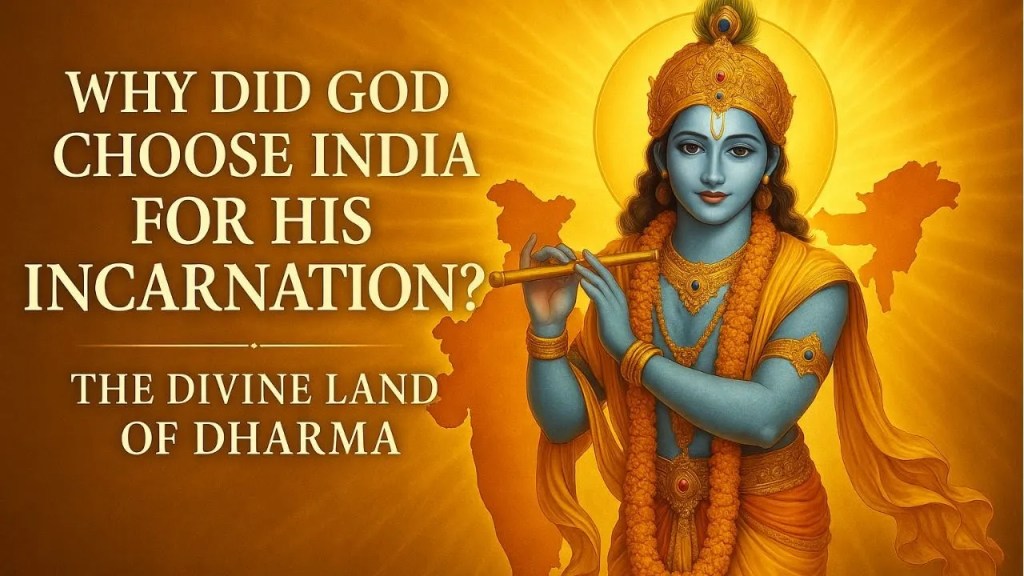
    Discover why God chose Bharat (India)
    for His divine incarnations. Explore the
    unique geography, spiritual heritage, and
    sacred culture that made India the eternal
    land of Vedas, sages, and divine manifestations.


  • Question (from the Hindi group)

    Gurudev….
    My name is ……. By profession, I am a teacher. Along with my work, I constantly remember the Lord. On every full-moon day, I go for the darshan of Mother Vindhyavasini. Yet my mind remains very restless. I worry a great deal about the future—sometimes about my daughter’s marriage, sometimes about debt, sometimes about my job, and at other times about my health.
    Kindly provide appropriate remedies and guidance. 🙏

    Reply (Brahm Bodhi)

    Who is responsible for a person’s difficult circumstances—this is stated very clearly in the Bhagavad Gita.
    Some situations arise from destiny, and that destiny is formed by our own actions from previous lives. Therefore, we should accept such destiny with dignity, without becoming distressed. Repeated sorrow is not appropriate.

    At the same time, we must also be careful not to make our future destiny worse with our own hands. For this, we should avoid wrong actions, avoid harming or troubling others, and, as far as possible, engage in virtuous deeds.

    However, the real question is how to deal with the difficulties of the present. For this, we must look for solutions. Mere endurance is not enough; one must find a way forward with intelligence.

    Understand this clearly: any deity may help you in a particular situation, but no deity can change the entire picture of your life. God does not permit any deity, any god of goddess to interfere much with the Law of Karma. The power to change that picture lies only within you—in your thoughts, your reflection, and your sustained effort.

    Recall that verse from the Bhagavad Gita, which I have quoted many times:
    “God does not create anyone’s actions, nor the results of actions; all these arise from one’s own nature.”

    Therefore, do go to Goddess Durga. She is immensely powerful. Yet, the primary importance will always remain with your own actions and your own thinking.

    So, use your problem-solving intelligence.
    Read the Gita every day—do not merely recite it. Read it, understand it, and apply it in life.
    There you will find complete guidance for the removal of sorrow.

    Towards the end of the Bhagavata Purana, Krishna states a hard but truthful fact:
    If a person were to invest even half the time and attention that he spends seeking fulfillment of desires from gods and deities into his own efforts, he could accomplish his tasks by himself with lessor cost and effort.

    You know how, and on what basis, Sri Krishna put an end to the worship of god Indra.

    If merely calling upon God and performing rituals were enough to transform life and remove poverty, then those Muslims who pray five times a day—spending nearly one and a half hours daily in regular worship—would generally be the most prosperous. Yet, the reality is otherwise. They are among the poorest. Even five percent of Hindus today do not worship for that length of time every day.

    Therefore, practice selfless devotion to God. Love Him.
    But for the achievement of goals and the removal of poverty, your own planning, hard work, and active effort will prove far more effective.

    While performing all duties, remain in the shelter of God. That will work wonders.

    Discover how to find God amidst
    household duties through the wisdom
    of the Bhagavad Gita. Learn practical
    ways of meditation, name-chanting,
    and offering daily actions as worship
    to attain peace and liberation.

    Discover why God chose Bharat (India)
    for His divine incarnations. Explore the
    unique geography, spiritual heritage, and
    sacred culture that made India the eternal
    land of Vedas, sages, and divine manifestations.


  • गुरुदेव…
    मैं ….,पेशे से एक अध्यापक हूं,कार्य के साथ प्रभु का स्मरण करता रहता हूं,प्रत्येक पूर्णिमा को मां विंध्यवासिनी का दर्शन करने जाता हूं,परंतु मन बहुत व्यग्र रहता है ,भविष्य को लेकर बहुत चिंता रहती है,कभी बिटिया की शादी, कभी कर्ज, कभी अपनी नौकरी तो कभी अपने स्वास्थ्य को लेकर चिंतित रहता हू,कृपया उचित उपाय एवम मार्गदर्शन प्रदान करें 🙏

    उत्तर

    मनुष्य की कठिन परिस्थितियों के लिए कौन जिम्मेदार होता है—यह भगवद्गीता स्पष्ट रूप से बताती है।
    कुछ परिस्थितियाँ भाग्य से आती हैं, और वह भाग्य हमारे ही पूर्व जन्मों के कर्मों से निर्मित होता है। अतः उस भाग्य को हमें बिना दुखी हुए, गरिमापूर्वक स्वीकार करना चाहिए। बार-बार दुखी होना उचित नहीं है।

    साथ ही, हमें यह भी ध्यान रखना चाहिए कि हम अपने भविष्य का भाग्य अपने ही हाथों से बुरा न बना लें। इसके लिए बुरे कर्मों से, दूसरों को सताने और दुखी करने से बचना चाहिए, और यथासंभव पुण्य कर्म करने चाहिए।

    किंतु प्रश्न यह है कि वर्तमान की कठिन परिस्थितियों से कैसे निबटा जाए। इसके लिए उपाय खोजने होंगे। केवल सहन करना पर्याप्त नहीं है; समझदारी से रास्ता निकालना आवश्यक है।

    यह बात स्पष्ट रूप से समझ लें कि कोई भी देवी-देवता किसी एक-आध परिस्थिति में सहायता कर सकते हैं, पर आपके पूरे जीवन की बड़ी तस्वीर को बदल नहीं सकते। उस तस्वीर को बदलने की क्षमता केवल आपके भीतर है—आपके विचार, आपका चिंतन, और आपके निरंतर प्रयत्नों में।

    याद कीजिए भगवद्गीता का वह श्लोक, जिसे मैं कई बार उद्धृत करता आया हूँ—
    ‘न तो ईश्वर किसी के कर्मों की सृष्टि करता है, और न ही कर्म-फल की; ये सब मनुष्य के अपने स्वभाव से उत्पन्न होते हैं।’

    अतः भगवती दुर्गा के पास अवश्य जाइए। वे अत्यंत शक्तिशाली हैं। किंतु प्रधानता आपके अपने कर्म और विचार की ही रहेगी।

    इसलिए समस्या-समाधान की बुद्धि का प्रयोग कीजिए।
    गीता रोज पढ़िए—केवल पाठ मत कीजिए। पढ़िए, समझिए, और जीवन में उतारिए।
    आपको दुख-निरोध का पूरा मार्गदर्शन वहीं मिल जाएगा।

    भागवत पुराण के अंत की ओर श्रीकृष्ण एक कठोर, पर सत्य बात कहते हैं—
    मनुष्य यदि देवी-देवताओं के पास जाकर कामना-पूर्ति में जितना समय और ध्यान लगाता है, उसका आधा भी यदि अपने प्रयत्नों में लगाए, तो अपने कार्य स्वयं सिद्ध कर सकता है।

    आप जानते हैं कि इंद्र-पूजा उन्होंने कैसे, और किस आधार पर, बंद करवाई थी।

    यदि केवल ईश्वर को पुकारने और पूजा-पाठ करने से ही जीवन बन जाता और गरीबी दूर हो जाती, तो जो मुसलमान दिन में पाँच बार, कुल मिलाकर लगभग डेढ़ घंटे नियमित रूप से रोज पूजा करते हैं (नमाज में ईश्वर से प्रार्थना करते हैं) वे सामान्यतः सबसे गरीब होते हैं। इतनी देर की नियमित पूजा तो आज पाँच प्रतिशत हिंदू भी नहीं करते।

    इसलिए ईश्वर की निष्काम उपासना करें। उनसे प्रेम करें।
    परंतु कार्य-सिद्धि और गरीबी-निवारण के लिए आपकी अपनी योजना, परिश्रम और कार्य-शीलता ही अधिक प्रभावी सिद्ध होगी।

    Discover how to find God amidst
    household duties through the wisdom
    of the Bhagavad Gita. Learn practical
    ways of meditation, name-chanting,
    and offering daily actions as worship
    to attain peace and liberation.

    Discover why God chose Bharat (India)
    for His divine incarnations. Explore the
    unique geography, spiritual heritage, and
    sacred culture that made India the eternal
    land of Vedas, sages, and divine manifestations.


  • (अंग्रेज़ी भगवद् धर्म ग्रुप से)

    विषय:

    भाग्य, पुरुषार्थ और श्रीमद्भगवद्गीता: क्या कुंडली हमारा भाग्य निर्धारित करती है?


    प्रश्न:

    पूज्य गुरुदेव,
    प्रणाम 🙏🏻

    क्या कुंडली केवल हमारा मार्गदर्शन करने के लिए होती है या वास्तव में वही हमारा भाग्य निर्धारित करती है?
    क्या हम अपने लक्ष्य और सपनों को प्राप्त कर सकते हैं, भले ही वे हमारी कुंडली में लिखे न हों?


    उत्तर (ब्रह्म बोधि द्वारा)

    कुंडली के आधार पर की जाने वाली भविष्यवाणियाँ कितनी सटीक होती हैं, यह एक विवादास्पद विषय है। अनुभव बताता है कि कुंडली भविष्य का अचूक मार्गदर्शक नहीं है।

    ज्योतिष-शास्त्र के दो प्रमुख भाग माने जाते हैं:

    • गणित ज्योतिष — खगोल-गणित पर आधारित, जो अत्यंत सटीक और वैज्ञानिक है
    • फलित ज्योतिष — भविष्यवाणी पर आधारित, जो प्रायः सटीक सिद्ध नहीं होती

    इस अनिश्चितता के दो पारंपरिक कारण बताए जाते हैं:

    1. विज्ञान सटीक होते हुए भी उसका व्याख्याकार पूर्ण नहीं होता
    2. यदि ज्योतिषी अत्यंत सिद्ध भी हो, तब भी मानव प्रयास और ईश्वर की कृपा से भाग्य बदला जा सकता है

    अतः ज्योतिष जीवन की प्रवृत्तियों की ओर संकेत तो करता है, पर वह कोई अपरिवर्तनीय आदेश नहीं है।


    2. क्या गीता भाग्य को स्वीकार करती है?

    हाँ, श्रीमद्भगवद्गीता भाग्य के अस्तित्व को स्वीकार करती है, किंतु एक अत्यंत सूक्ष्म और गहन दृष्टिकोण के साथ।

    (क) कुछ घटनाएँ पूर्वनिर्धारित होती हैं

    जब अर्जुन युद्ध करने में संकोच करता है, तब श्रीकृष्ण स्पष्ट कहते हैं कि सामने खड़े योद्धा ईश्वरीय योजना से पहले ही मारे जा चुके हैं, और अर्जुन केवल निमित्त है:

    निमित्तमात्रं भव सव्यसाचिन् ।
    (भगवद्गीता 11.33)

    अर्थ:
    “हे सव्यसाची अर्जुन, तुम केवल निमित्त मात्र बनो।”

    यह श्लोक स्पष्ट करता है कि कुछ घटनाएँ पहले से निश्चित होती हैं


    (ख) भाग्य हमारे ही पूर्व कर्मों से बनता है

    गीता बताती है कि कर्मों के फल अवश्य भोगे जाते हैं, चाहे वह इस जन्म में हों या अगले जन्मों में:

    अनिष्टमिष्टं मिश्रं च त्रिविधं कर्मणः फलम् । भवत्यत्यागिनां प्रेत्य न तु संन्यासिनां क्वचित् ॥
    (भगवद्गीता 18.12)

    अर्थ:
    कर्म का तीन प्रकार का फल — अशुभ, शुभ और मिश्र — कर्मासक्त लोगों को मृत्यु के बाद प्राप्त होता है, परंतु (कर्म फल से) संन्यास लेने वालों को नहीं।

    इससे स्पष्ट है कि भाग्य पूर्वकर्मों का ही सघन रूप है, चाहे वे इस जीवन के हों या पूर्वजन्मों के।


    3. क्या ईश्वर हमारे कर्म और भाग्य का कर्ता है?

    यहीं मनुष्य के लिए सबसे बड़ा आश्वासन मिलता है। गीता स्पष्ट रूप से कहती है कि स्वयं मनुष्य ही अपने कर्मों और कर्मफलों (भाग्य) के लिए उत्तरदाई है ;

    न कर्तृत्वं न कर्माणि लोकस्य सृजति प्रभुः । न कर्मफलसंयोगं स्वभावस्तु प्रवर्तते ॥
    (भगवद्गीता 5.14)

    अर्थ:
    ईश्वर न कर्तापन रचता है, न कर्म, न ही कर्म और फल का संबंध। यह सब जीव के अपने स्वभाव से ही उत्पन्न होता है।

    अतः भाग्य स्वयं के कर्मों से निर्मित है, ईश्वर द्वारा थोपा हुआ नहीं।


    4. क्या भाग्य बदला या पराजित किया जा सकता है?

    हाँ — अलग-अलग स्तरों तक

    संत भाग्य को तीन श्रेणियों में विभाजित करते हैं:

    1. मृदु (हल्का) — छोटे पापों से उत्पन्न
    2. मध्यम — गंभीर किंतु अत्यंत घोर नहीं
    3. कठोर — अत्यंत पापपूर्ण कर्मों से (हत्या, बलात्कार, क्रूरता, घोर अन्याय)

    (क) मृदु भाग्य

    व्यक्तिगत प्रयास और नैतिक जीवन से मिटाया जा सकता है।

    (ख) मध्यम भाग्य

    भक्ति, प्रार्थना तथा संतों और देवताओं की कृपा से शिथिल किया जा सकता है।

    (ग) कठोर भाग्य

    पूरी तरह नष्ट नहीं होता, किंतु इसकी तीव्रता कम की जा सकती है, द्वारा:

    • ईश्वर की कृपा
    • सत्कर्म
    • निरंतर परोपकार

    जैसे छाता वर्षा को नहीं रोकता, पर हमें भीगने से बचा लेता है।


    5. ज्ञान और भक्ति पापों का नाश करते हैं

    गीता बार-बार घोषित करती है कि ज्ञान और शरणागति संचित पापों को भस्म कर देती है:

    यथैधांसि समिद्धोऽग्निर्भस्मसात्कुरुतेऽर्जुन । ज्ञानाग्निः सर्वकर्माणि भस्मसात्कुरुते तथा ॥
    (भगवद्गीता 4.37)

    अर्थ:
    हे अर्जुन, जैसे प्रज्वलित अग्नि ईंधन को भस्म कर देती है, वैसे ही ज्ञानरूपी अग्नि समस्त कर्मों को भस्म कर देती है।


    अपि चेत्सुदुराचारो भजते मामनन्यभाक् । साधुरेव स मन्तव्यः सम्यग्व्यवसितो हि सः ॥ (9.30)

    क्षिप्रं भवति धर्मात्मा शश्वच्छान्तिं निगच्छति । कौन्तेय प्रतिजानीहि न मे भक्तः प्रणश्यति ॥ (9.31)

    भावार्थ:
    यदि अत्यंत दुराचारी और पापी व्यक्ति भी अनन्य भाव से मेरी भक्ति करे, तो वह साधु ही माना जाएगा, क्योंकि उसका संकल्प शुद्ध हो गया है। ऐसा व्यक्ति शीघ्र धर्मात्मा बनकर स्थायी शांति प्राप्त करता है। हे कुन्तीपुत्र, जान लो कि मेरा भक्त कभी नष्ट नहीं होता


    सर्वधर्मान्परित्यज्य मामेकं शरणं व्रज । अहं त्वा सर्वपापेभ्यो मोक्षयिष्यामि मा शुचः ॥
    (भगवद्गीता 18.66)

    अर्थ:
    “मेरी शरण में आओ, मैं तुम्हें समस्त पापों से मुक्त कर दूँगा — शोक मत करो।”
    (ईश्वर का अत्यंत स्पष्ट और निर्णायक वचन)


    6. दुःख से सर्वोच्च रक्षा

    एक ऐसा उपाय है, जिसमें किसी बाहरी हस्तक्षेप की भी आवश्यकता नहीं:

    • श्रीमद्भगवद्गीता का अध्ययन
    • उसके दृष्टिकोण का आत्मसात् करना
    • अनासक्ति का विकास

    ऐसे में, भले ही भाग्यजन्य घटनाएँ घटें, वे दुःख उत्पन्न नहीं कर पातीं

    पीड़ा आती है, पर शोक उत्पन्न नहीं होता


    7. शरणागति: अंतिम वचन

    यदि कोई साधक वास्तव में:

    • पूर्ण शरणागति
    • निरंतर सत्कर्म
    • नियमित करुणा और दान (परोपकार)

    का अभ्यास करता है, तो भाग्य स्वयं अपना प्रभाव खो देता है

    प्रह्लाद की कथा इसका जीवंत प्रमाण है
    (भागवत पुराण में द्रष्टव्य)।

    सत्कर्म पुण्य की पूँजी बढ़ाते हैं, जो संचित पापों को क्रमशः निष्प्रभावी कर देती है।


    निष्कर्ष

    • भाग्य है
    • भाग्य स्वयं के कर्मों से बनता है
    • भाग्य को शिथिल किया जा सकता है
    • भाग्य का अतिक्रमण संभव है
    • और अंततः, ज्ञान, भक्ति, परोपकार और शरणागति में भाग्य विलीन हो जाता है

    Discover how to find God amidst
    household duties through the wisdom
    of the Bhagavad Gita. Learn practical
    ways of meditation, name-chanting,
    and offering daily actions as worship
    to attain peace and liberation.

    Discover why God chose Bharat (India)
    for His divine incarnations. Explore the
    unique geography, spiritual heritage, and
    sacred culture that made India the eternal
    land of Vedas, sages, and divine manifestations.


  • Question:
    🙏🙏 Om Hari Sharanam, Gurudev.
    Fasting is considered necessary for both the mind and the body. What should a person who observes the Ekadashi vow do on that day? Kindly guide us. 🙏🙏


    Answer (Brahm Bodhi):

    In this group, a detailed discussion on the Ekadashi vow has already taken place, in which scriptural references were also given. Please read that discussion once again. You will find the direct answer to your question there.

    Here, I am adding a few general points about the relationship between vestas (vows), fasting, and spiritual growth, which were not included in that earlier post.

    The Relationship between Vow, Fasting, and ‘Tapas’

    All vows connected with fasting—including Ekadashi—traditionally fall under the category of tapas. In the Puranas, many fasting-oriented vows are described, and it is appropriate to understand all of them as forms of traditional tapas.

    You (the questioner) have used two words in the context of Ekadashi—‘vow’ (vrata) and ‘fasting’ (upavasa). First, it is necessary to understand the difference between the two.


    ‘Vow’ and ‘Fasting’: Difference and Meaning

    A ‘vow’ and ‘fasting’ are not the same thing.

    A ‘vow’ means a sacred discipline undertaken with a pious resolve. For example, in the Bhagavad Gita, the Lord refers to celibacy as a ‘vow’:

    “With a tranquil mind, free from fear, established in the vrata (vow) of celibacy, controlling the mind and fixing it on Me, the disciplined yogi should sit, devoted to Me.” (6:14)

    That is, a practitioner with a disciplined mind, established in the vow of celibacy, should remain fearless and calm, with the mind fixed on God.

    In the vow of celibacy, there is no fasting. Here, ‘vow’ means a moral and spiritual discipline adopted with firm resolve, although the rules of celibacy differ for householders and renunciants. Similarly, a ‘truth-vowed’ person is one who undertakes, with sacred resolve, the discipline of speaking truth. A ‘single-spouse vow’ is also such a resolve. Lord Rama undertook this vow toward Sita, and it was so firm that even after Sita’s departure from the world, he did not take another wife, even though multiple marriages were not considered unrighteous for kings in that era.


    Ekadashi as a Vow (vrata)

    From this perspective, Ekadashi is generally a vow undertaken with resolve. One who adopts it as a vow should observe it continuously and according to discipline until it is formally concluded through its prescribed completion rite (uddyapan)

    Therefore, those who wish to undertake the Ekadashi vow should first observe a few Ekadashis without formally taking the vow. This helps determine whether the body and mind are ready for it. Once clarity is achieved, it should then be formally adopted as a vow, and the rules prescribed in the principal Puranas should be followed.

    This is a Vaishnava vow. Therefore, it is not considered appropriate for those who consume meat. Those who ordinarily consume garlic and onion should also refrain from them on the day of Ekadashi.


    Ekadashi without Formal Vow

    Those who observe Ekadashi without formally undertaking the vow should not expect fulfillment of worldly desires through it. Even so, devotion to Lord Vishnu gradually becomes stronger—and that itself is a significant achievement.

    Observing a scripturally prescribed complete or partial fast twice a month also benefits the body by aiding detoxification. From the standpoint of health as well, this is useful.


    Fasting and the Nature of ‘Tapas’

    Now let us understand Ekadashi as tapas.

    The basic meaning of tapas is ‘to heat’ or ‘to discipline through restraint’. In a one-day fast, the body and mind are disciplined through controlled hunger.

    There are two kinds of tapas.
    One kind increases the endurance of the body and mind, develops self-discipline, and purifies the consciousness. The fast of Ekadashi belongs to this category.

    The other kind consists of fast and austerities that the Lord calls self-torturing. Such fasts and austerities are described in the Gita as tamasic (un-noble) tapas:

    “That austerity which is performed with foolish stubbornness, causing pain to oneself or intended to harm others, is declared to be tamasic.” (17:19)

    That is, austerity performed through ignorance, by inflicting pain upon oneself or intending harm to others, is tamasic.

    The Puranas recommend taking one meal on the day of Ekadashi. Therefore, it does not involve self-torture. It is a sattvic, traditional form of tapas.


    Reinterpretation of Tapas in the Gita

    In the Bhagavad Gita, the Lord fundamentally redefines tapas. He does not place fasting at its center, but divides tapas into three categories—the tapas of the body, speech, and mind.

    “Worship of the divine, the learned, teachers, and the wise; purity, straightforwardness, celibacy, and non-violence—this is called austerity of the body.” (17:14)

    “Speech that does not cause agitation, that is truthful, pleasant, and beneficial, and the regular practice of self-study—this is called austerity of speech.” (17:15)

    “Serene cheerfulness of mind, gentleness, silence, self-control, and purity of emotions—this is called austerity of the mind.” (17:16)

    In these verses, fasting is nowhere stated to be the core of tapas.


    Conclusion: What Is Real Tapas

    The Lord’s intention is clear—observe Ekadashi, but do not turn it into a self-torturing austerity. Stay away from self-punishing practices.

    God is of the nature of sat-chit-ananda—existence, consciousness, and bliss—and you too are a part of that same nature. God does not rejoice in seeing you in pain.

    If one wishes to practice tapas, one should speak gently to others and regularly study knowledge-bearing scriptures like the Gita, Ramkatha and Bhagavat Purana. The purity of mind and character that develops through such self study is greater than that produced by fasting alone. Therefore, along with Ekadashi, one should also practice the austerities of speech, mind, and body. Maintain serene cheerfulness of mind. According to the Gita, manah-prasada—inner cheerfulness—is a higher form of tapas.

    Through daily, contemplative study of the Bhagavad Gita, desires gradually diminish, attachments weaken, and suffering begins to lessen. By remaining connected to sat-chit-ananda, divine joy naturally blossoms within the mind.

    This is the teaching of the Gita—and this is the true meaning of vow, fasting, and tapas.

    Discover how to find God amidst
    household duties through the wisdom
    of the Bhagavad Gita. Learn practical
    ways of meditation, name-chanting,
    and offering daily actions as worship
    to attain peace and liberation.

    The Meaning of Ekadashi and Other Fasting Vows

    Discover why God chose Bharat (India)
    for His divine incarnations. Explore the
    unique geography, spiritual heritage, and
    sacred culture that made India the eternal
    land of Vedas, sages, and divine manifestations.


  • (From Hindi group)
    Revered Gurudev, pranāms 🙏🙏

    There is a doubt in my mind:
    Is it appropriate to offer Laddu Gopal dishes prepared with garlic and onion?
    In our region, no vegetable or lentil preparation is made without garlic and onion.
    In our home too, garlic and onion are avoided only on Dashami, Ekadashi, and Dwadashi.

    Therefore, kindly guide us. 🙏🙏

    Answer (Brahm Bodhi)

    First of all, it is necessary to understand what holds the greatest importance in the worship of God.
    On the path of devotion, the highest place belongs to love and devotion towards God—to inner feeling (bhāva). Only after that do other objects or rituals have significance.

    When this love and devotion reach their highest state, no formal boundary remains between God and the devotee. But such love, and such an exalted level of devotion, are found in very few people.

    The famous saint of Tarapith, Vama Khepa, was a contemporary of Ramakrishna Paramahamsa. He was an exclusive devotee of Mother Kali. He knew no conventional limits—he used abusive language, and at times even urinated inside the temple of Mother Kali. All this arose from his childlike state of devotion. Just as a small child may urinate in the lap of its mother and the mother does not become angry, such was his relationship with the Divine Mother.

    Once, a person approached Sri Ramakrishna Paramahamsa seeking the blessing of a son.
    Ramakrishna prayed to Mother Kali, who replied that the destiny of that seeker did not include a son; therefore, granting one was not possible. Ramakrishna conveyed this message to the seeker.

    That person then went to Vama Khepa and made the same request. Without any hesitation, Vama Khepa blessed him with a son—and indeed, the son was born.

    Some time later, the same man returned to Ramakrishna Paramahamsa and said,
    “You had said that there was no possibility of a son in my destiny. Then how did Vama Khepa grant me one?”

    Ramakrishna again went to Mother Kali and asked,
    “Mother, why did You say that a son was not possible for him?”

    Mother Kali replied,
    “See, you are My wise son and devotee, whereas Vama Khepa is My unwise devotee. Without consulting Me, he blessed the man with a son. What could I do? I had to preserve his dignity.”

    This shows that for those who are perfectly accomplished devotees, there are no rigid boundaries. They can give anything to God and receive anything from God. Although they do not act so by personal will, there is no prohibition for them.

    Now recall the third chapter of the Bhagavad Gita. There, Prajapati Brahma explains that to sustain the cycle of creation, there must be mutual exchange between gods and humans through sacrifice (yajña). However, Lord Krishna subtly and gracefully limits this statement.

    He says that for one who is self-fulfilled, inwardly satisfied, and a perfected yogi, no action is obligatory or even voluntary. Sacrificial duties are meant for ordinary people—those who have not yet reached the state of spiritual perfection.

    Lord Krishna says:

    “But the person who rejoices in the Self alone, who is satisfied in the Self, and who is content within himself—such a person has no duty to perform.” (3:18)

    That is, one who abides fully in the Self has no obligatory action to perform—not even the sacrificial duties described earlier by Brahma.

    The Lord further says:

    “For such a person, there is no purpose in performing action, nor in refraining from action; nor does he depend on any being for any purpose.” (3:18)

    Thus, when one reaches the perfected state, such questions do not arise.
    But at the initial stage, following prescribed rules and disciplines is both proper and necessary.

    In this context, offering purely sattvic food to Lord Vishnu and His incarnations is appropriate. Gradually, the same sattvic food should also be prepared at home—without garlic and onion.

    If onion is avoided, longevity is likely to increase. Onion requires more oil for cooking, which raises the risk of heart disease and thereby reduces lifespan.

    For those who wish to progress step by step:

    First stage: Offer fully sattvic food to Bal Gopal, even if garlic and onion are used for personal consumption.

    Second stage: Give up garlic and onion personally as well. Cook food only for the Lord, because one who cooks solely for oneself ‘eats sin’.
    If at this stage one strongly desires a dish that cannot be prepared without garlic or onion, it may be eaten outside or at someone else’s home.

    Third stage: Not only the taste but even the smell of garlic and onion becomes unpleasant. Eating outside also naturally stops.

    Fourth stage: When frequent travel becomes necessary and one does not wish to inconvenience others, one may eat whatever is available after giving up meat and fish. As far as possible, one should ask for simple foods such as milk and bread, curd and rice, rice and lentils, and the like that automatically eliminate onion and garlic.

    A further question may arise: why are garlic and onion not considered sattvic? What are the logical or scientific reasons?

    The Bhagavad Gita states:

    “Food that is stale, tasteless, foul-smelling, decomposed, impure, or left over is dear to those of tamasic nature.” (17:10)

    Note carefully—both garlic and onion emit an unpleasant odor.

    Some seekers may then ask what science says on this subject.
    Science does not necessarily know everything; it is a continuous process of research. Detailed discussion on scientific studies related to sattvic and tamasic food can be taken up at another time.

    At the end, let me say, it is a myth that without garlic and onion no tasty food can be cooked. One has just to learn the right recipes. Try it.

    Discover how to find God amidst
    household duties through the wisdom
    of the Bhagavad Gita. Learn practical
    ways of meditation, name-chanting,
    and offering daily actions as worship
    to attain peace and liberation.

    On Garlic and Onion in Puja

    Discover why God chose Bharat (India)
    for His divine incarnations. Explore the
    unique geography, spiritual heritage, and
    sacred culture that made India the eternal
    land of Vedas, sages, and divine manifestations.


  • Discover how to find God amidst
    household duties through the wisdom
    of the Bhagavad Gita. Learn practical
    ways of meditation, name-chanting,
    and offering daily actions as worship
    to attain peace and liberation.

    Discover why God chose Bharat (India)
    for His divine incarnations. Explore the
    unique geography, spiritual heritage, and
    sacred culture that made India the eternal
    land of Vedas, sages, and divine manifestations.


  • प्रश्न

    🙏🙏ॐ हरि शरणं गुरुदेव, मानव जीवन गुणों एवं अवगुणों से भरा हुआ है। जिसमें विनम्रता को मानवीय गुणों को दृढ़स्तम्भ माना जाता है , आपके मुखारबिंद से इसके बारे में जानना चाहती हूॅं साथ-ही-साथ प्रेम और करुणा के बारे में विस्तार से जानकारी देने की कृपा करें। सभी मानवीय गुणों एवं अवगुणों पर प्रकाश डाले।🙏🙏

    उत्तर (ब्रह्मबोधि)

    हरि शरणम्।
    आज हम तीन ऐसे विषयों पर विचार करेंगे,
    जो देखने में अलग लगते हैं,
    लेकिन वास्तव में एक ही सत्य के तीन रूप हैं—

    मानवीय गुण और अवगुण,
    प्रेम और करुणा,
    और विनम्रता।

    यदि इन तीनों को समझ लिया जाए,
    तो मनुष्य अपने भीतर ही
    राम और रावण—दोनों को पहचान सकता है।

    भगवद् गीता में भगवान श्रीकृष्ण ने
    मानव-स्वभाव का गहन विश्लेषण किया है।

    विशेष रूप से सोलहवें अध्याय में
    भगवान ने मनुष्य के गुणों को दो वर्गों में रखा—

    दैवी संपदा
    आसुरी संपदा

    यह समझना बहुत आवश्यक है कि
    एक ही मनुष्य में दैवी और आसुरी—दोनों प्रकार के गुण होते हैं।

    ये दोनों ही प्रकृति-प्रदत्त हैं।
    भगवान यह नहीं कहते कि
    कोई मनुष्य जन्म से ही पूर्ण देवता है
    या पूर्ण राक्षस। मनुष्य का मूल्यांकन होता है— प्रधानता के आधार पर।

    जो व्यक्ति अपने आसुरी गुणों को दबाता है, और दैवी गुणों को विकसित होने देता है,
    वह दैवी प्रवृत्ति का हो जाता है।

    और जो अपने दैवी गुणों को दबाकर, आसुरी गुणों को उभारता है
    वह आसुरी प्रवृत्ति का कहलाता है।

    भगवान ने षोडश अध्याय के प्रथम तीन श्लोकों में दैवी गुणों की स्पष्ट सूची दी है। (भगवद् गीता 16.1–3)

    अभयं सत्त्वसंशुद्धिर्ज्ञानयोगव्यवस्थितिः।
    दानं दमश्च यज्ञश्च स्वाध्यायस्तप आर्जवम्॥ 16.1 ॥

    अहिंसा सत्यमक्रोधस्त्यागः शान्तिरपैशुनम्।
    दया भूतेष्वलोलुप्त्वं मार्दवं ह्रीरचापलम्॥ 16.2 ॥

    तेजः क्षमा धृतिः शौचमद्रोहो नातिमानिता।
    भवन्ति सम्पदं दैवीमभिजातस्य भारत॥ 16.3 ॥

    यहाँ ध्यान दीजिए—
    अभय, अहिंसा, दया, क्षमा, नातिमानिता—
    ये केवल शब्द नहीं हैं,
    ये उच्च मानवीय चेतना के लक्षण हैं।

    भगवान इन्हें दैवी संपदा कहते हैं,
    लेकिन साधारण भाषा में
    आप इन्हें सद्गुण कह सकते हैं।

    भगवान केवल दार्शनिक वर्गीकरण नहीं करते, वे व्यवहारिक मनुष्य के गुण भी बताते हैं।

    भक्तों के गुण – भगवद् गीता 12.13–19 में देखें।

    भगवान कहते हैं—

    अद्वेष्टा सर्वभूतानां
    मैत्रः करुण एव च।
    निर्ममो निरहंकारः
    समदुःखसुखः क्षमी॥

    ध्यान दीजिए—
    “करुण एव च”
    करुणा को भगवान ने भक्तों के गुणों में सबसे पहले स्थान दिया।

    इसका अर्थ स्पष्ट है—
    जिस भक्ति में करुणा नहीं,
    वह अभी अधूरी है।

    ज्ञानियों के गुण – भगवद् गीता 13.8–11 भी देखें।

    अमानित्वमदम्भित्वमहिंसा
    क्षान्तिरार्जवम्…

    यहाँ भगवान कहते हैं—
    अमानित्व—अहंकार का अभाव,
    ज्ञान का पहला साधन है। जो निरहंकार है वही विनम्र और करुण हो सकता है।

    अब आइए श्रीरामचरितमानस की ओर।

    गोस्वामी तुलसीदास जी मनुष्य के सर्वोच्च गुण को एक पंक्ति में कह देते हैं—

    रामचरितमानस, उत्तरकाण्ड

    परहित सरिस धरम नहि भाई।
    परपीड़ा सम नहि अधमाई॥

    अर्थात—
    परहित जैसा कोई धर्म नहीं,
    और परपीड़ा जैसा कोई अधर्म नहीं। बिना करुणा के परहित का विचार उठ ही नहीं सकता।

    ये वही दैवी गुण हैं
    जो मनुष्य को संत की कोटि में पहुँचा देते हैं।

    शास्त्रों का मत बहुत स्पष्ट है—
    विनम्रता अहंकार के अभाव से जन्म लेती है।

    भगवान स्वयं कहते हैं—

    निर्ममो निरहंकारः … स मे प्रियः (गीता 12:13)

    जो निरहंकार है,
    वही भगवान को प्रिय है।

    और आगे—

    गीता 12.15 में,

    यस्मान्नोद्विजते लोको
    लोकान्नोद्विजते च यः।
    हर्षामर्षभयोद्वेगैर्मुक्तो
    यः स च मे प्रियः॥

    जो न स्वयं किसी को उद्विग्न करता है, न किसी से उद्विग्न होता है—
    वही सच्चा मनुष्य है। एक विनम्र व्यक्ति ही ऐसा हो सकता है।

    सद्गुण मनुष्य को राम बना देते हैं, और दुर्गुणों का अतिरेक रावण।

    गीता और मानस हमें यही सिखाते हैं:

    करुणा बिना भक्ति अधूरी है;
    विनम्रता बिना ज्ञान खोखला है;
    और सद्गुण बिना शक्ति विनाशकारी है।

    इसीलिए—
    मनुष्य का परम धर्म
    अपने भीतर दैवी गुणों को जगाना है।

    हरि शरणम्।

    Discover how to find God amidst
    household duties through the wisdom
    of the Bhagavad Gita. Learn practical
    ways of meditation, name-chanting,
    and offering daily actions as worship
    to attain peace and liberation.

    सद्गुण और दुर्गुण

    Discover why God chose Bharat (India)
    for His divine incarnations. Explore the
    unique geography, spiritual heritage, and
    sacred culture that made India the eternal
    land of Vedas, sages, and divine manifestations.


  • (A question raised in he Hindi Bhagavad Dharma group)

    Question:

    🙏🙏 Om Hari Sharanam, Gurudev.
    Human life is filled with virtues and vices. Among these, humility is regarded as a firm pillar of human virtues. I wish to learn about this from your own lips. Along with this, please kindly give a detailed explanation of love and compassion as well. Please shed light on all human virtues and vices. 🙏🙏

    Answer (BrahmBodhi)
    Topic: Human Virtues and Vices | Love, Compassion, and Humility

    Hari Sharanam.

    Today we shall reflect on three themes which may appear separate,
    but in truth are three forms of a single reality—

    human virtues and vices,
    love and compassion,
    and humility.

    If these three are understood,
    a person can recognise within oneself
    both Rama and Ravana.

    In the Bhagavad Gita, Lord Krishna presents a profound analysis of human nature.

    Especially in the sixteenth chapter,
    the Lord classifies human qualities into two categories—

    the divine endowment (daivi sampad),
    and the demonic endowment (asuri sampad).

    It is very important to understand that
    within the same human being,
    both divine and demonic qualities exist.

    Both are given by nature.
    The Lord does not say that
    anyone is born a complete god
    or a complete demon.
    A human being is judged on the basis of predominance.

    One who restrains demonic tendencies
    and allows divine qualities to grow
    comes to possess a divine disposition.

    And one who suppresses divine qualities
    and promotes demonic tendencies
    is said to have a demonic disposition.

    In the first three verses of the sixteenth chapter,
    the Lord gives a clear list of divine qualities
    (Bhagavad Gita 16.1–3).

    Here, note carefully—
    fearlessness, non-violence, compassion, forgiveness, freedom from excessive pride—
    these are not mere words;
    they are signs of a higher human consciousness.

    The Lord calls them divine endowment,
    but in simple language
    you may call them noble virtues.

    The Lord does not merely offer philosophical classifications;
    He also describes the qualities of the practical human being.

    The qualities of devotees are described in Bhagavad Gita 12.13–19.

    The Lord says—

    One who harbours no hatred towards any being,
    who is friendly and compassionate,
    free from possessiveness and ego,
    balanced in joy and sorrow, and forgiving—

    Note carefully—
    “karuna eva cha” — compassion indeed.
    The Lord places compassion at the forefront of a devotee’s qualities.

    The meaning is clear—
    devotion without compassion
    is still incomplete.

    The qualities of the wise are described in Bhagavad Gita 13.8–11 as well—

    absence of pride, absence of hypocrisy, non-violence,
    forbearance, and simplicity…

    Here the Lord says—
    amanitva—the absence of ego—
    is the first means to knowledge.
    Only one who is free from ego
    can truly be humble and compassionate.

    Now let us turn to the Ramcharitmanas.

    Goswami Tulsidas expresses the highest human virtue in a single couplet
    (Ramcharitmanas, Uttarakanda):

    “There is no religion equal to doing good to others,
    and no sin equal to causing suffering to others.”

    Without compassion,
    the very thought of doing good to others cannot arise.

    These are the same divine qualities
    that elevate a human being to the rank of a saint.

    The scriptures are very clear—
    humility is born from the absence of ego.

    The Lord Himself says—

    “Free from possessiveness and ego… such a one is dear to Me.”
    (Gita 12.13)

    One who is free from ego
    is dear to the Lord.

    And further, in Gita 12.15:

    “One by whom the world is not disturbed,
    and who is not disturbed by the world—
    who is free from joy, anger, fear, and agitation—
    such a one is dear to Me.”

    One who neither agitates others
    nor is agitated by others—
    only such a person is a true human being.
    Only a humble person can be like this.

    Virtues make a human being Rama;
    the excess of vices makes one Ravana.

    The Gita and the Manas teach us this very truth:

    Without compassion, devotion is incomplete;
    without humility, knowledge is hollow;
    and without virtues, power becomes destructive.

    Therefore—
    the highest duty of a human being
    is to awaken the divine qualities within oneself.

    Hari Sharanam!

    Discover how to find God amidst
    household duties through the wisdom
    of the Bhagavad Gita. Learn practical
    ways of meditation, name-chanting,
    and offering daily actions as worship
    to attain peace and liberation.

    Virtues and Vices

    Discover why God chose Bharat (India)
    for His divine incarnations. Explore the
    unique geography, spiritual heritage, and
    sacred culture that made India the eternal
    land of Vedas, sages, and divine manifestations.


  • Philosophy, Mission, and Institution Building

    1. Why Clarity Comes First

    Any philosophy of life that seeks to transform people must begin with clarity.
    Without clarity, even the highest ideals fail to take root.

    When a philosophy seeks expression through institutions, the process of institution-building must be even clearer than the philosophy itself. Philosophy gives direction; institutions give continuity, reach, and lived impact.

    1. Mission and Vision

    Geeta Global Family (GGF) is an endeavour to build a global family of human beings inspired by the life philosophy of the Bhagavad Gita.

    The Bhagavad Gita is a globally admired spiritual classic. It offers:

    Guidance for daily living

    Inner balance amid life’s struggles

    A path towards freedom from suffering, here and hereafter

    GGF is not an NGO competing for space or recognition.
    Its aim is deeper and wider: a civilizational shift rooted in spiritual understanding.

    GGF works for:

    Spiritual unity of humankind

    Beyond divisions of race, colour, faith, or geography

    Cultivating cooperation, fraternity, mutual respect, love, and reverence for all life and for the Earth

    1. From Philosophy to Action

    GGF does not remain at the level of ideas alone.
    It actively translates the philosophy of the Gita into ground-level reality through institution building.

    This process unfolds in phases, allowing organic growth, human bonding, and long-term sustainability.

    Phase One: Involving People

    (No physical infrastructure required)

    This phase focuses on awareness, learning, and connection.

    Step 1: Home-Based Gita Study Groups

    Weekly Gita study circles in homes

    Called Gita Nilayams

    Simple, informal, and welcoming

    Step 2: Gita Distribution

    Digital and printed editions of the Bhagavad Gita

    Available in local languages

    Adapted for different age groups and communities

    Step 3: Digital Connection

    Subscription to the GGF website

    Language-specific WhatsApp groups

    Regular sharing of:

    Gita-based spiritual insight

    Life-management guidance

    Access to:

    Online Gita courses

    Webinars on life management and Moksha Vidya

    Phase Two: Team Building

    This phase focuses on commitment, bonding, and collective responsibility.

    Step 1: Formal Membership

    Sincere participants may become formal members

    Registration options:

    Physical membership form (uploaded to the website)

    Direct online registration

    Members are encouraged to contribute any voluntary amount as a sign of commitment

    Higher responsibilities are entrusted only to registered members

    Step 2: GGF Culture Clubs

    Registered members may form GGF Culture Clubs at:

    District

    City

    Borough

    Or equivalent local levels

    Key features:

    Monthly gatherings at homes or hired public places

    Modest paid membership, if needed, to cover basic expenses

    Simple vegetarian refreshments (tea and snacks only)

    No alcohol

    Activities may include:

    Short talks on:

    Ram Katha

    Stories from the Bhagavatam

    Concise Gita reflections

    Collective kirtan with devotional dance

    Devotional compositions:

    Provided by headquarters

    Or developed locally using regional music and instruments

    These gatherings are family-inclusive, encouraging participation of all age groups.
    Shared meals and celebrations help build closeness, trust, and unity among Gita-loving families.

    Step 3: Formation of the Core Team

    After a few weeks of regular activity:

    A core team may be formed

    Led by the sheet anchor who initiated the work in Phase One

    Responsibilities of the sheet anchor:

    Inform the headquarters about team formation

    Submit:

    Names and identity details of members

    Brief biographies

    Eligibility conditions for office-bearers are available [here].

    Closing Note

    GGF grows step by step—
    from homes to communities,
    from learning to living,
    from philosophy to shared civilizational responsibility.

    Discover how to find God amidst
    household duties through the wisdom
    of the Bhagavad Gita. Learn practical
    ways of meditation, name-chanting,
    and offering daily actions as worship
    to attain peace and liberation.

    Gita Global Family: An Invitation

    Discover why God chose Bharat (India)
    for His divine incarnations. Explore the
    unique geography, spiritual heritage, and
    sacred culture that made India the eternal
    land of Vedas, sages, and divine manifestations.


/* Remove extra space under images in post cards */ .wp-block-post-template .wp-block-image { margin-bottom: 0; } .wp-block-image figcaption:empty { display: none; } /* If you’re using Gallery for the thumbnail grid */ .wp-block-gallery { gap: 0; } .wp-block-gallery.has-nested-images figure.wp-block-image { margin: 0; }