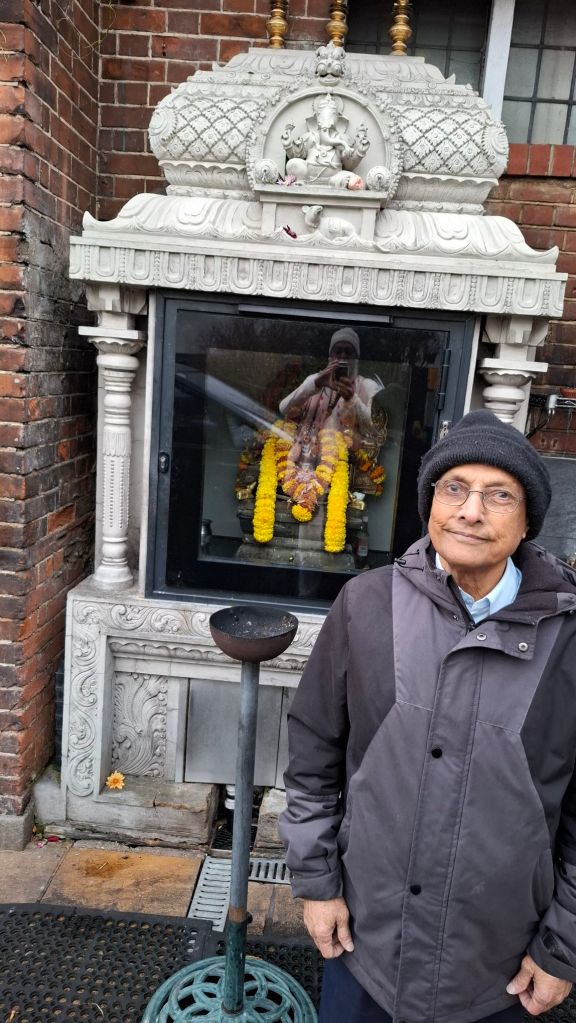
• लंदन में रहते हुए, मैंने सोचा कि कुछ मंदिरों के दर्शन करूँ। अधिकांश मंदिर पुराने चर्चों में स्थापित थे — वे पवित्र स्थल अब अगरबत्ती और भक्ति की सुगंध से पुनर्जीवित हो उठे थे। लेकिन एक मंदिर मुझे विशिष्ट रूप से पारंपरिक लगा। वह भी एक चर्च की इमारत में था, पर उसका अग्रभाग दक्षिण भारतीय शैली में निर्मित था। मैंने निश्चय किया कि मैं उसी मंदिर में जाऊँगा।

    वह मंदिर विम्बलडन में था, और वहाँ पहुँचने में लगभग दो घंटे लगे — कई बसों और ट्रेनों को बदलते हुए।

    यात्रा के अंतिम भाग में मैंने देखा कि एक वृद्ध एशियाई सज्जन मेरे पास खड़े होकर मुस्कुरा रहे थे। मैंने उन्हें अपने पास बैठने का आग्रह किया। बातचीत आरंभ हुई।

    जब मैंने बताया कि मैं गणपति मंदिर खोज रहा हूँ, तो उन्होंने मुस्कराते हुए कहा, “मैं भी वहीं जा रहा हूँ, आप मेरे साथ चलिए।”

    जब हम ट्रेन से उतरे, तो मैंने बाहर निकलते समय अपना कार्ड बैरियर पर टैप किया, पर वे बिना टैप किए ही बाहर चले गए। मुझे आश्चर्य हुआ। मैंने पूछा, “आपने कार्ड क्यों नहीं लगाया?” उन्होंने सहज भाव से कहा, “हम जैसे वरिष्ठ नागरिकों के पास यहाँ फ्रीडम पास होता है। इससे हम कहीं भी बिना किराया दिए यात्रा कर सकते हैं।”

    यह सुनकर मैं भीतर तक प्रभावित हुआ। बुजुर्गों को सम्मान देने का कितना सुंदर और सजीव तरीका है यह—उन्हें गरिमा, स्वतंत्रता और आत्मनिर्भरता प्रदान करने वाला। काश, भारत में भी ऐसा कोई उपहार अपने वरिष्ठ नागरिकों को दिया जा सके।

    हम साथ-साथ मंदिर की ओर चलने लगे। उन्होंने बताया कि उस दिन उनका पचासीवाँ जन्मदिन था। उनका परिवार शाम को मंदिर आएगा, पर वे सुबह ही शांत भाव से भगवान के दर्शन करना चाहते थे। मंदिर पहुँचकर जब उन्होंने जूते उतारे, तब मैंने देखा कि उनका एक पैर कृत्रिम था, फिर भी उनकी चाल में संतुलन और सौम्यता थी। दर्शन के बाद उन्होंने मुझसे अनुमति माँगी, क्योंकि मंदिर का एक भक्त उन्हें कार से उनके घर के पास तक छोड़ने जा रहा था।

    “फ्रीडम पास”—यह शब्द मेरे मन में गूंजता रहा। यह केवल एक सामाजिक योजना नहीं, बल्कि एक सुंदर प्रतीक है। वृद्धावस्था में भगवद गीता भी एक महान फ्रीडम पास है। यदि कोई अपने साथ गीता की छोटी प्रति रखे और जब-तब उसका अध्ययन करे, तो वह मन को भूत के बोझ, वर्तमान की पीड़ा, भविष्य की चिंता और मृत्यु के भय से मुक्त कर देती है।

    राज्य शरीर को चलने की स्वतंत्रता देता है,
    पर गीता आत्मा को उड़ने की स्वतंत्रता देती है।
    फ्रीडम पास बुजुर्ग को मंदिर तक ले जाता है—
    पर गीता उसे स्वयं भगवान तक पहुँचा देती है।

    Discover how to find God amidst
    household duties through the wisdom
    of the Bhagavad Gita. Learn practical
    ways of meditation, name-chanting,
    and offering daily actions as worship
    to attain peace and liberation.

    फ्रीडम पास

    Discover why God chose Bharat (India)
    for His divine incarnations. Explore the
    unique geography, spiritual heritage, and
    sacred culture that made India the eternal
    land of Vedas, sages, and divine manifestations.


  • While in London, I wished to visit a few temples. Most of them, I found, were set up in former churches—sacred spaces reborn with the fragrance of incense and devotion. But one temple – the Sri Ganpati Temple, Wimbledon –  looked distinctly traditional. It was also in a church building, but it’s front area was in the South Indian style. I decided to visit this temple.

    As it was in Wimbledon, the journey took nearly two hours with several changes between trains and buses.

    Towards the end of the train ride, I noticed an elderly Asian gentleman standing close to my seat and looking at me with a gentle smile. I invited him to sit beside me, and we began to talk.

    He was eighty-five. When I mentioned that I was searching for the Ganapati temple, he said, “I’m going there too. Come along.”

    When we got off the train, I tapped my card at the barrier, but he simply walked through. Curious, I asked how. He said, “We seniors in the UK have a Freedom Pass. It lets us travel anywhere, free of cost.”

    The simplicity of that arrangement touched me. What a gracious way to honour the elderly—granting them dignity, mobility, and independence. How meaningful it would be if India too offered such a gift to its senior citizens.

    As we walked toward the temple, he told me it was his 85th birthday. His family would come later, but he wished to visit in quiet devotion. I wished him a happy birthday.

    When we reached, and he started taking out out his shoes to enter the temple, I noticed that one of his legs was artificial, yet his steps were steady and serene. After his darshan, he ask for my permission to leave since he had found a devotee who could take him to his house in a car.

    The phrase Freedom Pass stayed with me. It is not only a social measure but a beautiful symbol. For the aged, the Bhagavad Gita is a greater Freedom Pass. If one carries a small copy of the Gita and reads it wherever possible, it frees the mind from the burden of the past, torments of the present, anxiety of the future, and even the fear of an impending death.

    The state can give freedom of movement; the Gita gives freedom of spirit.
    The Freedom Pass takes the elder to the temple— the Gita takes the elder to God.

    Discover how to find God amidst
    household duties through the wisdom
    of the Bhagavad Gita. Learn practical
    ways of meditation, name-chanting,
    and offering daily actions as worship
    to attain peace and liberation.

    The Freedom Pass

    Discover why God chose Bharat (India)
    for His divine incarnations. Explore the
    unique geography, spiritual heritage, and
    sacred culture that made India the eternal
    land of Vedas, sages, and divine manifestations.


  • “Should We Become Rishis — or Yogis and Saints?”

    You have raised a most profound question.

    There is a saying — “Old is gold.”
    That is, what is ancient is precious like gold.
    Yet this saying is not always true.

    The sages you have mentioned were indeed great — but they were not the only ones.
    Many others, too, were exalted seers and spiritual masters of the highest order.
    They had attained extraordinary control over their minds and senses.
    However, the scriptures do not affirm that their control was perfect.
    This raises a deeper question — what truly is control?

    Control means restraining the impulses of the senses and holding back the wanderings of the mind.
    It is undoubtedly a great achievement — yet it is not the ultimate spiritual perfection.
    To restrain the mind and senses is an achievement of negation — a negative attainment that says, “This I shall not do, that I shall not do.”
    But life also demands something more — a positive realization.

    To say, “I will not be angry,” is admirable — but not sufficient.
    The absence of anger is only a negation; the presence of compassion is an affirmation.
    Between “I will not be angry” and “I will be compassionate” lies the long journey from denial to affirmation.
    This distinction is subtle but vital.

    The word Rishi was used primarily in the Vedic age.
    Those whom you have mentioned were great ascetics of that era.
    In modern times, even Swami Dayananda was called a Maharshi because he upheld the Vedas and believed in the Vedic way of life.
    But after the Vedic period, those who embodied spiritual greatness were not called Rishis; they were revered as Yogis, Saints, Mahatmas, and Paramahansas.

    The Vedic Rishis were generally severe ascetics.
    They performed fire sacrifices, undertook prolonged fasts, and engaged in self-mortifying austerities.
    As a result of their penances, many developed superhuman powers.
    Yet it would be wrong to assume that all of them were the highest among the great souls.
    Many were known to have lost their temper and cursed others — sometimes even one another, and at times, astonishingly, even the Lord Himself.

    For instance, through his intense penance, Maharshi Dadhichi’s bones became as hard as thunderbolts, and for the protection of the gods he sacrificed his life.
    Yet he too was known for his fierce temperament — he once cursed even Lord Vishnu.
    Rishi Shringi pronounced a death-curse upon King Parikshit, a righteous monarch, for a mere trivial mistake.
    And Rishi Durvasa — his name itself became a byword for wrath — cursed countless beings.

    An episode from Dwarka shows how pride can overshadow wisdom.
    Once, Rishi Durvasa ordered Lord Krishna and Rukmini to pull his chariot like horses.
    And behold the humility of the Lord — He said gently to Rukmini, “Come, let us draw his chariot ourselves.”
    They did so without hesitation — revealing that true saintliness lies not in power, but in humility.

    The story of Vashishtha and Vishwamitra is also telling —
    both cursed each other and became birds.
    Maharshi Bhrigu, when testing the Trinity, went so far as to strike Lord Vishnu on the chest with his foot.
    The Lord, however, responded only with compassion.

    Even Devarshi Narada, when his desire was unfulfilled, cursed Vishnu.
    The four sons of Brahma — the Sanaka sages — cursed the gatekeepers of Vaikuntha, Jaya and Vijaya, merely because they said politely,
    “The Lord is resting; please wait until He grants permission.”
    In truth, Jaya and Vijaya had committed no offense; they were only performing their duty.
    Yet, blinded by pride and anger, the sages cursed them — and thus they were born on earth as Ravana, Hiranyakashipu, and Kamsa.

    Such episodes from the scriptures reveal a deep yet complex image of the Vedic Rishis.
    They possessed immense knowledge, penance, and spiritual power — but often lacked compassion, forgiveness, and the purification of ego that only devotion brings.
    Their minds had not yet been bathed in the nectar of Bhakti.

    Only with the awakening of Bhakti does the human ego melt away.
    Devotion transforms a Rishi into a Saint.
    A Rishi is the symbol of knowledge;
    a Saint, of love.
    Knowledge without love becomes arid;
    love without knowledge becomes directionless.
    When devotion illumines knowledge, true saintliness arises.

    The Rishis became powerful through austerity;
    the Saints became divine through love.
    The Rishis gave curses in anger;
    the Saints gave blessings in compassion.
    The Rishis performed outer sacrifices;
    the Saints made the heart itself their altar.

    Of course, not all Rishis were alike —
    some were deeply forgiving, gentle, and pure-hearted.
    But by and large, history shows that anger and pride often shadowed their greatness.

    Therefore, while we may draw inspiration from the Rishis,
    it is wiser to make the Saints, the Mahatmas, and the Paramahansas our ideals —
    for they attained perfection not through penance, but through love.

    Ultimately, it is best that we take the Bhagavad Gita as our highest guide —
    for the Gita does not produce Rishis; it produces Yogis, Saints, and Mahatmas.
    In its twelfth chapter (verses 13–20)
    and in the sixteenth chapter (verses 1–3),
    it describes the making of such realized souls —
    those whose hearts are free from anger and pride,
    and filled only with equanimity, devotion, and peace.

    Discover how to find God amidst
    household duties through the wisdom
    of the Bhagavad Gita. Learn practical
    ways of meditation, name-chanting,
    and offering daily actions as worship
    to attain peace and liberation.

    Discover why God chose Bharat (India)
    for His divine incarnations. Explore the
    unique geography, spiritual heritage, and
    sacred culture that made India the eternal
    land of Vedas, sages, and divine manifestations.


  • “ऋषि” बने या “योगी” और “संत”?

    आपने एक अत्यंत गंभीर प्रश्न उठाया है।

    एक कहावत है — “Old is gold.”
    अर्थात् जो पुराना है, वही सोने के समान मूल्यवान है।
    परंतु यह कथन सदैव सत्य नहीं होता।

    आपने जिन ऋषियों का उल्लेख किया है, वे ही नहीं, अनेक अन्य ऋषि भी हुए हैं — अत्यंत उच्च कोटि के, महान साधक।
    उन्होंने अपने मन और इंद्रियों पर असाधारण नियंत्रण प्राप्त किया था।
    किन्तु शास्त्र यह नहीं कहते कि वह नियंत्रण पूर्ण था।
    अब प्रश्न उठता है — नियंत्रण का अर्थ क्या है?

    नियंत्रण का अर्थ है — इंद्रियों के आवेग को रोक लेना, मन के भटकाव को थाम लेना।
    यह निश्चय ही महान उपलब्धि है, परंतु यह आध्यात्मिक पूर्णता नहीं है।
    मन को रोक लेना, इंद्रियों को संयत कर लेना — यह निषेधात्मक उपलब्धि है, नकारात्मक दिशा की सफलता है — “यह नहीं करेंगे, वह नहीं करेंगे।”
    परंतु जीवन का एक दूसरा पक्ष भी है — सकारात्मक पक्ष।

    क्रोध नहीं करेंगे — यह प्रशंसनीय है, परंतु यह अपने आप में पर्याप्त नहीं।
    क्रोध का न होना केवल एक निषेध है; किंतु करुणा का उदय एक सकारात्मक साधना है।
    “क्रोध नहीं करेंगे” और “करुणा करेंगे” — इन दोनों के बीच वही अंतर है जो नकार से स्वीकार तक की यात्रा में होता है।
    यह बात कहने का एक विशेष संदर्भ है।

    “ऋषि” शब्द का प्रयोग प्रायः वैदिक काल में होता था।
    जिन ऋषियों का आपने नाम लिया है, वे वैदिक युग के महान तपस्वी थे।
    आधुनिक काल में भी स्वामी दयानंद को “महर्षि” कहा गया, क्योंकि वे वेदों के हिमायती थे और वैदिक जीवन-पद्धति में विश्वास रखते थे।
    परंतु वैदिक युग के पश्चात जो महात्मा हुए, उन्हें “ऋषि” नहीं, बल्कि “योगी”, “संत”, “महात्मा”, “परमहंस” जैसे विशेषणों से विभूषित किया गया।

    वैदिक ऋषि प्रायः तपस्वी थे — वे अग्नि-यज्ञ करते, दीर्घ उपवास रखते, आत्म-पीड़क साधनाओं में रत रहते।
    उनके तप के परिणामस्वरूप उनमें अनेक अति-मानवीय शक्तियाँ प्रकट हो जाती थीं।
    परंतु यह मान लेना कि वे सभी ऋषि सबसे श्रेष्ठ महात्मा थे — यह उचित नहीं।
    उनमें से अनेक ऐसे भी थे जो क्रोध के वशीभूत होकर दूसरों को शाप दे बैठते थे — कभी-कभी एक-दूसरे को भी, यहाँ तक कि स्वयं भगवान को भी।

    उदाहरण के लिए, महर्षि दधीचि की तपस्या से उनकी अस्थियाँ वज्र के समान कठोर हो गईं, और देवताओं की रक्षा के लिए उन्होंने अपना जीवन तक अर्पित कर दिया।
    परंतु उनका स्वभाव भी तीव्र था — उन्होंने स्वयं भगवान विष्णु तक को शापित कर दिया।
    शृंगी ऋषि ने परीक्षित जैसे धर्मात्मा राजा को केवल एक छोटी-सी भूल के लिए मृत्यु का शाप दे दिया।
    ऋषि दुर्वासा का नाम तो क्रोध के प्रतीक के रूप में प्रसिद्ध है — उन्होंने असंख्य जनों को शापित किया।

    उनके अहंकार का एक उदाहरण द्वारका में देखा जाता है —
    जहाँ उन्होंने भगवान कृष्ण और रुक्मिणी को आदेश दिया कि वे उनके रथ को घोड़ों की भाँति खींचें।
    भगवान की विनम्रता देखिए — उन्होंने रुक्मिणी से कहा, “चलो, हम स्वयं उनके रथ को खींचें।”
    और वे दोनों निःसंकोच ऐसा करते भी हैं — यह दृश्य बताता है कि संतत्व का शिखर विनम्रता में है, न कि सामर्थ्य में।

    महर्षि वशिष्ठ और विश्वामित्र का प्रसंग भी स्मरणीय है —
    दोनों ने परस्पर एक-दूसरे को शाप देकर पक्षी बना दिया।
    महर्षि भृगु ने जब त्रिदेवों की परीक्षा ली, तो भगवान विष्णु के पास जाकर उनकी छाती पर लात मारी।
    भगवान ने तब भी करुणा से ही उत्तर दिया।

    देवर्षि नारद ने भी जब उनकी इच्छा पूरी न हुई, तो विष्णु को शापित किया।
    सनकादिक ऋषियों ने वैकुण्ठ के द्वारपाल जय और विजय को केवल इस कारण शाप दे दिया कि उन्होंने कहा था —
    “भगवान अभी विश्राम कर रहे हैं, अनुमति मिलते ही प्रवेश करें।”
    निष्पक्ष दृष्टि से देखें तो जय-विजय ने कोई अपराध नहीं किया था; वे तो केवल अपना कर्तव्य निभा रहे थे।
    किन्तु क्रोधवश और अहंकारवश ऋषियों ने उन्हें शाप दिया — और परिणामस्वरूप वे रावण, हिरण्यकशिपु और कंस के रूप में जन्मे।

    इन शास्त्रीय वृत्तांतों से वैदिक ऋषियों की छवि एक गहरी, किंतु जटिल प्रतीत होती है।
    उनमें अत्यंत ज्ञान था, तप था, सामर्थ्य था — किंतु करुणा, क्षमाशीलता और अहंभाव की शुद्धि का अभाव था।
    उनके चित्त का स्नान भक्ति के अमृत में नहीं हुआ था।

    भक्ति आने पर ही मनुष्य का अहंकार गलता है।
    भक्ति ऋषि को संत बना देती है।
    ऋषि ज्ञान का प्रतीक है, किंतु संत प्रेम का।
    ज्ञान बिना प्रेम के सूखा रहता है; और प्रेम बिना ज्ञान के दिशाहीन।
    भक्ति जब ज्ञान को आलोकित करती है, तब संतत्व प्रकट होता है।

    ऋषि तप के द्वारा शक्तिशाली बने,
    परंतु संत प्रेम के द्वारा दिव्य बने।
    ऋषि क्रोध में शाप देते थे;
    संत करुणा में आशीर्वाद देते थे।
    ऋषि यज्ञ करते थे,
    संत हृदय को वेदी बनाते थे।

    यह नहीं कि सभी ऋषि एक समान थे —
    कुछ अत्यंत क्षमाशील, उदार और सरल भी थे।
    किन्तु प्रधानता उन्हीं ऋषियों की दृष्टिगोचर होती है, जो क्रोध और अहंकार के वश होकर शाप दे बैठते थे।

    इसलिए यह अधिक उचित है कि हम ऋषियों से प्रेरणा तो लें,
    पर अपने जीवन का आदर्श संतों, महात्माओं और परमहंसों को बनाएं —
    जिन्होंने तप में नहीं, प्रेम में पूर्णता प्राप्त की।

    वास्तव में सर्वोत्तम यह है कि हम भगवद गीता को अपना आदर्श बनाएं —
    क्योंकि गीता ऋषि नहीं, योगी, संत और महात्मा तैयार करती है।
    बारहवें अध्याय के 13 से 20वें श्लोक,
    और सोलहवें अध्याय के पहले से तीसरे श्लोक
    ऐसे संत और परमहंस का निर्माण करते हैं,
    जिनके हृदय में न क्रोध है, न अहंकार, केवल समत्व, भक्ति और शांति है।

    Discover how to find God amidst
    household duties through the wisdom
    of the Bhagavad Gita. Learn practical
    ways of meditation, name-chanting,
    and offering daily actions as worship
    to attain peace and liberation.

    “ऋषि” बनें या “योगी”, “संत”, “महात्मा”?

    Discover why God chose Bharat (India)
    for His divine incarnations. Explore the
    unique geography, spiritual heritage, and
    sacred culture that made India the eternal
    land of Vedas, sages, and divine manifestations.


  • Discover how to find God amidst
    household duties through the wisdom
    of the Bhagavad Gita. Learn practical
    ways of meditation, name-chanting,
    and offering daily actions as worship
    to attain peace and liberation.

    England Still Has Post Boxes

    Discover why God chose Bharat (India)
    for His divine incarnations. Explore the
    unique geography, spiritual heritage, and
    sacred culture that made India the eternal
    land of Vedas, sages, and divine manifestations.


  • Travelogue – 3

    October 27, 2025

    My First Day in London

    Yesterday was my first evening in London.
    The final days of October bring with them the soft melancholy of autumn — moisture in the air, golden leaves drifting from trees, and sunlight touched with a wistful glow.
    Here, dusk arrives early; by five o’clock darkness settles in completely.
    Thus, when we drove from Heathrow Airport to our residence in Orpington, London appeared only as a city of flickering lights — as though we were passing through a silent procession of fireflies in the night.

    It was October 26 — the day I arrived. The house into which I entered was already alive with the preparations for Chhath Puja: the fragrance of offerings, the songs of women echoing through the rooms, and the warm bustle of visiting devotees — all awakening a vivid remembrance of India in this foreign land.

    Our residence, a graceful three-storied home built nearly ninety years ago, stood resplendent with renewed charm.
    The ground floor housed a spacious living room, kitchen, and a small office.
    On the first floor lived my nephew Sid, my niece Anu, and a guest room reserved for me.
    The top floor was the abode of my sister and brother-in-law, Vasudha and Rajat.
    Behind the house stretched a lush green backyard; in front, a flowered garden — an image of the serene suburban life of England.

    The evening haze had veiled London’s beauty, but the next morning, which means today, when I stepped outside, nature seemed to have spilled colors upon an artist’s canvas — gentle sunlight, cool air, and the shimmer of red and gold leaves dancing in the breeze.

    The Rhythm of London

    The English countryside and its suburban stretches are majestic in their simplicity.
    Though Orpington is technically a part of London, it feels worlds apart from the restlessness of Central London.
    Here, silence breathes softly; elegant British architecture lines the undulating roads, shaded by trees that whisper in the wind.

    During autumn, every tree becomes an alchemist of color — amber, gold, and crimson hues blend like verses of a silent hymn.
    White and gray clouds play across the sky; sometimes the sun peeks through smilingly, only to retreat again into their folds.
    Light drizzles now and then add to the enchantment, and the air carries a chill that is both cool and invigorating.

    The Echo of Chhath in London

    My sister’s family, settled in London for many years and now British citizens, continues to celebrate Chhath Puja with devotion.
    There are so many North Indian families here that a single WhatsApp message —
    “We are observing Chhath” — brings devotees from miles around.
    This year, nearly thirty-five families joined in the celebration.
    Traditional gifts such as thekua, vermilion boxes (sindoor ki dibiya), and other ritual offerings were distributed.
    I had brought the vermilion boxes especially from Vrindavan, for such sacred items are rarely found in London.

    It was heartwarming to see Indian women — fluent in refined English, yet adorned in traditional attire — filling the parting of their hair with vermilion from nose to crown.
    It was more than ritual; it was a radiant declaration — we have not forgotten our roots.

    In the backyard, a symbolic ghat had been created — a large plastic pool filled with water for the offering to the Sun.
    On the first day, the setting sun would be worshipped; on the next, the rising one.
    This Surya-upasana (solar worship) is one of the oldest spiritual traditions of the Vedas.
    From the Rigveda (1.50.10) comes this hymn to the Sun:

    udvayam tamasas pari jyotiṣ pashyanta uttaram |
    devam devatra sūryam aganma jyotir uttamam ||
    (Rigveda 1.50.10)

    “Rising beyond the darkness, we behold the higher light;
    We have reached the divine Sun — the supreme radiance.”

    The Sun is not merely the giver of light; he is the source of life, the witness of time.

    Chhathi Maiya — The Worship of Nature

    In later centuries, this ancient Vedic sun-worship merged with the popular reverence of Chhathi Maiya — the Mother Goddess representing the nurturing aspect of Nature.
    Lord Krishna too speaks of this divine union in the Bhagavad Gita:>l

    sarva-yoniṣu kaunteya mūrtayaḥ sambhavanti yāḥ |
    tāsāṁ brahma mahad yonir ahaṁ bīja-pradaḥ pitā ||
    (Bhagavad Gita 14.4)

    “O son of Kunti, it is I who am the seed-giving father of all living beings,
    while Nature is their great womb, the mother of creation.”

    That very Mother Nature is worshipped in India under many names —
    as Durga, as Kali, as Lakshmi,
    and in Chhath Puja, as Chhathi Maiya.
    This worship is not merely a ritual — it is a prayer for harmony between humanity and the natural world.

    The Wheel of Time and England

    When I arrived from India, the time difference was four and a half hours.
    But with the end of Daylight Saving Time on the last Sunday of October, the difference became five and a half hours.

    Yet, it is not only the clocks that have changed — the very wheel of time has turned here.
    A century ago, this land was “Great Britain” —
    that empire upon which, it was said, “the sun never sets.”
    India, Egypt, Australia, Canada, South Africa, and countless islands — all were under its dominion.
    Now, that vast empire lives only in the pages of history;
    England has withdrawn into its modest, ancient island self once more.

    Man can set his clocks, but he cannot command Time.
    As Lord Krishna revealed to Arjuna:

    kālo ’smi loka-kṣaya-kṛt pravṛddho lokān samāhartum iha pravṛttaḥ ||
    (Bhagavad Gita 11.32)

    “I am Time — the mighty destroyer of worlds,
    engaged in consuming all beings.”

    This is the eternal wheel of Kala — the cosmic time that dissolves empires and gives birth to new civilizations.

    Epilogue

    Thus passed my first sunrise in Orpington –
    a day not merely of crossing geographic distance,
    but of traversing many bridges of time, culture, and inner emotion.
    The traditions of India, the soil of England, and the universal radiance of the Sun together transformed this first day of the journey
    into a meditation — a quiet, spiritual awakening beneath the same eternal sky.


    Discover how to find God amidst
    household duties through the wisdom
    of the Bhagavad Gita. Learn practical
    ways of meditation, name-chanting,
    and offering daily actions as worship
    to attain peace and liberation.

    My first day in London

    Discover why God chose Bharat (India)
    for His divine incarnations. Explore the
    unique geography, spiritual heritage, and
    sacred culture that made India the eternal
    land of Vedas, sages, and divine manifestations.


  • यात्रा-वृत्तांत – ३
    27 अक्टूबर, 2025
    लंदन में पहला दिन
    लंदन की यह मेरी प्रथम संध्या थी।
    अक्टूबर के अंतिम दिनों में यहाँ का मौसम “Autumn” का होता है— हवा में हल्की नमी, वृक्षों से झरते सुनहरे पत्ते, और सूर्य की किरणों में एक मद्धिम विषाद।
    यहाँ पाँच बजे ही अंधकार उतर आता है। अतः जब हम हीथ्रो एयरपोर्ट से ऑरपिंगटन अपने निवास-स्थल पहुँचे, तब तक लंदन केवल टिमटिमाती रोशनियों का नगर था— मानो जुगनुओं की किसी शांत बारात के बीच से गुज़रते हुए हम रात्रि में यात्रा कर रही हो।
    वह दिन था २६ अक्टूबर— कल जब में पहुँचा था तो जिस घर में पहुँचा उस घर में छठ पर्व की तैयारियाँ आरंभ हो चुकी थीं। घर में श्रद्धालु अतिथियों का आगमन, प्रसाद की सुगंध, और स्त्रियों के मंगल गीतों की झंकार — यह सब परदेश में भारतीयता की पुनर्स्मृति जगा रहे थे।
    हमारा निवास तीन मंज़िला सुंदर भवन था — लगभग ९० वर्ष पुराना, किंतु नवीन सौंदर्य में पूर्ण। नीचे का तल विस्तृत लिविंग रूम, रसोई और एक छोटा-सा ऑफिस।
    पहली मंज़िल पर मेरे भांजे “सिड” और भांजी अनु का, तथा अतिथियों के लिए मेरा कक्ष।
    दूसरी मंज़िल पर बहन और बहनोई वसुधा और रजत का निवास।
    पीछे एक हरित आँगन (backyard), और सामने फूलों से सुसज्जित गार्डन, इंग्लैंड के उपनगरीय जीवन की शांति का मूर्त रूप।
    कल शाम की धुंध में लंदन का सौंदर्य छिपा था, पर आज प्रातः जब मैं बाहर निकला, तब प्रकृति मानो किसी कलाकार के कैनवास पर रंग बिखेर रही थी —
    मृदुल धूप, हल्की ठंडक, और वृक्षों पर सुनहरे-लाल पत्तों की झिलमिलाहट।
    लंदन और उसकी लय
    इंग्लैंड का ग्रामीण और उपनगरीय क्षेत्र अपनी सादगी में ही भव्य है।
    यद्यपि ऑरपिंगटन प्रशासनिक दृष्टि से लंदन का ही भाग है, किंतु यहाँ का वातावरण सेंट्रल लंदन की चहल-पहल से भिन्न है — यहाँ प्रगाढ़ शांति है, सुसंस्कृत स्थापत्य, और वृक्षों से आच्छादित सड़कों की कोमल लय।
    पतझड़ के मौसम में यहाँ का हर वृक्ष रंगों का रसायन बन जाता है — कहीं अंबर, कहीं सुनहला, कहीं रक्तिम।
    आकाश में सदा श्वेत और श्याम मेघों का खेल चलता रहता है —
    कभी सूर्य झाँक कर मुस्करा देता है, तो कभी बादलों की गोद में छिप जाता है।
    बीच-बीच में हल्की फुहारें इस दृश्य को और आकर्षक बना देती हैं।
    हवा में एक “चिल” है जिसमें ठंडक भी है और ताजगी भी।
    छठ पर्व की गूंज लंदन में
    लंदन में सेटल्ड और ब्रिटिश नागरिकता प्राप्त मेरी बहन का परिवार वर्षों से छठ पर्व मनाता आया है।
    यहाँ लंदन में भी इतने उत्तर भारतीय परिवार हैं कि बस व्हाट्सएप पर संदेश दे दीजिए—
    “हम छठ कर रहे हैं”— तो दूर-दूर से श्रद्धालु एकत्र हो जाते हैं।
    लगभग ३५ परिवार इस बार के पर्व में सम्मिलित हुए हैं।
    उपहारस्वरूप ठेकुआ, सिंदूर की डिबिया और अन्य पारंपरिक वस्तुएँ दी जाती हैं।
    मैंने वृंदावन से विशेष रूप से सिंदूर की डिबियाँ लाईं, क्योंकि यहाँ ऐसी पारंपरिक वस्तुएँ सहज उपलब्ध नहीं होतीं।
    लंदन में सेटल्ड भारतीय महिलाएँ, जो परिष्कृत अंग्रेज़ी में वार्तालाप करती हैं, इस दिन पारंपरिक वेशभूषा में, नाक के नीचे से लेकर माँग तक सिंदूर भर लेती हैं।
    यह दृश्य हृदय को छू जाता है — यह केवल श्रद्धा नहीं, बल्कि अपनी जड़ों से जुड़े रहने की घोषणा है।
    घर के बैकयार्ड में ही “घाट” का प्रतीक निर्मित किया गया है।
    एक बड़ा प्लास्टिक का जलकुंड, जिसमें जल भरकर सूर्य को अर्घ्य दिया जाना है
    प्रथम दिवस अस्ताचलगामी सूर्य को, और दूसरे दिन उदयमान सूर्य को —
    वही सूर्योपासना जो भारत की वैदिक परंपरा की सबसे प्राचीन साधनाओं में से एक है।
    ऋग्वेद में सूर्य देव की उपासना का यह मंत्र आता है —
    उद्व॒यं तम॑स॒स्परि॒ ज्योति॒ष्पश्य॑न्त॒ उत्त॑रम् ।
    दे॒वं दे॑व॒त्रा सूर्य॒मग॑न्म॒ ज्योति॑रुत्त॒मम् ॥ (०१:०५०:१०)
    सूर्य केवल प्रकाश का देवता नहीं, वह जीवन का मूल है, समय का साक्षी है।
    छठी मइया — प्रकृति की आराधना
    कालांतर में इस वैदिक सूर्य-पूजन से जुड़ गया लोक-विश्वास —
    छठी मैया की आराधना।
    भगवान श्रीकृष्ण ने भी गीता में कहा है —
    सर्वयोनिषु कौन्तेय मूर्तयः सम्भवन्ति याः।
    तासां ब्रह्म महद्योनिरहं बीजप्रदः पिता।। 14:4
    (भगवद्गीता 14.4)
    “मैं समस्त प्राणियों का बीज देने वाला पिता हूँ, और प्रकृति उनकी माता है।”
    यही प्रकृति माता विविध रूपों में भारतभूमि पर पूजित होती हैं —
    कभी दुर्गा बनकर, कभी काली बनकर, कभी लक्ष्मी के रूप में,
    और छठ पर्व में — छठी मैया के रूप में।
    यह पूजन केवल धार्मिक कर्म नहीं, बल्कि मनुष्य और प्रकृति के सहअस्तित्व की प्रार्थना है।
    कालचक्र और इंग्लैंड
    भारत से लंदन आने पर समय का अंतर लगभग 4 घंटे 30 मिनट का था —
    और अक्टूबर के अंतिम रविवार को जब “Daylight Saving Time” समाप्त हुआ, तो यह अंतर 5 घंटे 30 मिनट का हो गया।
    पर केवल घड़ियाँ ही नहीं, समय का चक्र भी यहाँ बदल चुका।
    एक शताब्दी पूर्व यह भूमि “ग्रेट ब्रिटेन” थी।
    वह साम्राज्य जिसके विषय में कहा जाता था, “The sun never sets on the British Empire.”
    भारत, मिस्र, ऑस्ट्रेलिया, कनाडा, दक्षिण अफ्रीका, और असंख्य द्वीप — सब इसके अधीन थे।
    आज वह विशाल साम्राज्य इतिहास का प्रसंग बन चुका है;
    इंग्लैंड पुनः अपने सीमित भूभाग में लौट आया है।
    मनुष्य घड़ियों से समय को बाँध सकता है, पर काल को नहीं।
    भगवान ने गीता में अर्जुन से कहा था —
    “कालोऽस्मि लोकक्षयकृत् प्रवृद्धो लोकान् समाहर्तुमिह प्रवृत्तः।”
    (भगवद्गीता 11.32)
    “मैं काल हूँ — लोकों का संहारक, और समय का प्रवाह मुझमें स्थित है।”
    यह वही कालचक्र है जो साम्राज्यों को मिटाता और नई सभ्यताओं को जन्म देता है।
    समापन
    सूर्योदय के बाद का यह पहला दिन ऑरपिंगटन में बीता — न केवल भौगोलिक दूरी पार करने में, बल्कि समय, संस्कृति, और आत्मीयता के अनेक पुल पार करते हुए।
    भारत की परंपरा, इंग्लैंड की धरती, और सूर्य की सार्वभौम किरण।
    तीनों ने मिलकर इस यात्रा के प्रथम दिन को एक अध्यात्मिक अनुभव बना दिया।

    Discover how to find God amidst
    household duties through the wisdom
    of the Bhagavad Gita. Learn practical
    ways of meditation, name-chanting,
    and offering daily actions as worship
    to attain peace and liberation.

    लंदन में मेरा पहला दिन

    Discover why God chose Bharat (India)
    for His divine incarnations. Explore the
    unique geography, spiritual heritage, and
    sacred culture that made India the eternal
    land of Vedas, sages, and divine manifestations.


  • यात्रा-वृत्तांत – ३
    27 अक्टूबर, 2025
    लंदन में पहला दिन
    लंदन की यह मेरी प्रथम संध्या थी।
    अक्टूबर के अंतिम दिनों में यहाँ का मौसम “Autumn” का होता है— हवा में हल्की नमी, वृक्षों से झरते सुनहरे पत्ते, और सूर्य की किरणों में एक मद्धिम विषाद।
    यहाँ पाँच बजे ही अंधकार उतर आता है। अतः जब हम हीथ्रो एयरपोर्ट से ऑरपिंगटन अपने निवास-स्थल पहुँचे, तब तक लंदन केवल टिमटिमाती रोशनियों का नगर था— मानो जुगनुओं की किसी शांत बारात के बीच से गुज़रते हुए हम रात्रि में यात्रा कर रही हो।
    वह दिन था २६ अक्टूबर— कल जब में पहुँचा था तो जिस घर में पहुँचा उस घर में छठ पर्व की तैयारियाँ आरंभ हो चुकी थीं। घर में श्रद्धालु अतिथियों का आगमन, प्रसाद की सुगंध, और स्त्रियों के मंगल गीतों की झंकार — यह सब परदेश में भारतीयता की पुनर्स्मृति जगा रहे थे।
    हमारा निवास तीन मंज़िला सुंदर भवन था — लगभग ९० वर्ष पुराना, किंतु नवीन सौंदर्य में पूर्ण। नीचे का तल विस्तृत लिविंग रूम, रसोई और एक छोटा-सा ऑफिस।
    पहली मंज़िल पर मेरे भांजे “सिड” और भांजी अनु का, तथा अतिथियों के लिए मेरा कक्ष।
    दूसरी मंज़िल पर बहन और बहनोई वसुधा और रजत का निवास।
    पीछे एक हरित आँगन (backyard), और सामने फूलों से सुसज्जित गार्डन, इंग्लैंड के उपनगरीय जीवन की शांति का मूर्त रूप।
    कल शाम की धुंध में लंदन का सौंदर्य छिपा था, पर आज प्रातः जब मैं बाहर निकला, तब प्रकृति मानो किसी कलाकार के कैनवास पर रंग बिखेर रही थी —
    मृदुल धूप, हल्की ठंडक, और वृक्षों पर सुनहरे-लाल पत्तों की झिलमिलाहट।
    लंदन और उसकी लय
    इंग्लैंड का ग्रामीण और उपनगरीय क्षेत्र अपनी सादगी में ही भव्य है।
    यद्यपि ऑरपिंगटन प्रशासनिक दृष्टि से लंदन का ही भाग है, किंतु यहाँ का वातावरण सेंट्रल लंदन की चहल-पहल से भिन्न है — यहाँ प्रगाढ़ शांति है, सुसंस्कृत स्थापत्य, और वृक्षों से आच्छादित सड़कों की कोमल लय।
    पतझड़ के मौसम में यहाँ का हर वृक्ष रंगों का रसायन बन जाता है — कहीं अंबर, कहीं सुनहला, कहीं रक्तिम।
    आकाश में सदा श्वेत और श्याम मेघों का खेल चलता रहता है —
    कभी सूर्य झाँक कर मुस्करा देता है, तो कभी बादलों की गोद में छिप जाता है।
    बीच-बीच में हल्की फुहारें इस दृश्य को और आकर्षक बना देती हैं।
    हवा में एक “चिल” है जिसमें ठंडक भी है और ताजगी भी।
    छठ पर्व की गूंज लंदन में
    लंदन में सेटल्ड और ब्रिटिश नागरिकता प्राप्त मेरी बहन का परिवार वर्षों से छठ पर्व मनाता आया है।
    यहाँ लंदन में भी इतने उत्तर भारतीय परिवार हैं कि बस व्हाट्सएप पर संदेश दे दीजिए—
    “हम छठ कर रहे हैं”— तो दूर-दूर से श्रद्धालु एकत्र हो जाते हैं।
    लगभग ३५ परिवार इस बार के पर्व में सम्मिलित हुए हैं।
    उपहारस्वरूप ठेकुआ, सिंदूर की डिबिया और अन्य पारंपरिक वस्तुएँ दी जाती हैं।
    मैंने वृंदावन से विशेष रूप से सिंदूर की डिबियाँ लाईं, क्योंकि यहाँ ऐसी पारंपरिक वस्तुएँ सहज उपलब्ध नहीं होतीं।
    लंदन में सेटल्ड भारतीय महिलाएँ, जो परिष्कृत अंग्रेज़ी में वार्तालाप करती हैं, इस दिन पारंपरिक वेशभूषा में, नाक के नीचे से लेकर माँग तक सिंदूर भर लेती हैं।
    यह दृश्य हृदय को छू जाता है — यह केवल श्रद्धा नहीं, बल्कि अपनी जड़ों से जुड़े रहने की घोषणा है।
    घर के बैकयार्ड में ही “घाट” का प्रतीक निर्मित किया गया है।
    एक बड़ा प्लास्टिक का जलकुंड, जिसमें जल भरकर सूर्य को अर्घ्य दिया जाना है
    प्रथम दिवस अस्ताचलगामी सूर्य को, और दूसरे दिन उदयमान सूर्य को —
    वही सूर्योपासना जो भारत की वैदिक परंपरा की सबसे प्राचीन साधनाओं में से एक है।
    ऋग्वेद में सूर्य देव की उपासना का यह मंत्र आता है —
    उद्व॒यं तम॑स॒स्परि॒ ज्योति॒ष्पश्य॑न्त॒ उत्त॑रम् ।
    दे॒वं दे॑व॒त्रा सूर्य॒मग॑न्म॒ ज्योति॑रुत्त॒मम् ॥ (०१:०५०:१०)
    सूर्य केवल प्रकाश का देवता नहीं, वह जीवन का मूल है, समय का साक्षी है।
    छठी मइया — प्रकृति की आराधना
    कालांतर में इस वैदिक सूर्य-पूजन से जुड़ गया लोक-विश्वास —
    छठी मैया की आराधना।
    भगवान श्रीकृष्ण ने भी गीता में कहा है —
    सर्वयोनिषु कौन्तेय मूर्तयः सम्भवन्ति याः।
    तासां ब्रह्म महद्योनिरहं बीजप्रदः पिता।। 14:4
    (भगवद्गीता 14.4)
    “मैं समस्त प्राणियों का बीज देने वाला पिता हूँ, और प्रकृति उनकी माता है।”
    यही प्रकृति माता विविध रूपों में भारतभूमि पर पूजित होती हैं —
    कभी दुर्गा बनकर, कभी काली बनकर, कभी लक्ष्मी के रूप में,
    और छठ पर्व में — छठी मैया के रूप में।
    यह पूजन केवल धार्मिक कर्म नहीं, बल्कि मनुष्य और प्रकृति के सहअस्तित्व की प्रार्थना है।
    कालचक्र और इंग्लैंड
    भारत से लंदन आने पर समय का अंतर लगभग 4 घंटे 30 मिनट का था —
    और अक्टूबर के अंतिम रविवार को जब “Daylight Saving Time” समाप्त हुआ, तो यह अंतर 5 घंटे 30 मिनट का हो गया।
    पर केवल घड़ियाँ ही नहीं, समय का चक्र भी यहाँ बदल चुका।
    एक शताब्दी पूर्व यह भूमि “ग्रेट ब्रिटेन” थी।
    वह साम्राज्य जिसके विषय में कहा जाता था, “The sun never sets on the British Empire.”
    भारत, मिस्र, ऑस्ट्रेलिया, कनाडा, दक्षिण अफ्रीका, और असंख्य द्वीप — सब इसके अधीन थे।
    आज वह विशाल साम्राज्य इतिहास का प्रसंग बन चुका है;
    इंग्लैंड पुनः अपने सीमित भूभाग में लौट आया है।
    मनुष्य घड़ियों से समय को बाँध सकता है, पर काल को नहीं।
    भगवान ने गीता में अर्जुन से कहा था —
    “कालोऽस्मि लोकक्षयकृत् प्रवृद्धो लोकान् समाहर्तुमिह प्रवृत्तः।”
    (भगवद्गीता 11.32)
    “मैं काल हूँ — लोकों का संहारक, और समय का प्रवाह मुझमें स्थित है।”
    यह वही कालचक्र है जो साम्राज्यों को मिटाता और नई सभ्यताओं को जन्म देता है।
    समापन
    सूर्योदय के बाद का यह पहला दिन ऑरपिंगटन में बीता — न केवल भौगोलिक दूरी पार करने में, बल्कि समय, संस्कृति, और आत्मीयता के अनेक पुल पार करते हुए।
    भारत की परंपरा, इंग्लैंड की धरती, और सूर्य की सार्वभौम किरण,
    तीनों ने मिलकर इस यात्रा के प्रथम दिन को एक अध्यात्मिक अनुभव बना दिया।

    Discover how to find God amidst
    household duties through the wisdom
    of the Bhagavad Gita. Learn practical
    ways of meditation, name-chanting,
    and offering daily actions as worship
    to attain peace and liberation.

    लंदन में पहला दिन

    Discover why God chose Bharat (India)
    for His divine incarnations. Explore the
    unique geography, spiritual heritage, and
    sacred culture that made India the eternal
    land of Vedas, sages, and divine manifestations.


  • Travelogue – 6

    First Encounter with the Brahma Kumaris in London

    One of the principal purposes of my visit to England was Interfaith Dialogue — to foster understanding among diverse religious and spiritual traditions, to build bridges of harmony, and to explore new possibilities of collaboration. Today, a beautiful first step was taken in that direction.

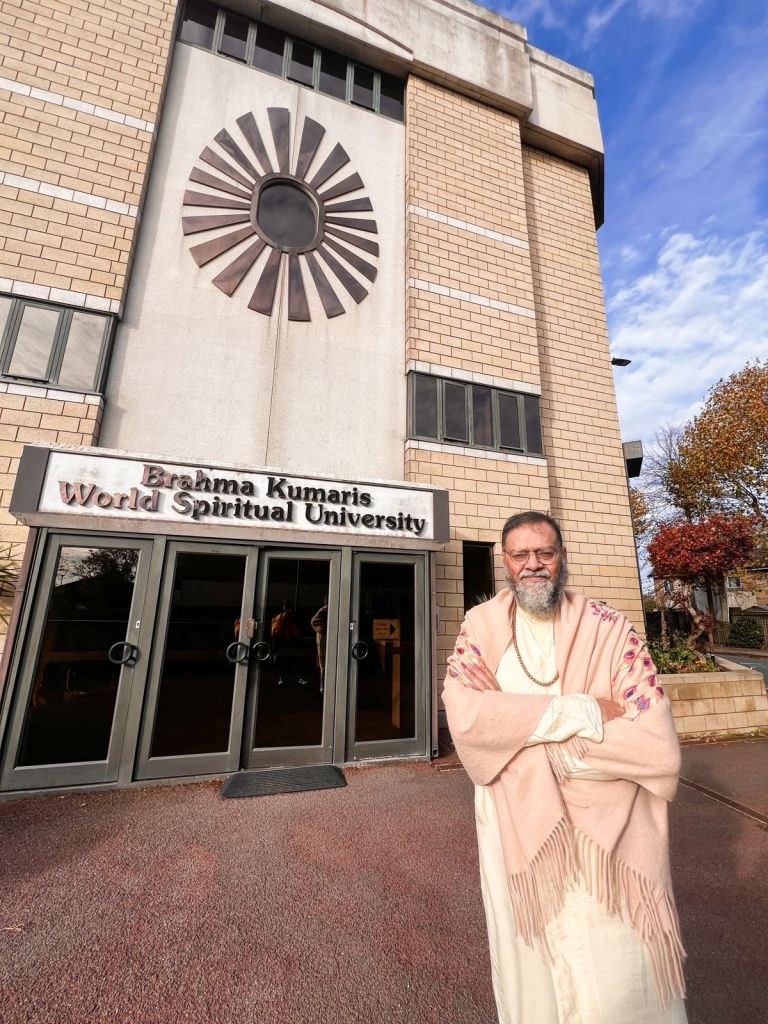
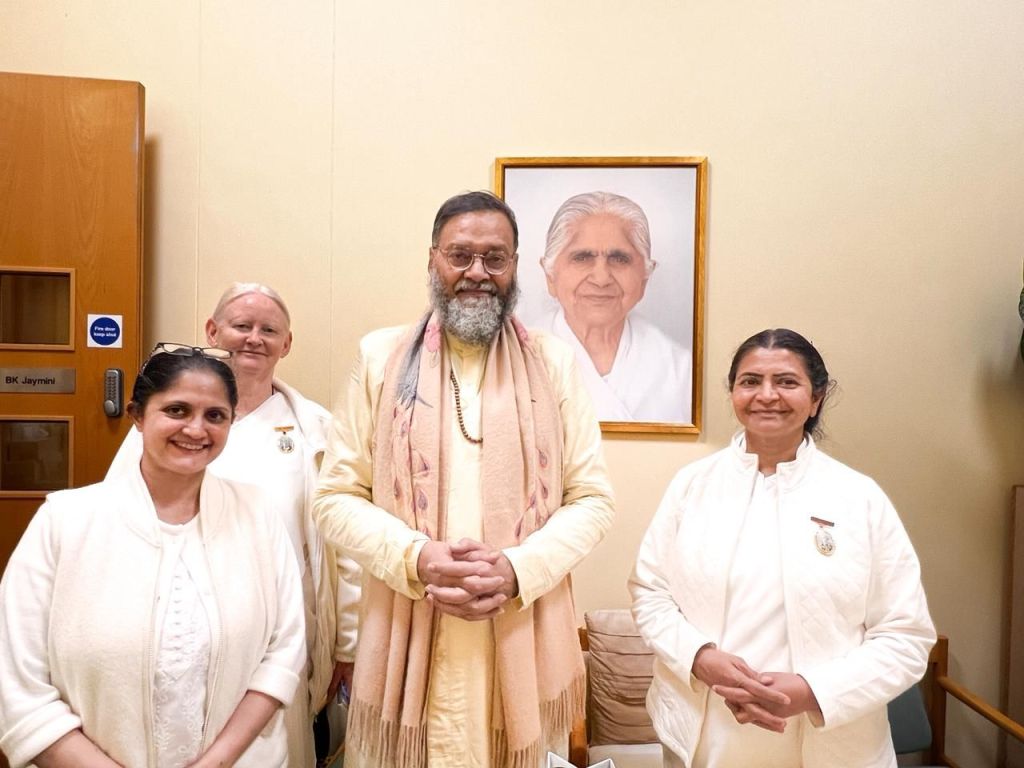
    We visited the Brahma Kumaris World Spiritual University at the Global Cooperation House in London. The regional head, Sister Gemini, along with her associates Sister Charu, Sister Kim, Sister Kalpana, and Sister Dipti, welcomed us with warm affection.

    Even during our initial conversation over the phone, they had lovingly insisted that we share lunch with them — and indeed, they were waiting for us when we arrived.
    The meal was delicious, sattvic, and absolutely pure — prepared without onion or garlic, and without any food sourced from outside. They told us that in their kitchen, nothing cooked — not even sweets or bread — comes from elsewhere. Everything is prepared within the ashram itself. This discipline of self-reliance and purity gives the community its distinct aura.

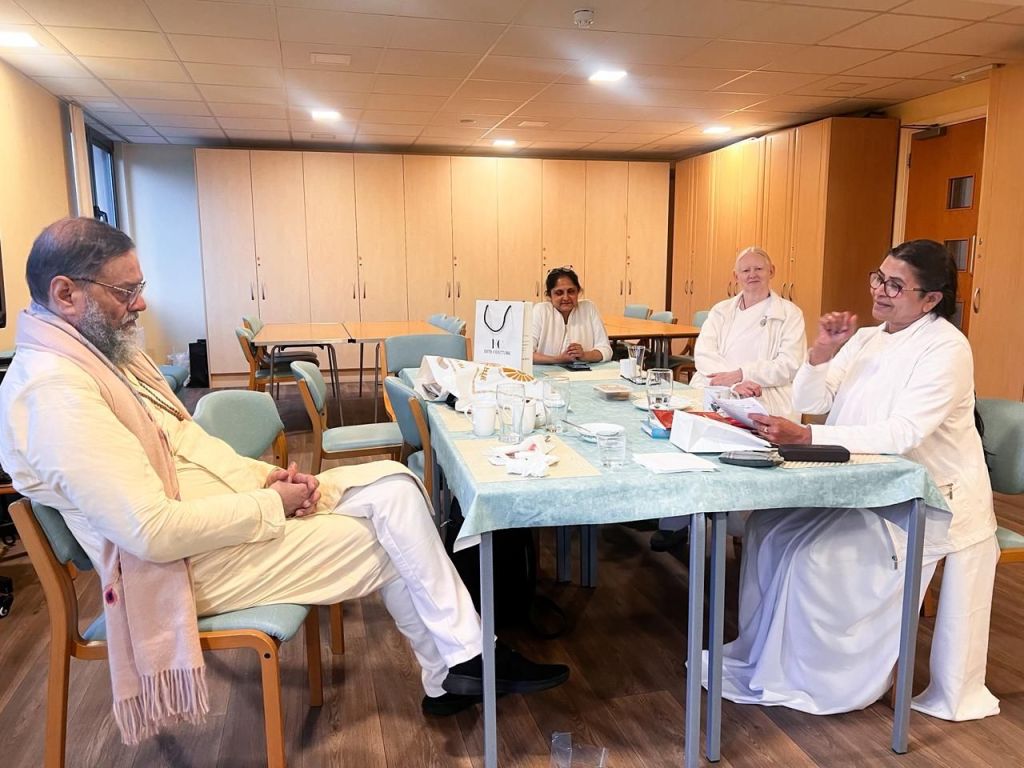
    After the meal, our dialogue began. I briefly introduced my background and requested that, for today, I would rather listen than speak. They smiled and mentioned that they had already watched some of my talks and interviews online — the bridge of communication had, it seemed, already been built.

    Sister Jaymini, who oversees the organization’s work across several countries, spoke in detail about the origin and philosophy of the Brahma Kumaris movement.
    She explained that the institution was founded before India’s independence, in Hyderabad (Sindh) and Karachi. Since its ideas were unconventional — even revolutionary — it faced opposition, and eventually the headquarters were moved to Mount Abu. From there, the movement has quietly spread to nearly 8,000 centers across the world.

    The essence of the organization, she said, lies in working with quiet dignity — serving humanity through spiritual practice, free from noise, propaganda, or ostentation.

    The sisters seated with us wore a special locket that all Brahma Kumari teachers wear. In its center was an image of Lord Vishnu, on one side Lord Shiva, and in place of Brahma, a portrait of Lekhraj Mahashay, their revered founder — lovingly known as Brahma Baba. His followers consider themselves his spiritual children; thus, the women are called Brahma Kumaris and the men Brahma Kumars. On the back side of the locket was an image of Lakshmi Narayan.

    They believe that God — whom they call “Shiv Baba” — spoke to humanity through Lekhraj Baba, revealing divine wisdom for the upliftment of humankind.
    I asked, “Was this divine speech ever compiled into a scripture?”
    Sister Jaymini replied, “Not in a formal book. The words continue to live as the Murli (flute) — a daily message of about three pages, blending Hindi, Sindhi, and English expressions. Listening to it is an experience of the soul’s touch — just as the gopis were enraptured by Lord Krishna’s “murli” (flute), so too does a devotee find bliss in the Murli.”
    She then read aloud a few lines from the Murli — her voice carried a depth of emotion that felt like a gentle invocation from the heart.

    The Brahma Kumaris is indeed a unique spiritual experiment — not only in its inclusive spirit of interfaith dialogue, but also because it places the feminine principle at its very center.
    Over 8,000 centers worldwide are led and managed primarily by women — a living testament to the reawakening of the divine feminine in our age.

    Their London campus is serene and meticulously organized. There are no idols, no traditional temple structures — yet every hall radiates a quiet luminosity, centered upon the image of a point of light, the symbol of the soul and the Supreme.

    Sister Kim, an English woman, shared her own story — that when she was nineteen, someone handed her a Bhagavad Gita and said, “Read this once; it will change your life.”
    It did. That was the turning point of her journey.
    Today, she is a senior member of the community — serene, content, and deeply fulfilled.

    Sister Kim also guided us through the entire complex — the seminar halls, meditation rooms, and the auditorium. The meditation room, with a single luminous point of light at its center, radiated an ineffable peace. She also told us about their beautiful retreat center in Oxford.

    The entire institution exudes a sense of discipline, grace, and purity that touches the heart.
    Brahmacharya (celibacy)  is one of the four cardinal vows of the community, not merely as a rule but as an integral part of spiritual practice.

    As we took leave, they lovingly presented us with books, sweets prepared in the ashram, and other small mementos.
    In return, I offered them an English commentary on the Bhagavad Gita penned by me.
    Sister Kim and brother Emile accompanied us to the railway station — with the same simplicity, warmth, and quiet courtesy that mark their way of life.

    The cleanliness, discipline, and spiritual dignity of the Brahma Kumaris left a deep impression upon me.
    It was more than a visit — it was a communion of souls, where words were secondary and empathy was the true language.

    Discover how to find God amidst
    household duties through the wisdom
    of the Bhagavad Gita. Learn practical
    ways of meditation, name-chanting,
    and offering daily actions as worship
    to attain peace and liberation.

    First encounter with the Brahma kumaris in London

    Discover why God chose Bharat (India)
    for His divine incarnations. Explore the
    unique geography, spiritual heritage, and
    sacred culture that made India the eternal
    land of Vedas, sages, and divine manifestations.


  • यात्रा-वृत्तांत – ६

    लंदन में ‘ब्रह्माकुमारियों’ से प्रथम साक्षात्कार

    इंग्लैंड आने का एक प्रमुख उद्देश्य था — इंटर फेथ डायलॉग, अर्थात् विविध धर्मों और आध्यात्मिक परंपराओं के बीच संवाद स्थापित करना, आपसी समझ बढ़ाना और सहयोग के नए सेतु निर्मित करना। आज उसी दिशा में एक सुंदर प्रथम कदम उठ सका।

    आज हम पहुँचे — ब्रह्माकुमारीज़ वर्ल्ड स्पिरिचुअल यूनिवर्सिटी, ग्लोबल कोऑपरेशन हाउस, लंदन। वहाँ संस्था की क्षेत्रीय प्रमुख सिस्टर जेमिनी, तथा उनकी सहयोगी सिस्टर चारु, सिस्टर किम, सिस्टर कल्पना और सिस्टर दीप्ति ने अत्यंत आत्मीयता से हमारा स्वागत किया।

    टेलीफोन पर हुए पहले ही संवाद में उन्होंने आग्रहपूर्वक कहा था कि हम दोपहर का भोजन वहीं उनके साथ करेंगे, और सचमुच वे हमारी प्रतीक्षा में थे। भोजन सुस्वादु, सात्विक और पूर्णतः शुद्ध था — न उसमें लहसुन-प्याज का प्रयोग था, न किसी बाहरी वस्तु का। उन्होंने बताया कि उनके यहाँ कोई भी पका हुआ पदार्थ, चाहे मिठाई हो या ब्रेड, बाहर से नहीं आता। सब कुछ आश्रम में ही निर्मित होता है — स्वावलंबन और शुद्धता का यह अनुशासन उन्हें विशिष्ट बनाता है।

    भोजन के पश्चात हमारा संवाद आरंभ हुआ। मैंने संक्षेप में अपनी पृष्ठभूमि बताई और निवेदन किया कि आज मैं अधिक सुनना चाहता हूँ, कहना नहीं। किंतु उन्होंने मुस्कुराते हुए बताया कि वे मेरे कुछ प्रवचन और संवाद पहले ही इंटरनेट पर देख चुके हैं — अर्थात संवाद का सेतु पहले ही बन चुका था।

    सिस्टर जेमिनी, जो कई देशों में संस्था का कार्य देखती हैं, ने विस्तार से ब्रह्माकुमारी आंदोलन की उत्पत्ति और दर्शन पर प्रकाश डाला।
    उन्होंने बताया कि यह संस्था भारत की स्वतंत्रता से पूर्व हैदराबाद (सिंध) और कराची में आरंभ हुई थी। उस समय समाज के पारंपरिक ढाँचे से भिन्न और कुछ हद तक क्रांतिकारी विचार प्रस्तुत करने के कारण विरोध झेलना पड़ा, और अंततः संस्था का मुख्यालय माउंट आबू स्थानांतरित कर दिया गया। आज वहाँ से यह आंदोलन विश्व के लगभग ८००० केंद्रों तक फैला है।

    संस्था का मूल भाव है — शांत गरिमा में कार्य करना, बिना शोर-शराबे वाले प्रचार के आत्मिक साधना और सेवा में निरंतर प्रवृत्त रहना।

    हमारे साथ बैठी सिस्टरों ने एक विशेष लॉकेट धारण कर रखा था जो सभी टीचर्स धारण करती हैं— उसमें मध्य में भगवान विष्णु का, एक ओर भगवान शंकर का, और तीसरी ओर ब्रह्मे के स्थान पर उनके संस्थापक लेखराज महाशय का चित्र अंकित था, जिन्हें वे ‘ब्रह्मा बाबा’ के नाम से पूजते हैं। स्वयं को वे इन्हीं ‘ब्रह्मा की संतान’ मानते हैं, इसलिए स्त्रियाँ “ब्रह्माकुमारी” और पुरुष “ब्रह्माकुमार” कहलाते हैं।

    उनका विश्वास है कि परमात्मा, जिन्हें वे ‘शिवबाबा’ कहते हैं, ने लेखराज जी के माध्यम से मानवता के कल्याण हेतु अपनी वाणी प्रकट की। मैंने पूछा — “क्या यह वाणी किसी ग्रंथ के रूप में संकलित हुई?”
    सिस्टर जेमिनी ने बताया — “नहीं, यह किसी औपचारिक शास्त्र के रूप में नहीं है, किंतु तीन पृष्ठों की ‘मुरली’ के रूप में वाणी आज भी जीवित है। उसमें हिंदी, सिंधी और अंग्रेज़ी शब्दों का अनूठा मिश्रण होता है। इसे सुनना मानो आत्मा को स्पर्श करने जैसा अनुभव है — जैसे गोपियाँ श्रीकृष्ण की बाँसुरी पर मोहित हो जाती थीं, वैसे ही साधक बाबा की “मुरली” सुनकर तृप्त हो जाता है।”
    उन्होंने प्रेमपूर्वक उस मुरली के कुछ अंश मुझे पढ़कर सुनाए— वह वाणी वास्तव में भावों से भीगे हुए हृदय की अनुभूति थी।

    ब्रह्माकुमारी संस्था अपने आप में एक अद्वितीय प्रयोग है — न केवल सर्वधर्म संवाद की दृष्टि से, बल्कि इसलिए भी कि यहाँ स्त्री-शक्ति ही केंद्र में है।
    विश्व के ८००० से अधिक केंद्र लगभग सभी महिलाओं द्वारा संचालित हैं — यह आधुनिक युग में मातृशक्ति के पुनर्जागरण का जीवंत उदाहरण है।

    लंदन स्थित उनका परिसर अत्यंत सुंदर और अनुशासित है। वहाँ न कोई मूर्ति है, न पारंपरिक मंदिर की व्यवस्था। किन्तु हर कक्ष में एक निर्मल आभा है — एक प्रकाश-बिंदु की छवि, जिस पर ध्यान केंद्रित किया जाता है।

    सिस्टर किम, जो अंग्रेज हैं, ने साझा किया कि जब वे 19 वर्ष की थीं, तभी किसी ने उन्हें भगवद्गीता पढ़ने के लिए दी और यह कहां की इसे एक बार पढ़ लो तो जीवन बदल जाएगा, और वही पल उनके जीवन का मोड़ बन गया। और उनका जीवन वास्तव में बदल गया।

    आज वे वरिष्ठ नागरिक हैं, किंतु जीवन में संतोष, सादगी और प्रसन्नता का अद्भुत समन्वय लिए हुए हैं।

    सिस्टर किम ने हमें पूरा परिसर दिखाया — सेमिनार हॉल, ध्यान-कक्ष, ऑडिटोरियम। ‘ध्यान-कक्ष’ में अनोखी शांति के बीच प्रकाश का बिंदु ध्यान का केंद्र है। उन्होंने बताया कि ऑक्सफ़ोर्ड में उनका एक सुंदर रिट्रीट सेंटर भी है।

    संस्था की अनुशासन-प्रियता, गरिमा, और वातावरण की पवित्रता हृदय को स्पर्श करती है।
    यहाँ ब्रह्मचर्य (celibacy) उनके चार मूल नियमों में से एक है — और यह न केवल नियम, बल्कि साधना का अंग प्रतीत होता है।

    विदा के समय उन्होंने हमें अनेक पुस्तकें, आश्रम में निर्मित मिठाइयाँ और स्मृति-चिह्न स्नेहपूर्वक भेंट किए। मैने भी उन्हें अंग्रेजी में गीता की अपनी एक कमेंट्री भेंट की।
    सिस्टर किम और एक ब्रदर एमिल हमें स्टेशन तक छोड़ने आए — वही सहजता, वही शालीनता।

    संस्था की स्वच्छता, अनुशासन और आत्मिक गरिमा देखकर मन गहरी प्रसन्नता और शांति से भर गया।
    यह अनुभव केवल एक भेंट नहीं था — यह आत्माओं का संवाद था, जहाँ शब्द गौण थे और संवेदना ही भाषा थी।

    Discover how to find God amidst
    household duties through the wisdom
    of the Bhagavad Gita. Learn practical
    ways of meditation, name-chanting,
    and offering daily actions as worship
    to attain peace and liberation.

    लंदन में ब्रह्माकुमारियों से प्रथम साक्षात्कार

    Discover why God chose Bharat (India)
    for His divine incarnations. Explore the
    unique geography, spiritual heritage, and
    sacred culture that made India the eternal
    land of Vedas, sages, and divine manifestations.


/* Remove extra space under images in post cards */ .wp-block-post-template .wp-block-image { margin-bottom: 0; } .wp-block-image figcaption:empty { display: none; } /* If you’re using Gallery for the thumbnail grid */ .wp-block-gallery { gap: 0; } .wp-block-gallery.has-nested-images figure.wp-block-image { margin: 0; }