• 4 नवंबर 2025।
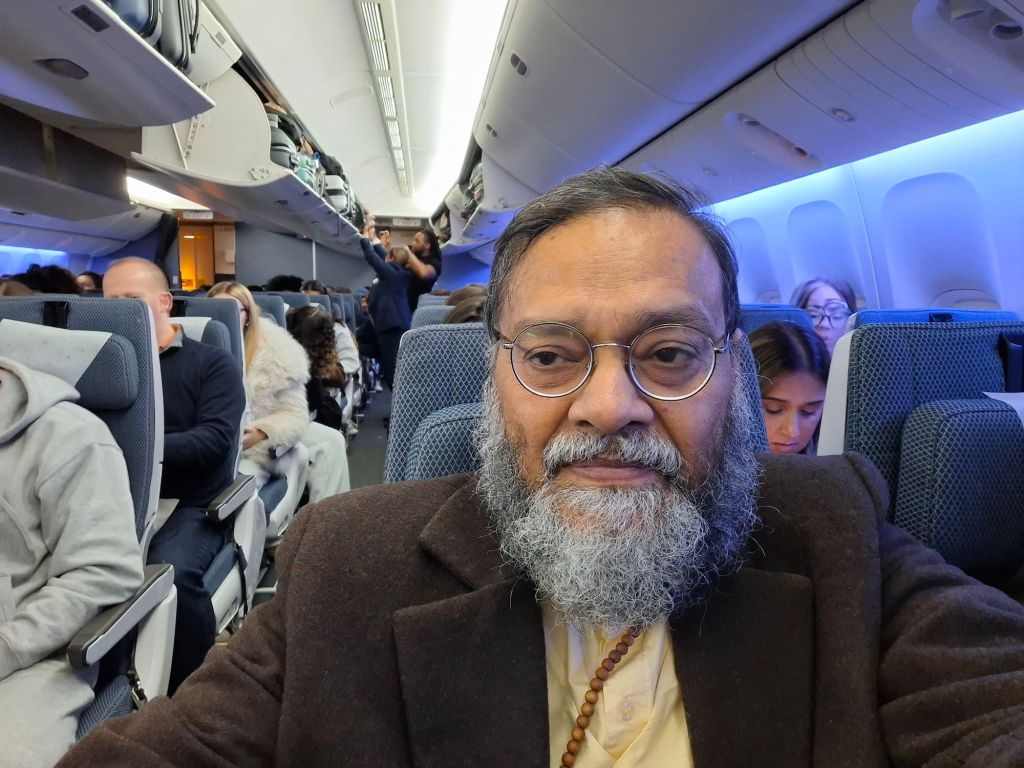
    लंदन को विदा कहकर, इमिग्रेशन प्रक्रिया और सुरक्षा-जांच पूरी करने के बाद मैं ब्रिटिश एयरवेज के विशाल विमान में प्रवेश करता हूँ।

    विमान तीन विभागों में बँटा है। प्रवेश करते ही सर्वोच्च श्रेणी (बिज़नेस क्लास) आती है, जहाँ दो सीटों के बराबर स्थान को एक यात्री के छोटे-से कार्यालय की तरह बनाया गया है—आरामदायक बैठने की जगह और बगल में लैपटॉप व अन्य वस्तुएँ रखने के लिए एक सुव्यवस्थित पटल।

    उसके बाद मध्य श्रेणी, और अंत में इकोनॉमी क्लास।

    पुराणों और रामायण आदि में विमान-यात्राओं के उल्लेख मिलते हैं, पर विमानों का उपयोग अत्यन्त विशिष्ट व्यक्तियों में भी अति विशिष्ट व्यक्तियों तक ही सीमित था। इस विमान में बैठा कोई भी व्यक्ति उन विमानों पर नहीं बैठ सकता था। यह सामर्थ्य विज्ञान और तकनीक ने ही मनुष्य को दिया है।

    लेकिन विज्ञान अपने साथ बहुत-सी और चीज़ें भी लेकर आया—जिनका फल मनुष्यता को भुगतना पड़ रहा है। कारण सरल है: ज्ञान के साथ यदि विवेक न जुड़ सके तो ज्ञान घातक भी हो जाता है।

    विद्यार्थी-जीवन में पढ़ा गया बर्ट्रेंड रसेल का निबंध “Knowledge and Wisdom” यहाँ स्मरण हो आता है। आज की शिक्षा-पद्धति में ‘विज़डम’ की चर्चा पीछे छूट गई है; केवल ‘नॉलेज’, और वह भी वस्तुतः ‘इनफॉर्मेशन’, प्रधान हो गई है।

    भगवद्गीता विज़डम का एक महान स्रोत है।

    विमान के उड़ान भरने की प्रतीक्षा में है। इस बीच मन में अनेक विचार उठते हैं।
    विज्ञान ने पिछले पाँच–छः सौ वर्षों में इतनी तीव्र प्रगति कैसे कर ली?
    उसके पहले यह सब क्यों नहीं बन पाया, जबकि मनुष्य का मस्तिष्क आज से 20 लाख वर्ष पहले भी लगभग इसी आकार का था—जैसा वैज्ञानिक बताते हैं?

    अर्थात हार्डवेयर तो पहले से था; केवल वह सॉफ़्टवेयर नहीं था जो आज इस हार्डवेयर पर स्थापित है।
    स्वतंत्र और निष्पक्ष चिंतन के स्थान पर एक अन्य सॉफ़्टवेयर था—धर्म की पुस्तकों में कही गयी प्रत्येक बात पर बिना किसी विचार या परीक्षण के विश्वास। इस अंध-श्रद्धा ने मनुष्य की चिंतन-शक्ति और शोध-क्षमता को सहस्राब्दियों तक जकड़े रखा।

    जिन लोगों की चिंतन-शक्ति उस अंध-श्रद्धा की बेड़ियों से मुक्त हुई, वे यूरोप के लोग थे। उन्होंने एक नई शक्ति प्राप्त की। यह आध्यात्मिक शक्ति नहीं थी; यह स्वतंत्र बुद्धि की शक्ति थी।
    और इसी स्वतंत्र चिंतन के आधार पर वे प्रकृति के नियम खोज सके। उन्हीं नियमों के आधार पर आज ऐसे विमान बन पाए, जिनमें एक साथ सैकड़ों लोग उड़ान भर सकते हैं।

    विमान उड़ते हैं क्योंकि मनुष्य ने केवल इतना किया कि एयरोडायनेमिक्स के प्राकृतिक नियमों को पहचान कर उन्हें यंत्रों पर लागू कर दिया।

    मैंने लंदन में देखा कि जितने भी मंदिर, मस्जिद और गुरुद्वारे बन रहे हैं, वे अधिकतर उन चर्च भवनों को खरीदकर बनाए जा रहे हैं जहाँ अब ईसाई लोग प्रार्थना करने नहीं आते।
    और यह भी सत्य है कि यही वे समाज हैं, जो अब चर्च नहीं जाते, जिन्होंने यह विमान और ऐसे हजारों यंत्र बनाए, जिनसे मनुष्य प्रकृति पर अधिकार पाने लगा।

    इसके विपरीत, वे समुदाय जो अपनी धार्मिक पुस्तकों से अंधविश्वास-पूर्ण ढंग से चिपके रहे, उनके नाम वैज्ञानिकों की सूची में लगभग अदृश्य हैं। इस विमान में वे भी बैठे हैं, पर इसे बनाने में उनका कोई योगदान नहीं रहा।

    अफ्रीका में बोको हरम ने एक फ़तवा दिया कि स्कूलों में यह न पढ़ाया जाए कि वर्षा वाष्पीकरण से होती है—क्योंकि यह उनकी धार्मिक पुस्तक की बात से मेल नहीं खाता। जब स्कूलों ने यह निर्देश नहीं माना, तो विभिन्न रिपोर्टों के अनुसार उन्होंने लगभग पाँच हज़ार बच्चों की हत्या कर दी।

    एक ओर धर्म की पुस्तक पर ऐसा अंध-विश्वास; और दूसरी ओर किसी पुस्तक को केवल इसलिए पूरी तरह त्याग देना कि उसकी कुछ बातें वैज्ञानिक रूप से असत्य सिद्ध हो गईं—ये दोनों ही मनुष्य की बुद्धि की दो चरम प्रतिक्रियाएँ हैं।

    गीता इन दोनों से बचाती है।
    वह कहती है कि श्रद्धा के बिना ज्ञान नहीं मिलता—
    श्रद्धावान् लभते ज्ञानम्…” (गीता 4:39)
    अर्थात, श्रद्धावान और संयमी व्यक्ति ही ज्ञान प्राप्त करता है।

    आगे एक अन्य चेतावनी भी देती है (गीता 4.40)

    अज्ञश्चाश्रद्दधानश्च संशयात्मा विनश्यति।
    अर्थात, अज्ञानी, अविश्वासी और संशयशील व्यक्ति नष्ट हो जाता है।

    पर यह ध्यान रखने की बात है कि ये दोनों श्लोक आध्यात्मिक ज्ञान पर लागू होते हैं, सांसारिक विज्ञान पर नहीं। गीता कभी भी मनुष्य की विचार-क्षमता को, अध्यात्म के मामले में भी, बाधित नहीं करती।

    क्योंकि गीता एक नया आयाम भी प्रस्तुत करती है जहाँ ईश्वर स्वयं मनुष्य को विचार-स्वतंत्रता देते हैं—
    ( गीता 18.63)

    “इति ते ज्ञानमाख्यातं… विमृश्यैतदशेषेण यथेच्छसि तथा कुरु।”
    अर्थात, मैंने अपना विचार कह दिया। अब इसे पूर्ण रूप से विचारकर, जैसी इच्छा हो वैसा करो।

    यह इच्छा की स्वतंत्रता का स्पष्ट विधान है—और यह भी कि ईश्वर की वाणी स्वीकारने के पहले यह देखना आवश्यक है कि वह वास्तव में ईश्वर-वाणी है भी या नहीं। कहीं कुछ मनुष्यों ने ईश्वर के नाम पर अपने लाभ के लिए कुछ गलत तो नहीं परोस दिया?

    इसलिए जितना वैज्ञानिक ज्ञान ग्रहण करना हो करो, पर अंधविश्वास नहीं—विवेक बनाए रखो। ऐसे अंध- सामान्यीकरणों से बचें कि “जो वेद में नहीं वह कहीं नहीं”।

    बुद्धि और श्रद्धा, ज्ञान और विवेक—इस संतुलन जैसा ढाँचा मैंने कहीं और नहीं देखा। इसके अलावा यह भी स्पष्टोक्ति गीता के अलावा कहीं नहीं देखी कि ईश्वर तक पहुंचने के कई मार्ग हैं : “ये यथा मां प्रपद्यंते…”, कि अहिंसा एक देवी गुण है और हिंसात्मकता एक आसुरी लक्षण, कि युद्ध अंतिम विकल्प है, कि सभी जीवों, सभी मनुष्यों में एक ही ईश्वर आत्मा के रूप में स्थित है…।

    यही कारण है कि मैं गीता के प्रचार के लिए वैश्विक यात्रा पर निकला हूँ—इस यात्रा में भूमि तैयार करने, बीज डालने, और विभिन्न देशों में एक टीम खड़ी करने। बीज अंकुरित हो जाएंगे तो अगली यात्रा में लौटकर उगते पौधों को संभालना होगा।

    मेरे विचारों की शृंखला अचानक रुक जाती है जब विमान-परिचारिकाएँ घोषणा करती हैं कि विमान उड़ान भरने वाला है और सीट-बेल्ट बाँध ली जाए।
    मैं कमर की बेल्ट बाँध लेता हूँ और अपने विचारों की पतंग को भी धीरे से समेटकर मन के एक कोने में रख देता हूँ।

    मेरे विचारों की गति अवरूद्ध कर विमान रनवे पर स्वयं तेज गति पकड़ने लगता है।
    Discover how to find God amidst
    household duties through the wisdom
    of the Bhagavad Gita. Learn practical
    ways of meditation, name-chanting,
    and offering daily actions as worship
    to attain peace and liberation.

    भूतल पर स्थिर विमान में विचारों की उड़ान

    Discover why God chose Bharat (India)
    for His divine incarnations. Explore the
    unique geography, spiritual heritage, and
    sacred culture that made India the eternal
    land of Vedas, sages, and divine manifestations.


  • Today is 4 November 2025.
    I had arrived in England on 26 October. It has been almost a month and a quarter now. Time passed so swiftly that, although I had come thinking that this time I would certainly write a daily travelogue of England and the other countries I visit, I could not do so. But whenever I find the time, I will surely write it down—and after writing, I will arrange all the parts in chronological order.

    It is half past two in the afternoon. A taxi stops in front of the house. It is not an Uber; it is a taxi driven by an Indian—the same person with whom Vinod and Jayashree have developed an old and warm acquaintance.

    This acquaintance itself is a story. One day Vinod received a call from this taxi driver who said, “I also want to become a lifetime member of the temple you are building.” He knew that to become a life member one has to contribute 2000 pounds—which comes to about two and a half lakh rupees in Indian currency.
    He requested Vinod ji that if he could kindly deposit this amount on his behalf, he would repay it in several instalments. Vinod did not know him at all. But Jayashree said, “You should give it; he will certainly return it. He is asking for a good cause.”
    And I have seen that whatever Jayashree says, Vinod does not dismiss—he accepts it joyfully, without resistance. And he was greatly surprised when the very next day the driver deposited the entire amount into Vinod’s account. God must have sent the money to him instantly from somewhere!!

    In the Bhagavad Gita, Bhagavan says that among women reside the qualities of “fame, prosperity, speech, memory, intelligence, patience, and forgiveness.” In Jayashree, the attribute of ‘intelligence’ is clearly visible—the ability to offer the right advice at the right moment, exactly where no one else might think of it. Despite being educated, she embraces the life of a homemaker with perfect ease and takes pride in it; this too is her remarkable quality. Vinod is an IT consultant; he earns well; but there is never any pressure on Jayashree to work, nor does she feel any such need. Always cheerful, simple, and full of energy—if forty people come to a temple event, preparing food for all forty and bringing it is not a burden to her but a joy.

    Vinod and Jayashree—a truly divine couple: Vinod from Madhya Pradesh and Jayashree from Maharashtra. After marriage, Vinod too has become somewhat Marathi. Both are calm, cooperative, and dedicated to the temple with body, mind, and resources. To nurture and beautify the new temple at Dartford from morning till night seems to them like their natural duty.

    There is no equivalent of UPI in London. The convenience one finds in India, where even a small street vendor accepts QR-code payments and astonishes the world, is not available here even in a small measure. I found the same confirmed again in Switzerland. Anyone who comes to India realises that in terms of technological convenience, India has become far more advanced in many areas.

    Therefore the taxi must be paid in cash—going to Heathrow costs about a hundred pounds, which is roughly twelve thousand rupees. I have a forex card and wish to go to an ATM to withdraw some cash. But Vinod and Jayashree have already paid the taxi fare, and they are absolutely unwilling to let me go to the ATM.

    They considered dropping me to Heathrow in their car, but travelling a hundred kilometres in the evening traffic and then returning another hundred kilometres on long, traffic-clogged roads would have been extremely difficult. So even though they wished to, I did not allow them to take that trouble.

    I said that one should keep some cash in one’s pocket, but Jayashree smiled and refused, as if saying, “Everything is taken care of.”

    Ganesh also came to see me off—people affectionately call him “London Ganesh.” He has made seven feature films in Hyderabad and is making two in London. His contribution to advancing the temple is remarkable. His unusual quality is that he can settle any matter over the phone in two or three minutes—as if the network exists not for him but he exists for the network.

    Everyone knew that I would now go to America, then to several countries in Africa, and afterward through the Middle East to India. In every place I was to visit, the devotees of the temple had already found homes where meat and fish are not cooked, and where I would receive sattvic food and a warm, affectionate environment.

    Among all this, one thing became even clearer—my journeys may be new, but the affection I receive feels as though it is age-old.

    As I sat in the taxi, my heart felt heavy, yet full of gratitude.

    Even while living in London, these people have not let their Indian-ness become tarnished in the slightest. Addressing me as “Guruji,” touching my feet with respect, giving their children such values, paying careful and reverent attention to every comfort and discomfort—truly, it felt as though a small India had come alive in London.

    I stayed in their home for nearly twenty days. Their elder son, Kartik, upon hearing of my arrival, willingly vacated his room.

    I interacted with the temple team almost every day. During these days, Vinod, Jayashree, and the other coordinators did not let me spend even a penny. Wherever I needed to go, they took me in their cars. This dedication awakened a new hope in my heart.

    I told them that among the 500 temples, this temple should not become just the 501st—rather, it should become the temple that guides and inspires all the others. The full utility and potential of the temple should become clear to everyone.
    They accepted this with ease and immediately began working in that direction.
    I suggested that the temple must have, even if small, a spiritual library, where people could borrow scriptures or sit and study, so that their religious and spiritual literacy may grow. Today’s Hindu, whether in India or in England, remains religiously and spiritually illiterate. And the fault is not theirs; it lies elsewhere. The suggestion was accepted within a moment, and the library was set up.

    When I return to India, I will send them a large collection of spiritual books—a devotee-transporter is ready to bring it to England free of cost.

    The taxi is speeding toward Heathrow.
    Through the window, London recedes—the magnificent architecture of its houses, the hill-like slopes by the roadside with finely trimmed grass, as if the earth has wrapped itself in a vast green carpet—all slipping away behind me.

    Now the silhouettes of planes taking off and landing have begun to appear—a sign that Heathrow is near.

    At the airport, the taxi driver places my luggage on the trolley and bows in respect. I thank him and bid farewell.
    And at that moment, a feeling deepens within—

    The memories of London are etched in my mind not because it is a wondrous metropolis, but because there are some Indians here who have lived their Indian-ness with such dignity and affection.

    With the weight of my luggage on the trolley, and the weight of gratitude in my heart, I enter Heathrow.

    Discover how to find God amidst
    household duties through the wisdom
    of the Bhagavad Gita. Learn practical
    ways of meditation, name-chanting,
    and offering daily actions as worship
    to attain peace and liberation.

    Travelogue: Farewell to London

    Discover why God chose Bharat (India)
    for His divine incarnations. Explore the
    unique geography, spiritual heritage, and
    sacred culture that made India the eternal
    land of Vedas, sages, and divine manifestations.


  • आज 4 नवंबर 2025 है।
    इंग्लैंड में मैं 26 अक्टूबर को आया था। लगभग सवा महीने हो रहे हैं। समय इतनी तेजी से गुजरा कि यद्यपि यह सोच कर आया था कि इस बार मैं इंग्लैंड और अन्य देशों का हर दिन का यात्रा-वृत्तांत जरूर लिखूंगा, मगर लिख नहीं पाया। लेकिन समय मिलते ही लिखूंगा जरूर। और लिखने के बाद कड़ियों को काल-अनुक्रम से सजा दूंगा।

    दोपहर के ढाई बजे हैं। घर के सामने आकर एक टैक्सी रुकती है। यह ऊबर नहीं; एक भारतीय की चलाई हुई टैक्सी है—वही व्यक्ति जिससे विनोद और जयश्री का पुराना, आत्मीय परिचय बन चुका है।

    यह परिचय भी अपने आप में एक कथा है। एक दिन विनोद के पास इस टैक्सी-चालक का फोन आया कि “आप जो मंदिर बना रहे हैं, उसका मैं भी आजीवन सदस्य बनना चाहता हूँ।” उसे मालूम था कि लाइफ मेंबर बनाने के लिए 2000 पाउंड देने होते हैं—जो भारतीय मुद्रा में लगभग ढाई लाख रुपए होते हैं।
    उसने विनोद जी से विनती की कि यदि वे अपनी ओर से अभी यह राशि जमा कर दें तो वह उन्हें कई किस्तों में चुका देगा। विनोद का उससे कोई परिचय न था। पर जयश्री ने कहा—“आप दे दीजिए, वह अवश्य लौटा देगा। अच्छे काम के लिए मांग रहा है।”
    और मैंने देखा है कि जयश्री की कही बात, विनोद टालते नहीं—सहर्ष, बिना प्रतिरोध के यह बात भी उनके द्वारा मानी गई। और उन्हें बेहद हैरानी तब हुई, जब अगले दिन ड्राइवर ने वह राशि विनोद के अकाउंट में डाल दी। ईश्वर ने उसे ये पैसे कहीं से तुरंत भेज दिए!!

    भगवद्गीता में भगवान कहते हैं कि स्त्रियों में “कीर्ति, श्री, वाक्, स्मृति, मेधा, धृति और क्षमा” ये गुण होते हैं। जयश्री में ‘मेधा’ का यह रूप स्पष्ट दिखाई देता है—ठीक समय पर, जहाँ किसी को विचार भी न आए, वहाँ उपयुक्त सलाह देने की क्षमता। पढ़ी-लिखी होने पर भी पूर्ण सहजता से गृहिणी का जीवन अपनाना, और उसमें गर्व अनुभव करना, यह भी उनका विलक्षण गुण है। विनोद IT कंसल्टेंट हैं; अच्छी आय है; पर जयश्री पर कभी यह दबाव नहीं कि वे भी काम करें—और न ही उन्हें ऐसा कोई अभाव। हमेशा प्रसन्न, सरल, ऊर्जा से भरी—मंदिर के किसी कार्यक्रम में चालीस लोग आ जाएँ, तो चालीस के लिए भोजन बनाकर ले जाना उनके लिए बोझ नहीं, आनंद है।

    विनोद और जयश्री—एक ऐसी दिव्य जोड़ी, जिसमें विनोद मध्य प्रदेश के और जयश्री महाराष्ट्र की। विवाह के बाद विनोद भी कुछ-कुछ मराठी हो गए हैं। दोनों ही शांत, सहयोगी, और मंदिर के लिए तन-मन-धन से जुटे रहने वाले। डार्टफोर्ड के नए मंदिर को सँवारने में ये दोनों सुबह से रात तक लगे रहना मानो अपना नैसर्गिक धर्म समझते हैं।

    लंदन में UPI का कोई समकक्ष नहीं। भारत की जो सुविधा—एक खोमचे वाले को भी QR कोड से भुगतान करने की—दुनिया को विस्मित कर देती है, उसका अंश-मात्र भी यहाँ उपलब्ध नहीं। स्विट्ज़रलैंड में मुझे इसी बात की पुनः पुष्टि मिली। कोई भी विदेशी भारत पहुँचकर यही अनुभव करता है कि तकनीकी सुविधा में भारत कई क्षेत्रों में कहीं अधिक अग्रणी हो चुका है।

    इसीलिए टैक्सी का भुगतान नकद ही करना होता है—हीथ्रो जाने के लिए लगभग सौ पाउंड यानी बारह हजार रुपए देने हैं। मेरे पास फॉरेक्स कार्ड है, और मैं ATM जा कर कैश निकालना चाहता हूँ। पर विनोद-जयश्री ने पहले ही टैक्सी का भुगतान कर दिया है और मुझे ATM के जाने को बिल्कुल तैयार नहीं।

    वे मुझे हीथ्रो तक कार से छोड़ने की सोचते, पर शाम के ट्रैफ़िक में 100 किलोमीटर जाना, और 100 किलोमीटर लौटना—वह भी लंबी जाम-भरी सड़कों पर—अत्यंत कठिन होता। इसलिए मैंने आग्रह कर भी उन्हें कष्ट नहीं लेने दिया।

    मैंने कहा कि जेब में थोड़ा कैश रहना चाहिए, पर जयश्री ने मुस्कुराकर मना कर दिया, जैसे कहती हों—“सब व्यवस्थित है।”

    मुझे विदा देने गणेश भी आए—जिन्हें लोग प्रेम से “लंदन गणेश” कहते हैं। हैदराबाद में सात फीचर फिल्में बना चुके हैं, और लंदन में दो बना रहे हैं। मंदिर को आगे बढ़ाने में उनका योगदान अद्भुत है। उनका अनोखा गुण यह है कि फ़ोन पर ही दो-चार मिनट में कोई भी काम निपटा देते हैं—मानो नेटवर्क उनके लिए नहीं, वे नेटवर्क के लिए बने हों।

    सब जानते थे कि अब मैं अमेरिका, फिर अफ्रीका के कई देशों, और उसके बाद मध्य-पूर्व से होते हुए भारत पहुँचूँगा। मेरी यात्राओं में जहाँ-जहाँ जाना था, वहाँ-वहाँ मंदिर के भक्तों ने ऐसे घर खोज लिए जहाँ मांस-मछली न पकती हो, और जहाँ मुझे सात्त्विक भोजन तथा आत्मीय वातावरण मिले।

    इन सबके बीच, एक बात और स्पष्ट हुई—मेरी अपनी यात्राएँ भले नई हों, पर इनका स्नेह, मानो पुरानों जैसा।

    टैक्सी में बैठते हुए मन भारी भी था और कृतज्ञ भी।

    लंदन में रहकर भी इन लोगों ने भारतीयता को जरा भी मलीन नहीं होने दिया। “गुरुजी” कहकर सम्बोधित करना, सम्मानपूर्वक चरण-स्पर्श, बच्चों को भी ऐसा संस्कार देना, हर सुविधा-असुविधा का अत्यंत आदरपूर्वक ध्यान रखना—मानो लंदन में एक छोटा-सा भारत बस गया हो।

    मैं इनके घर में लगभग 20 दिन रहा। इनके बड़े बेटे कार्तिक ने मेरे आने की खबर सुन कर, अपना कमरा स्वेच्छा से खाली कर दिया।

    मंदिर की टीम से प्रतिदिन मेलजोल रहा। इन दिनों में विनोद-जयश्री और अन्य संचालकों ने मुझे एक पेनी तक खर्च नहीं करने दी। जहाँ जाना होता, अपनी कारों से ले जाते। इस समर्पण ने मेरे मन में एक नयी आशा जगा दी।

    मैंने इन्हें कहा कि 500 मंदिरों के बीच, एक और 501वाँ मंदिर न बने—बल्कि यह ऐसा मंदिर बने जो बाकी मंदिरों का मार्गदर्शक और आदर्श बन जाए। मंदिर की पूरी उपयोगिता और संभावनाएं सभी लोगों को समझ में आने लगें।
    इन्होंने इसे सहजता से स्वीकार किया और उसी दिशा में कार्य प्रारम्भ कर दिया।
    मैंने सुझाव दिया कि मंदिर में एक छोटी-सी ही सही, पर आध्यात्मिक लाइब्रेरी अवश्य हो—जहाँ लोग शास्त्र घर ले जा सकें, या बैठकर अध्ययन कर सकें ताकि उनकी धार्मिक आध्यात्मिक साक्षरता विकसित हो। आज के हिंदू भारत में भी और इंग्लैंड में भी धार्मिक आध्यात्मिक रूप से निरक्षर ही है। और इसमें दोष उनका नहीं, दोष किसी और का है। इस पर क्षणभर में सहमति बनी, और लाइब्रेरी तैयार भी हो गई।

    भारत लौटकर मैं इनके लिए आध्यात्मिक ग्रंथों का बड़ा संग्रह भेजूँगा—एक भक्त-ट्रांसपोर्टर इसे निःशुल्क इंग्लैंड तक लाने को तत्पर है।

    टैक्सी हीथ्रो की ओर दौड़ रही है।
    खिड़की के शीशे से पीछे छूटता हुआ लंदन—उसके घरों का उत्कृष्ट स्थापत्य, सड़क किनारे पहाड़ियों-जैसी ढलानों पर महीन कटाई वाली घास, जैसे धरती ने किसी विशाल हरित कालीन को ओढ़े रखा हो—सब पीछे छूटते जा रहे हैं।

    अब विमानों के उड़ने और उतरने की छवियां दिखने लगी हैं—जो संकेत दे रही हैं कि हीथ्रो निकट है।

    एयरपोर्ट पर टैक्सी-चालक मेरा सामान ट्रॉली पर रखकर झुककर प्रणाम करता है। मैं उसे धन्यवाद देकर विदा करता हूँ।
    और इस क्षण, यह अनुभूति भीतर गहराती है—

    लंदन की स्मृतियाँ मेरे मन में इसलिए एक स्वर्ण रेखा की तरह अंकित नहीं हो गई हैं कि वह अदभुत महानगर है; बल्कि इसलिए कि वहाँ कुछ भारतीय हैं, जिन्होंने अपनी भारतीयता को अद्भुत गरिमा और स्नेह के साथ धारण किया और जिया है।

    मैं ट्रॉली पर सामान का बोझ और हृदय में आभार का भार लिए हीथ्रो में प्रवेश करता हूँ।

    Discover how to find God amidst
    household duties through the wisdom
    of the Bhagavad Gita. Learn practical
    ways of meditation, name-chanting,
    and offering daily actions as worship
    to attain peace and liberation.

    यात्रा वृत्तांत : लंदन से विदा

    Discover why God chose Bharat (India)
    for His divine incarnations. Explore the
    unique geography, spiritual heritage, and
    sacred culture that made India the eternal
    land of Vedas, sages, and divine manifestations.


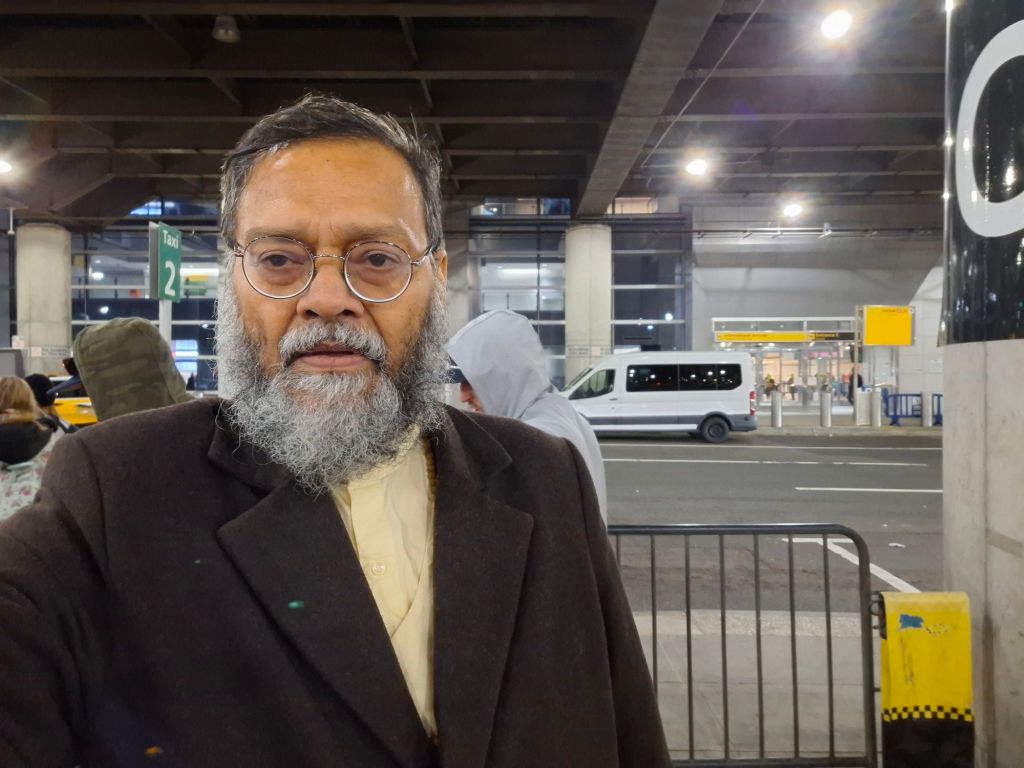
  • Landed at New York’s John F. Kennedy Airport from London at 8:30 on 4 November 2025. I plan to stay in the USA for three to four weeks, and then continue, in the third leg of the world tour, to East African countries—Uganda, Kenya, and Tanzania—which have a significant Indian diaspora.

    Discover how to find God amidst
    household duties through the wisdom
    of the Bhagavad Gita. Learn practical
    ways of meditation, name-chanting,
    and offering daily actions as worship
    to attain peace and liberation.

    Landed in New York, USA

    Discover why God chose Bharat (India)
    for His divine incarnations. Explore the
    unique geography, spiritual heritage, and
    sacred culture that made India the eternal
    land of Vedas, sages, and divine manifestations.


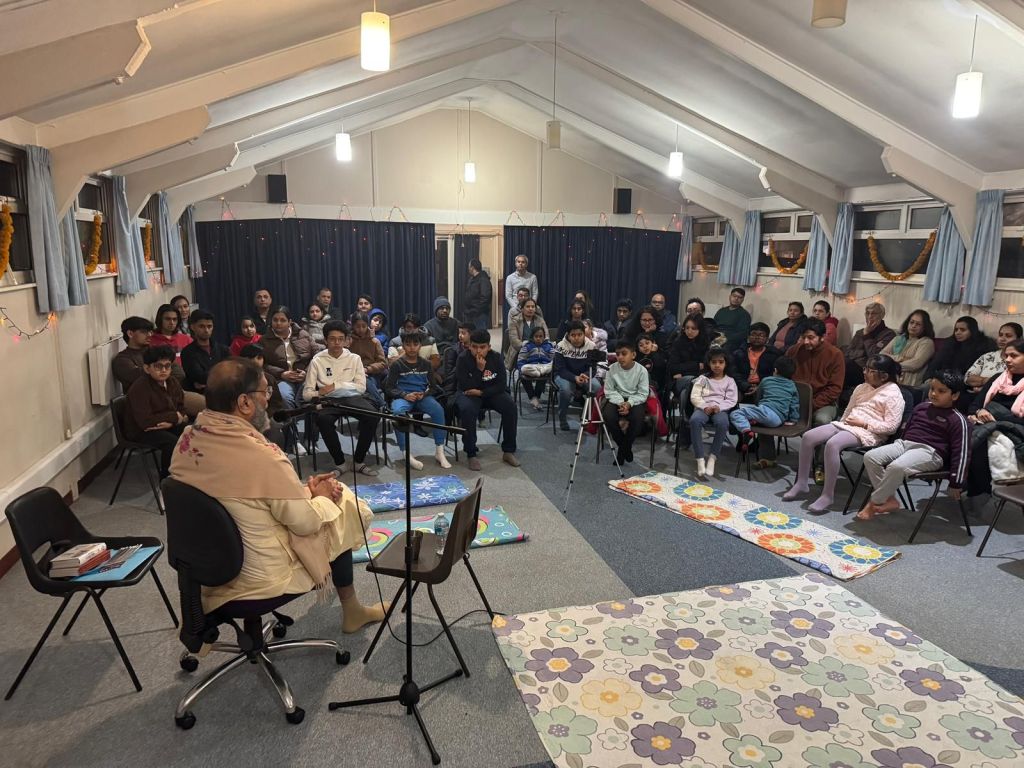
  • 30 नवंबर को लंदन स्थित डार्टफ़र्ड मंदिर में एक कार्यक्रम आयोजित किया गया, जिसमें मुझे बच्चों—और अप्रत्यक्ष रूप से उनके माता-पिता—से संवाद के लिए आमंत्रित किया गया। पहले सत्र में सनातन धर्म से जुड़े कुछ प्रमुख प्रश्नों और उनके उत्तरों पर चर्चा हुई। दूसरा सत्र विद्यार्थियों के लिए अध्ययन-कौशल पर केंद्रित था।

    यद्यपि मुख्य लक्ष्य बच्चे थे, फिर भी माता-पिता स्वाभाविक रूप से इस बातचीत का हिस्सा बने, क्योंकि दोनों ही विषयों में—बच्चों में सनातन धर्म, विशेषकर गीता, की समझ विकसित करना हो या अध्ययन-कौशल को संवर्धित करना—माता-पिता की भूमिका अत्यंत महत्त्वपूर्ण है।

    मंदिर-प्रबंधन ने अनुरोध किया कि जब भी मैं इंग्लैंड में रहूँ, तो बच्चों और उनके माता-पिता के लिए कुछ समय अवश्य निकालूँ, ताकि उन्हें सनातन धर्म, विशेषकर गीता, तथा अध्ययन-कौशल के विषय में मार्गदर्शन दिया जा सके।

    संपूर्ण सत्रों का पूरा वीडियो शीघ्र ही यूट्यूब पर उपलब्ध होगा। फिलहाल, यहाँ एक तस्वीर और एक छोटा वीडियो साझा कर रहा हूँ।


    Discover how to find God amidst
    household duties through the wisdom
    of the Bhagavad Gita. Learn practical
    ways of meditation, name-chanting,
    and offering daily actions as worship
    to attain peace and liberation.

    बच्चों के साथ एक शाम लंदन में

    Discover why God chose Bharat (India)
    for His divine incarnations. Explore the
    unique geography, spiritual heritage, and
    sacred culture that made India the eternal
    land of Vedas, sages, and divine manifestations.


  • On the 30th of November, the Dartford Temple, London, organised a programme in which I was invited to address children—and, by extension, their parents—on some of the common questions asked about Sanatan Dharma, along with their answers. The second session focused on study skills for students.

    Although the primary audience was the children, the parents naturally became part of the session, for in both matters—in nurturing an understanding of Sanatan Dharma, especially the Gita, and in developing sound study habits—the role of parents is essential.

    The temple requested that whenever I am in England, I set aside some time for children and parents, to guide them on Sanatan Dharma and, in particular, the teachings of the Gita, as well as on effective study skills.

    While the complete footage of all the sessions will soon be available on YouTube, here is a photograph and a short video.


    Interacting with young minds

    Discover how to find God amidst
    household duties through the wisdom
    of the Bhagavad Gita. Learn practical
    ways of meditation, name-chanting,
    and offering daily actions as worship
    to attain peace and liberation.

    An Evening with Young Minds at London

    Discover why God chose Bharat (India)
    for His divine incarnations. Explore the
    unique geography, spiritual heritage, and
    sacred culture that made India the eternal
    land of Vedas, sages, and divine manifestations.


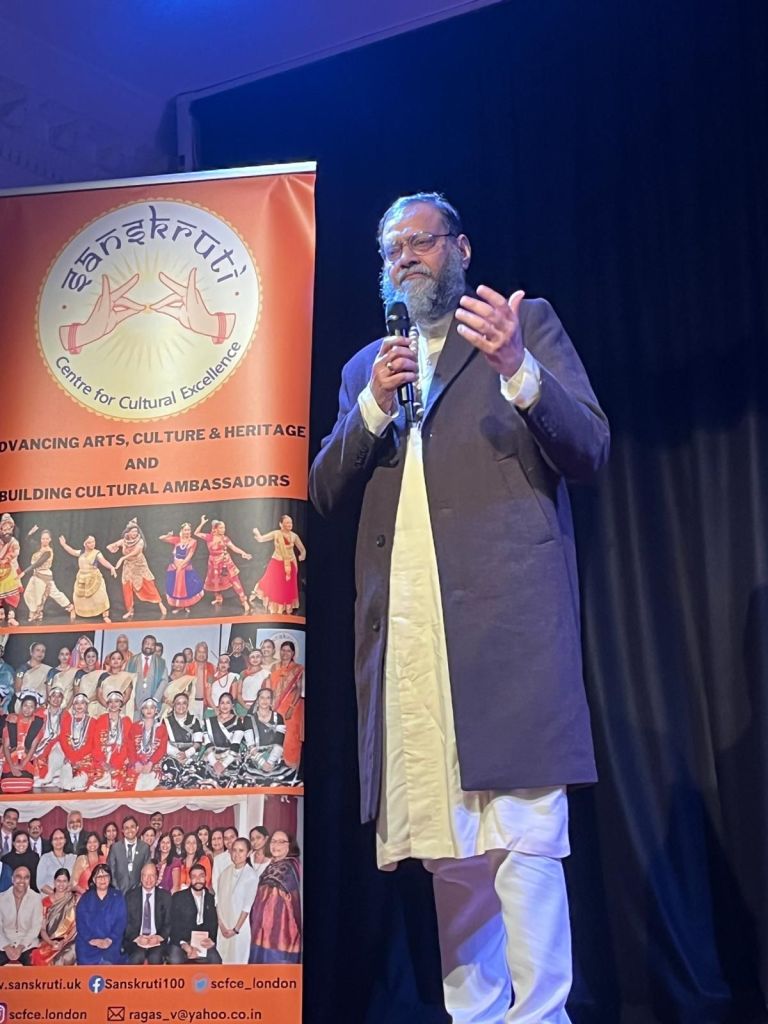
  • लंदन स्थित नेहरू सेंटर में आयोजित गीता महोत्सव के दौरान एक अत्यंत स्मरणीय संध्या बीती।

    संस्कृति केन्द्र Sanskriti Centre, London द्वारा प्रस्तुत विभिन्न नृत्य-अनुक्रमों के बीच मुझे ‘कॉस्मिक ड्रामा’ पर — जो भगवद्गीता में वर्णित सृष्टि-विवरण पर आधारित है —  विचार साझा करने का अवसर मिला।

    नेहरू सेंटर का सभागार विद्वानों, वरिष्ठ पेशेवरों और जागरूक, पश्रोतागण से पूर्ण था।

    अब तक जो कुछ फ़ोटोग्राफ़ प्राप्त हुए हैं, वे साझा कर रहा हूँ। आयोजकों की ओर से सम्मान-स्वरूप शॉल ओढ़ाने के लिए इंग्लैंड की सुप्रसिद्ध कोरियोग्राफ़र और नृत्यांगना रागसुधा जी का हार्दिक धन्यवाद, तथा भगवद्गीता पर वक्तव्य के लिए Sanskriti Centre से मेरा परिचय कराने के लिए काउंसिलर श्री शरद कुमार झा का भी आभार।


    Discover how to find God amidst
    household duties through the wisdom
    of the Bhagavad Gita. Learn practical
    ways of meditation, name-chanting,
    and offering daily actions as worship
    to attain peace and liberation.

    गीता महोत्सव में लंदन की एक स्मरणीय संध्या

    Discover why God chose Bharat (India)
    for His divine incarnations. Explore the
    unique geography, spiritual heritage, and
    sacred culture that made India the eternal
    land of Vedas, sages, and divine manifestations.


  • A memorable evening unfolded at the Nehru Centre, London, during the Gita Mahotsav.

    I had the opportunity to share a reflection on the Cosmic Drama—reconstructed from the account of creation found in the Bhagavad Gita—between the dance presentations organised by the #SanskrutiCentre, London.

    The Nehru Centre hall was filled with scholars, senior professionals, and an attentive, enlightened audience.

    I am sharing a couple of photographs that have reached me so far. My thanks to #Ragasudha ji, the noted choreographer and dancer of England, for the gracious gesture of placing the shawl on behalf of the organisers, and to Councillor Shri Sharad Kumar Jha for introducing me to the Sanskriti Centre for a talk on the Bhagavad Gita.


    Discover how to find God amidst
    household duties through the wisdom
    of the Bhagavad Gita. Learn practical
    ways of meditation, name-chanting,
    and offering daily actions as worship
    to attain peace and liberation.

    A Memorable Evening in London at Gita Mahotsava

    Discover why God chose Bharat (India)
    for His divine incarnations. Explore the
    unique geography, spiritual heritage, and
    sacred culture that made India the eternal
    land of Vedas, sages, and divine manifestations.


  • गीता जब आत्म–संयम की बात करती है, तो वह किसी कठोर साधना, दंड या स्वयं को पीड़ा देने की बात नहीं करती। वह बहुत सहज, बहुत मानवीय ढंग से कहती है कि अपनी इंद्रियों को, अपने मन को, और अपनी इच्छाओं को उचित मर्यादा में रखना—यही वास्तविक संयम है। यह मन को दबाना नहीं है; यह मन को दिशा देना है। यह इंद्रियों को खत्म करना नहीं है; यह उन्हें उचित स्थान देना है।

    गीता के दूसरे अध्याय में भगवान कहते हैं:

    “रागद्वेषवियुक्तैस्तु विषयानिन्द्रियैश्चरन् ।
    आत्मवश्यैर्विधेयात्मा प्रसादमधिगच्छति ॥” (2.64)

    जिसका मन राग और द्वेष से मुक्त है, और जिसकी इंद्रियाँ उसके अपने अधिकार में हैं, वह भीतर से शांति—एक सहज प्रसन्नता—प्राप्त करता है।
    यह आत्म-संयम का प्रथम स्वर है: न दबाव, न हिंसा; केवल स्वच्छ भाव और संतुलित दृष्टि।

    छठे अध्याय में भगवान एक और गहरी बात कहते हैं:

    “उद्धरेदात्मनाऽत्मानं नात्मानमवसादयेत् ।
    आत्मैव ह्यात्मनो बन्धुरात्मैव रिपुरात्मनः ॥” (6.5)

    मनुष्य अपने मन को ऊपर उठाए, गिराए नहीं। मन ही मित्र है और वही मन शत्रु भी बन सकता है। जिस दिन मन को सही दिशा मिल जाती है, उसी दिन साधना सरल हो जाती है।

    और फिर वे कहते हैं:

    “तत्रैकाग्रमनः कृत्वा यतचित्तेन्द्रियक्रियः” (6.12)
    मन को एकाग्र करो।
    इंद्रियों को संयमित करो।
    यही योग का आधार है।

    इसी अध्याय में वे एक निर्णायक वाक्य जोड़ते हैं:

    “बन्धुरात्माऽत्मनस्तस्य येनात्मैवात्मना जितः ॥” (6.6)

    जिसने मन को जीत लिया है, वह अपने भीतर ही सबसे बड़ा सहायक पा लेता है।

    इन श्लोकों का भाव एक ही है—
    मन को पीड़ा देकर नहीं, मन को समझाकर चलाना है।
    इंद्रियों को कुचलना नहीं, उन्हें संयम के भीतर रखना है।
    यही भाव गीता में हर जगह मिलता है।

    अब इसके ठीक विपरीत—आत्म-पीड़न

    भारत की परंपरा में कभी-कभी कठोर तपस्याओं को, शरीर को कष्ट देने वाले साधनों को, महान माना गया—उपवासों से लेकर कठिन व्रतों तक।
    लेकिन गीता इस पर एक अलग, बहुत स्पष्ट दृष्टि रखती है।

    भगवान कहते हैं:

    “कर्शयन्तः शरीरस्थं भूतग्राममचेतसः ।
    मां चैवान्तःशरीरस्थं तान्विद्ध्यासुरनिश्चयान् ॥” (17.6)

    जो लोग अज्ञानवश अपने शरीर को कष्ट देते हैं, वे समझ लें कि उसी शरीर में स्थित मैं भी कष्ट पाता हूँ। ऐसी वृत्ति आसुरी कही गई है।

    और आगे वे जोड़ते हैं:

    “मूढग्राहेनात्मनो यत्पीडया क्रियते तपः ।
    परस्योत्सादनार्थं वा तत्तामसमुदाहृतम् ॥” (17.19)

    जो तप मूढ़तावश, अपने या दूसरों को पीड़ा देकर किया जाता है—वह तामस तप है।

    वह गुरु के स्वर में, करुणा के स्वर में कहते हैं—
    “अपने को मत सताओ।
    मैं पीड़ा से नहीं, प्रेम से प्रसन्न होता हूँ।
    मैं संयम में हूँ, आत्म हिंसा में नहीं।”

    गीता का अंतिम निष्कर्ष

    ईश्वर उन साधकों से प्रसन्न नहीं होते जो अपने शरीर को यातना देते हैं।
    वे उन लोगों से प्रसन्न होते हैं—
    जो दूसरों की पीड़ा दूर करते हैं,
    जो किसी की मुस्कान का कारण बनते हैं,
    जो अपनी इंद्रियों और मन को स्वस्थ मर्यादा में रखते हैं,
    जो जीवन को संतुलन, सद्भाव और शांति से जीते हैं।

    यही गीता का आत्म–संयम है—
    स्वयं को उठाने वाला संयम, स्वयं को तोड़ने वाला नहीं।

    Discover how to find God amidst
    household duties through the wisdom
    of the Bhagavad Gita. Learn practical
    ways of meditation, name-chanting,
    and offering daily actions as worship
    to attain peace and liberation.

    विषय : गीता में आत्म–संयम का अर्थ

    Discover why God chose Bharat (India)
    for His divine incarnations. Explore the
    unique geography, spiritual heritage, and
    sacred culture that made India the eternal
    land of Vedas, sages, and divine manifestations.


  • When the Gita speaks of self-restraint, it does not speak of harsh discipline, punishment, or inflicting pain upon oneself. It speaks in a very natural, very human way. To keep one’s senses, one’s mind, and one’s desires within a reasonable and ethical boundary—this is true self-restraint. It is not suppressing the mind; it is guiding it. It is not destroying the senses; it is giving them their proper place.

    In the second chapter, the Lord says:

    “Rāga-dveṣa-viyuktais tu viṣayān indriyaiś caran
    Ātma-vaśyair vidheyātmā prasādam adhigacchati.” (2.64)

    One who moves among sense-objects, free from attachment and aversion, with senses held under self-control—such a person attains inner calm, a quiet joy.
    This is the first note of self-restraint: no pressure, no violence—only clarity and balance.

    In the sixth chapter the Lord offers a deeper insight:

    “Uddhared ātmanātmānaṁ nātmānam avasādayet,
    Ātmāiva hyātmano bandhur ātmāiva ripur ātmanaḥ.” (6.5)

    A person must lift oneself by one’s own mind, not degrade oneself. The mind is indeed one’s friend, and the mind is also one’s enemy. The day the mind receives the right direction, the path becomes easier.

    And then He adds:

    “Tatraikāgram manaḥ kṛtvā yata-cittendriya-kriyaḥ.” (6.12)
    Make the mind one-pointed.
    Restrain the senses.
    This is the foundation of yoga.

    A few verses later He states:

    “Bandhur ātmātmanas tasya yenātmaivātmanā jitaḥ.” (6.6)

    One who has mastered the mind finds the greatest ally within oneself.

    All these verses carry the same message—
    The mind is not to be hurt but understood.
    The senses are not to be crushed but held in balance.
    This is the spirit that flows throughout the Gita.

    Now the opposite—Self-mortification

    In the broader Indian tradition, severe austerities—fasting, bodily hardship, difficult vows—were sometimes considered great achievements.
    But the Gita takes a very different and very compassionate view.

    The Lord says:

    “Karśayantaḥ śarīrasthaṁ bhūta-grāmam acetasaḥ,
    Māṁ caivāntaḥ-śarīrasthaṁ tān viddhy āsura-niścayān.” (17.6)

    Those who, out of ignorance, torture their own bodies should know that they also torment Me, who dwell in that very body. Such tendencies are called demonic.

    He adds:

    “Mūḍha-grāhenātmano yat pīḍayā kriyate tapaḥ,
    Parasyotsādanārthaṁ vā tat tāmasam udāhṛtam.” (17.19)

    Austerity performed foolishly, causing pain to oneself or to others—this is called tāmasik tapas, the lowest form of austerity.

    Here the Lord speaks in the voice of a compassionate teacher:
    “Do not hurt yourself.
    I am not pleased by pain.
    I am pleased by love.
    I dwell in restraint, not in self-violence.”

    The Gita’s Final Conclusion

    God is not pleased with those who torture their bodies.
    He is pleased with those
    who remove the suffering of others,
    who become a reason for someone’s smile,
    who keep their senses and mind in healthy balance,
    who live with harmony, clarity and peace.

    This is the Gita’s teaching on self-restraint—
    a discipline that uplifts the self,
    never one that breaks it.

    Discover how to find God amidst
    household duties through the wisdom
    of the Bhagavad Gita. Learn practical
    ways of meditation, name-chanting,
    and offering daily actions as worship
    to attain peace and liberation.

    The meaning of self-restraint in the Bhagavad Gita

    Discover why God chose Bharat (India)
    for His divine incarnations. Explore the
    unique geography, spiritual heritage, and
    sacred culture that made India the eternal
    land of Vedas, sages, and divine manifestations.


/* Remove extra space under images in post cards */ .wp-block-post-template .wp-block-image { margin-bottom: 0; } .wp-block-image figcaption:empty { display: none; } /* If you’re using Gallery for the thumbnail grid */ .wp-block-gallery { gap: 0; } .wp-block-gallery.has-nested-images figure.wp-block-image { margin: 0; }