• Hari Sharanam!

    BrahmBodhi stands as a beacon in the spiritual realm, a venerated leader, accomplished author, profound thinker, and dedicated educationist. Holding the esteemed position of Founder and President of the Gita Global Family, he also champions the principles and philosophies as the Head of Bhagavad Dharma, a spiritual path deeply rooted in the teachings of the revered Bhagavad Gita.

    Under his visionary leadership, the Gita Global Family has burgeoned into an organization with far-reaching wings, including the educational pioneer Gita Global Gurukul Schools, the enlightening channel of Gita Global Publications, and the yet to be unveiled Gita Dham—a sanctuary conceived to be an amalgamation of a Gita temple, a hub dedicated to poverty alleviation, and a vibrant center promoting art and culture.

    BrahmBodhi is committed to unlocking the boundless potential within individuals and communities, propelling them towards a life rich in purpose and fulfillment. A staunch advocate for education and personal growth, he has embarked on a journey of empowerment, seeding knowledge and fostering development for years.

    We invite you to delve deeper into the multifaceted world of BrahmBodhi through this portal, designed to be a gateway to his diverse projects and his presence on various social media platforms. Herein, you will find an enriching assembly of his oeuvre, encompassing insightful articles, transformative videos, and enlightening books — all curated to guide you towards a life of heightened fulfillment and purpose.

    आज ध्यान दिवस है। यह निश्चय ही प्रसन्नता की बात है कि भारत की पहल पर संयुक्त राष्ट्र संघ द्वारा विश्व का ध्यान ‘ध्यान’ की ओर आकर्षित किया गया है, और यह प्रयास अब प्रत्येक वर्ष होता रहेगा।
    परन्तु ध्यान के विषय में समाज में अनेक भ्रांत धारणाएँ प्रचलित हैं, जिनका निराकरण अत्यन्त आवश्यक है।

    ध्यान पर हुए एक अंतरराष्ट्रीय सर्वेक्षण के अनुसार, आज संसार में लगभग 1100 प्रकार के ध्यान प्रचलित हैं। ऐसी स्थिति में यह प्रश्न अत्यन्त महत्त्वपूर्ण हो जाता है कि—
    हम कौन-सा ध्यान करें, और क्यों करें?

    ध्यान के मूलतः दो उद्देश्य

    ध्यान को उद्देश्य के आधार पर मोटे तौर पर दो वर्गों में समझा जा सकता है—

    1. ईश्वर-प्राप्ति के लिए किया जाने वाला ध्यान
    2. अन्य ध्यान, जिनका उद्देश्य न तो ईश्वर-प्राप्ति है, न ही आध्यात्मिक उन्नयन

    ईश्वर-प्राप्ति के लिए ध्यान : दो मार्ग

    (1) निर्गुण–निराकार ध्यान

    यह वह ध्यान है जिसमें निर्गुण, निराकार ईश्वर या निराकार आत्मा का ध्यान किया जाता है।
    इसका सर्वाधिक प्रामाणिक और शास्त्रीय स्रोत महर्षि पतंजलि का अष्टांग योग है, जैसा कि योगसूत्र में वर्णित है। इसमें ध्यान की सीढ़ी-दर-सीढ़ी, क्रमिक प्रक्रिया बताई गई है—यम, नियम, आसन, प्राणायाम, प्रत्याहार, धारणा, ध्यान और समाधि।

    इसी अष्टांग योग से अनेक शाखाएँ निकलकर विकसित हुईं, जिन्हें थोड़े-बहुत भेद के साथ हठयोग, राजयोग, क्रियायोग आदि नामों से जाना जाता है।
    इन प्रक्रियाओं में कुंडलिनी जागरण और षट्चक्र-भेदन जैसी साधनाएँ भी सम्मिलित हैं।

    सामान्य रूप से ये साधनाएँ सन्न्यासियों के लिए अधिक उपयुक्त मानी गई हैं—जो संसार से निवृत्त होकर, रजोगुण से मुक्त हो, केवल ईश्वर-प्राप्ति के लिए जीवन समर्पित करते हैं।

    यह मार्ग अत्यन्त क्लेशकारी है—जैसा कि स्वयं भगवान श्रीकृष्ण ने श्रीमद्भगवद्गीता के द्वादश अध्याय में कहा है—

    श्लोक (12.5):

    क्लेशोऽधिकतरस्तेषामव्यक्तासक्तचेतसाम् ।
    अव्यक्ता हि गतिर्दुःखं देहवद्भिरवाप्यते ॥

    अर्थात—
    निर्गुण, अव्यक्त तत्त्व में आसक्त चित्त वालों के लिए साधना अत्यधिक क्लेशयुक्त होती है, क्योंकि देहधारी मनुष्य के लिए अव्यक्त मार्ग कठिन है।

    (2) सगुण ईश्वर का ध्यान

    ईश्वर-प्राप्ति का दूसरा मार्ग सगुण ध्यान है।
    इसमें ईश्वर की मूर्ति या चित्र को सामने रखकर खुली आँखों से दर्शन किया जाता है—
    एक-एक अंग, एक-एक आभूषण, एक-एक भाव का निरीक्षण किया जाता है।
    फिर आँखें मूँदकर उसी रूप का ध्यान किया जाता है।

    धीरे-धीरे वह छवि मन में पूर्णतः अंकित हो जाती है।
    एक समय ऐसा आता है जब बाह्य चित्र की आवश्यकता नहीं रहती।
    और आगे चलकर वही छवि ध्यान में जीवंत दर्शन का रूप ले लेती है।

    भागवत पुराण में सगुण ध्यान की दो विधियाँ बताई गई हैं, जिनमें से यह एक प्रमुख विधि है।

    इस मार्ग में सामान्यतः कोई मानसिक संकट उत्पन्न नहीं होता।

    गृहस्थों के लिए चेतावनी

    कभी-कभी कुछ गुरुजन सामान्य गृहस्थों को भी ‘भ्रूवोर्मध्ये ध्यान’, कुंडलिनी जागरण, या निराकार साधनाओं की दीक्षा देने लगते हैं।
    यह स्थिति गंभीर संकट उत्पन्न कर सकती है।

    निराकार ध्यान या कुंडलिनी-साधना, यदि सिद्ध गुरु के बिना की जाए, तो यह साधक को मानसिक असंतुलन की ओर भी ले जा सकती है।
    केवल वीडियो देखकर, या अधपके गुरु से दीक्षा लेकर ऐसी साधनाएँ नहीं करनी चाहिए।

    अष्टांग योग की ध्यान-प्रक्रिया वही सिखा सकता है, जिसने स्वयं उस मार्ग से परम सिद्धि प्राप्त की हो।

    ईश्वर-प्राप्ति के अतिरिक्त ध्यान

    आज प्रचलित बहुत-से ध्यान ईश्वर-प्राप्ति या आत्म-साक्षात्कार के लिए नहीं होते।
    उनका उद्देश्य केवल—

    मानसिक शांति

    तनाव से मुक्ति

    अच्छी अनुभूति

    नशे या क्रोध जैसी आदतों से छुटकारा

    होता है।
    इन उद्देश्यों के लिए भी अलग-अलग ध्यान-पद्धतियाँ हैं, जिनसे मन कुछ समय के लिए शांत हो जाता है।

    उद्देश्य स्पष्ट हो, तभी ध्यान सार्थक

    इसलिए ध्यान करने से पहले यह स्पष्ट कर लेना चाहिए कि—
    हम ध्यान क्यों करना चाहते हैं?
    उसी उद्देश्य के अनुसार ध्यान का चयन होना चाहिए।

    मन का भटकाव और गाइडेड मेडिटेशन

    ध्यान में सबसे बड़ी कठिनाई है—मन का भटकना।
    इसे नियंत्रित करने के लिए गाइडेड मेडिटेशन सहायक होता है, जिसमें संगीत और मार्गदर्शन की आवाज के साथ ध्यान किया जाता है।

    इससे मन कुछ समय के लिए निर्देशित रहता है और अस्थायी शांति की अनुभूति होती है।

    परन्तु यह शांति स्थायी नहीं होती।

    स्थायी शांति का उपाय : गीता का मार्ग

    मन की स्थायी शांति का उपाय केवल ध्यान नहीं है।
    उसका उपाय है—

    श्रीमद्भगवद्गीता का अनासक्ति योग

    कामनाओं के अतिरेक में कमी

    संतोष का अभ्यास

    अत्यधिक कामनाएँ, विशेषकर रजोगुण से प्रेरित क्रियाएँ, मन को अशांत कर देती हैं।
    इसलिए आवश्यक है कि मनुष्य कुछ आवश्यक कामनाओं पर ही मन केंद्रित करे और शेष से विरक्त होकर संतोष में स्थित हो।

    क्योंकि संतोष से ही शांति आती है।

    रजोगुण और ध्यान

    जब तक मनुष्य में रजोगुण प्रधान रहता है, तब तक ध्यान स्थिर नहीं हो सकता।
    रजोगुण कर्म के लिए बाध्य करता है, आवेग उत्पन्न करता है।

    इसी को भगवान श्रीकृष्ण गीता में कहते हैं—

    श्लोक (18.24 का भाव):

    सर्वकर्मसमारम्भाः कामसंकल्पवर्जिताः…

    अर्थात—
    जो कर्म कामना और संकल्प से प्रेरित होकर आरम्भ होते हैं, वे रजोगुण को बढ़ाते हैं।

    गृहस्थ और कुंडलिनी साधना

    एक साधिका ने मुझसे पूछा कि वे पिछले दस वर्षों से दोनों भ्रुओं के मध्य ध्यान करने का प्रयास कर रही हैं, पर सफल नहीं हो सकीं।
    उनके गुरु ने उन्हें कुंडलिनी-संबंधी साधना दी है।

    मेरा मानना है कि अत्यधिक गृहस्थीय कर्तव्यों से बँधे व्यक्ति के लिए यह मार्ग अत्यन्त कठिन है।
    जब तक रजोगुण को नियंत्रित कर, सत्त्वगुण में स्थित होकर कर्म नहीं किए जाते, तब तक ध्यान स्थिर नहीं होता।

    ईश्वर-प्राप्ति के सरल और सुरक्षित मार्ग

    ईश्वर-प्राप्ति के लिए कुंडलिनी जागरण आवश्यक नहीं है।
    श्रीमद्भगवद्गीता ने अनेक सरल, सुरक्षित और प्रभावी मार्ग बताए हैं—

    भक्ति योग

    कर्म योग

    जप योग

    परोपकार योग

    गीता-ज्ञान प्रसार योग

    इन सभी में ज्ञान का तत्व अनिवार्य है, यद्यपि ये ‘ज्ञान योग’ की कठिन साधना से भिन्न हैं।

    इन मार्गों का अनुसरण करके, विशेषकर गृहस्थ व्यक्ति, बिना किसी मानसिक या आध्यात्मिक जोखिम के, ईश्वर की ओर तीव्र गति से प्रगति कर सकता है।

    समापन

    अतः आज ध्यान दिवस के अवसर पर, ध्यान के विषय में इन तथ्यों को जानकर, उन पर मनन करें और ध्यान के तत्त्व को सही रूप में समझने का प्रयास करें।

    हरि शरणम्!

    Discover how to find God amidst
    household duties through the wisdom
    of the Bhagavad Gita. Learn practical
    ways of meditation, name-chanting,
    and offering daily actions as worship
    to attain peace and liberation.

    ध्यान दिवस : सही दृष्टि और सही चयन

    Discover why God chose Bharat (India)
    for His divine incarnations. Explore the
    unique geography, spiritual heritage, and
    sacred culture that made India the eternal
    land of Vedas, sages, and divine manifestations.


  • Hari Sharanam!

    BrahmBodhi stands as a beacon in the spiritual realm, a venerated leader, accomplished author, profound thinker, and dedicated educationist. Holding the esteemed position of Founder and President of the Gita Global Family, he also champions the principles and philosophies as the Head of Bhagavad Dharma, a spiritual path deeply rooted in the teachings of the revered Bhagavad Gita.

    Under his visionary leadership, the Gita Global Family has burgeoned into an organization with far-reaching wings, including the educational pioneer Gita Global Gurukul Schools, the enlightening channel of Gita Global Publications, and the yet to be unveiled Gita Dham—a sanctuary conceived to be an amalgamation of a Gita temple, a hub dedicated to poverty alleviation, and a vibrant center promoting art and culture.

    BrahmBodhi is committed to unlocking the boundless potential within individuals and communities, propelling them towards a life rich in purpose and fulfillment. A staunch advocate for education and personal growth, he has embarked on a journey of empowerment, seeding knowledge and fostering development for years.

    We invite you to delve deeper into the multifaceted world of BrahmBodhi through this portal, designed to be a gateway to his diverse projects and his presence on various social media platforms. Herein, you will find an enriching assembly of his oeuvre, encompassing insightful articles, transformative videos, and enlightening books — all curated to guide you towards a life of heightened fulfillment and purpose.

    Today is Meditation Day. It is certainly a matter of joy that, at India’s initiative, the United Nations has drawn the attention of the world toward ‘meditation’, and that this effort will now continue every year.
    However, many misconceptions about meditation are prevalent in society, and it is extremely necessary to remove them.

    According to an international survey conducted on meditation, nearly 1,100 types of meditation are practiced in the world today. In such a situation, an important question naturally arises:
    Which meditation should we practice, and why?

    The Two Fundamental Objectives of Meditation

    On the basis of purpose, meditation can broadly be understood in two categories:

    1. Meditation undertaken for God-realisation
    2. Other forms of meditation, whose aim is neither God-realisation nor spiritual elevation

    Meditation for God-Realisation: Two Paths

    (1) Nirguna–Nirakara Meditation (Meditation on the Formless Absolute)

    This is the meditation in which one contemplates the nirguna, nirakara (attributeless, formless) God, or the formless Self.
    Its most authentic and classical source is the Ashtanga Yoga of Maharshi Patanjali, as described in the Yoga Sutras. Here, meditation is presented as a gradual, step-by-step process—yama, niyama, asana, pranayama, pratyahara, dharana, dhyana, and samadhi.

    From this Ashtanga Yoga, several branches developed over time, with minor variations, known as Hatha Yoga, Raja Yoga, Kriya Yoga, and so on.
    These systems also include practices such as kundalini awakening and the piercing of the six chakras.

    Generally, these disciplines are considered more suitable for sannyasis—those who withdraw from worldly life, free themselves from rajo-guna, and dedicate their entire existence solely to the pursuit of God-realisation.

    This path is extremely arduous, as Lord Krishna Himself states in the Bhagavad Gita, Chapter Twelve:

    Verse (12.5):
    kleśo’ dhikataras teṣām avyaktāsakta-cetasām |
    avyaktā hi gatir duḥkhaṁ dehavadbhir avāpyate ||

    Meaning:
    For those whose minds are attached to the unmanifest, the path is far more difficult, because the way of the unmanifest is painful and hard to attain for embodied beings.

    (2) Meditation on the Saguna (Personal) God

    The second path of God-realisation is saguna meditation.
    In this practice, one places an image or idol of God before oneself and contemplates it with open eyes—observing each limb, each ornament, and each expression. Thereafter, one closes the eyes and meditates upon the same form.

    Gradually, the image becomes fully imprinted on the mind.
    A stage comes when the external image is no longer required.
    With further practice, that inner image becomes vivid and living, as if one is receiving direct divine vision during meditation.

    The Bhagavata Purana describes two methods of saguna meditation, of which this is one major method.

    On this path, generally, no mental danger arises.

    A Caution for Householders

    At times, some teachers also prescribe practices like meditation between the eyebrows, kundalini awakening, or formless disciplines to ordinary householders.
    This can create serious problems.

    Formless meditation or kundalini practices, if undertaken without a fully realised master, can even lead the practitioner toward mental imbalance. Such practices should not be adopted merely by watching videos or by receiving initiation from an inadequately trained teacher.

    Only one who has himself attained supreme realisation through the Ashtanga Yoga path is qualified to teach such meditation.

    Meditation Beyond God-Realisation

    Many forms of meditation prevalent today are not meant for God-realisation or self-realisation.
    Their objectives are limited to:

    mental peace

    relief from stress

    pleasant inner experiences

    freedom from habits such as addiction or anger

    For these purposes, different techniques exist, through which the mind becomes calm for some time.

    Meditation Is Meaningful Only When the Purpose Is Clear

    Therefore, before practicing meditation, one must clearly understand:
    Why do I want to meditate?
    The choice of meditation should be made strictly according to that purpose.

    Restlessness of the Mind and Guided Meditation

    The greatest difficulty in meditation is the wandering of the mind.
    To control this, guided meditation can be helpful, where meditation is done along with music and spoken instructions.

    Through this, the mind remains directed for a while, and a temporary sense of peace is experienced.

    However, this peace is not permanent.

    The Path to Lasting Peace: The Teaching of the Gita

    The means to lasting peace is not meditation alone.
    It lies in:

    the yoga of non-attachment taught in the Bhagavad Gita

    reduction of excessive desires

    the practice of contentment

    Excessive desires—especially actions driven by rajo-guna—disturb the mind.
    Therefore, one should focus the mind only on essential desires, renounce the rest, and remain established in contentment.

    For peace arises from contentment alone.

    Rajo-Guna and Meditation

    As long as rajo-guna predominates in a person, meditation cannot become steady.
    Rajo-guna compels one toward action and creates inner agitation.

    This is what Lord Krishna points out in the Gita:

    Indicative sense of Verse (18.24):
    sarva-karma-samārambhāḥ kāma-saṅkalpa-varjitāḥ …

    Meaning:
    Actions that are initiated under the impulse of desire and mental projection increase rajo-guna.

    The Householder and Kundalini Practice

    A woman seeker once asked me that for the past ten years she has been trying to concentrate between the eyebrows, yet has not succeeded. Her teacher has given her a kundalini-related practice.

    In my view, this path is extremely difficult for a person bound by heavy household responsibilities. Until rajo-guna is restrained and actions are performed while established in sattva-guna, meditation does not become steady.

    Simple and Safe Paths to God-Realisation

    Kundalini awakening is not necessary for God-realisation.
    The Bhagavad Gita has shown several simple, safe, and effective paths:

    Bhakti Yoga

    Karma Yoga

    Japa Yoga

    Yoga of Selfless Service

    Yoga of Spreading Gita-Knowledge

    In all these paths, the element of knowledge is essential, though they are different from the rigorous discipline of classical Jnana Yoga.

    By following these paths, especially a householder can progress rapidly toward God without any mental or spiritual risk.

    Conclusion

    Therefore, on this Meditation Day, one should reflect upon these facts about meditation, contemplate them deeply, and strive to understand the true essence of meditation in its proper form.

    Hari Sharanam!

    Discover how to find God amidst
    household duties through the wisdom
    of the Bhagavad Gita. Learn practical
    ways of meditation, name-chanting,
    and offering daily actions as worship
    to attain peace and liberation.

    Meditation Day: The Right Perspective and Right Choice

    Discover why God chose Bharat (India)
    for His divine incarnations. Explore the
    unique geography, spiritual heritage, and
    sacred culture that made India the eternal
    land of Vedas, sages, and divine manifestations.


  • Hari Sharanam!

    BrahmBodhi stands as a beacon in the spiritual realm, a venerated leader, accomplished author, profound thinker, and dedicated educationist. Holding the esteemed position of Founder and President of the Gita Global Family, he also champions the principles and philosophies as the Head of Bhagavad Dharma, a spiritual path deeply rooted in the teachings of the revered Bhagavad Gita.

    Under his visionary leadership, the Gita Global Family has burgeoned into an organization with far-reaching wings, including the educational pioneer Gita Global Gurukul Schools, the enlightening channel of Gita Global Publications, and the yet to be unveiled Gita Dham—a sanctuary conceived to be an amalgamation of a Gita temple, a hub dedicated to poverty alleviation, and a vibrant center promoting art and culture.

    BrahmBodhi is committed to unlocking the boundless potential within individuals and communities, propelling them towards a life rich in purpose and fulfillment. A staunch advocate for education and personal growth, he has embarked on a journey of empowerment, seeding knowledge and fostering development for years.

    We invite you to delve deeper into the multifaceted world of BrahmBodhi through this portal, designed to be a gateway to his diverse projects and his presence on various social media platforms. Herein, you will find an enriching assembly of his oeuvre, encompassing insightful articles, transformative videos, and enlightening books — all curated to guide you towards a life of heightened fulfillment and purpose.

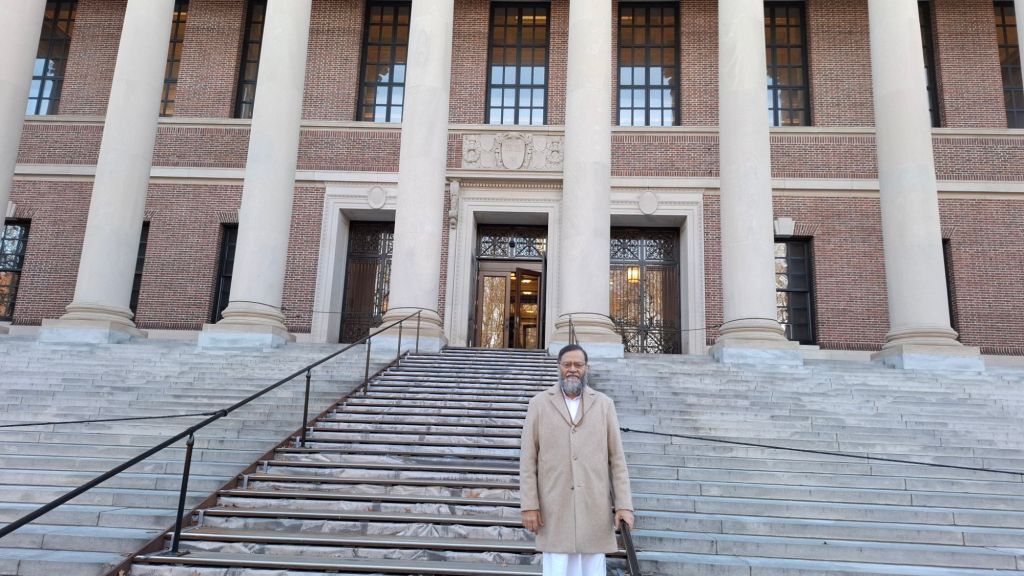
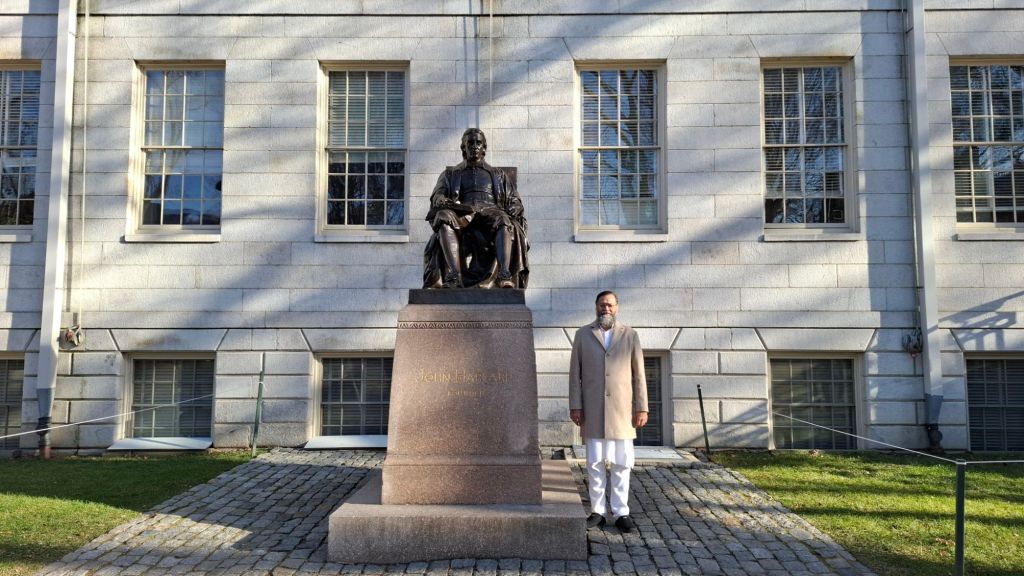
    With the Statue of Harward, the Founder of the Harvard University, USA

    Discover how to find God amidst
    household duties through the wisdom
    of the Bhagavad Gita. Learn practical
    ways of meditation, name-chanting,
    and offering daily actions as worship
    to attain peace and liberation.

    At Harward University, USA on 20 November, 2025

    Discover why God chose Bharat (India)
    for His divine incarnations. Explore the
    unique geography, spiritual heritage, and
    sacred culture that made India the eternal
    land of Vedas, sages, and divine manifestations.


  • Hari Sharanam!

    BrahmBodhi stands as a beacon in the spiritual realm, a venerated leader, accomplished author, profound thinker, and dedicated educationist. Holding the esteemed position of Founder and President of the Gita Global Family, he also champions the principles and philosophies as the Head of Bhagavad Dharma, a spiritual path deeply rooted in the teachings of the revered Bhagavad Gita.

    Under his visionary leadership, the Gita Global Family has burgeoned into an organization with far-reaching wings, including the educational pioneer Gita Global Gurukul Schools, the enlightening channel of Gita Global Publications, and the yet to be unveiled Gita Dham—a sanctuary conceived to be an amalgamation of a Gita temple, a hub dedicated to poverty alleviation, and a vibrant center promoting art and culture.

    BrahmBodhi is committed to unlocking the boundless potential within individuals and communities, propelling them towards a life rich in purpose and fulfillment. A staunch advocate for education and personal growth, he has embarked on a journey of empowerment, seeding knowledge and fostering development for years.

    We invite you to delve deeper into the multifaceted world of BrahmBodhi through this portal, designed to be a gateway to his diverse projects and his presence on various social media platforms. Herein, you will find an enriching assembly of his oeuvre, encompassing insightful articles, transformative videos, and enlightening books — all curated to guide you towards a life of heightened fulfillment and purpose.

    Question

    Gurudev, pranam 🙏🙏

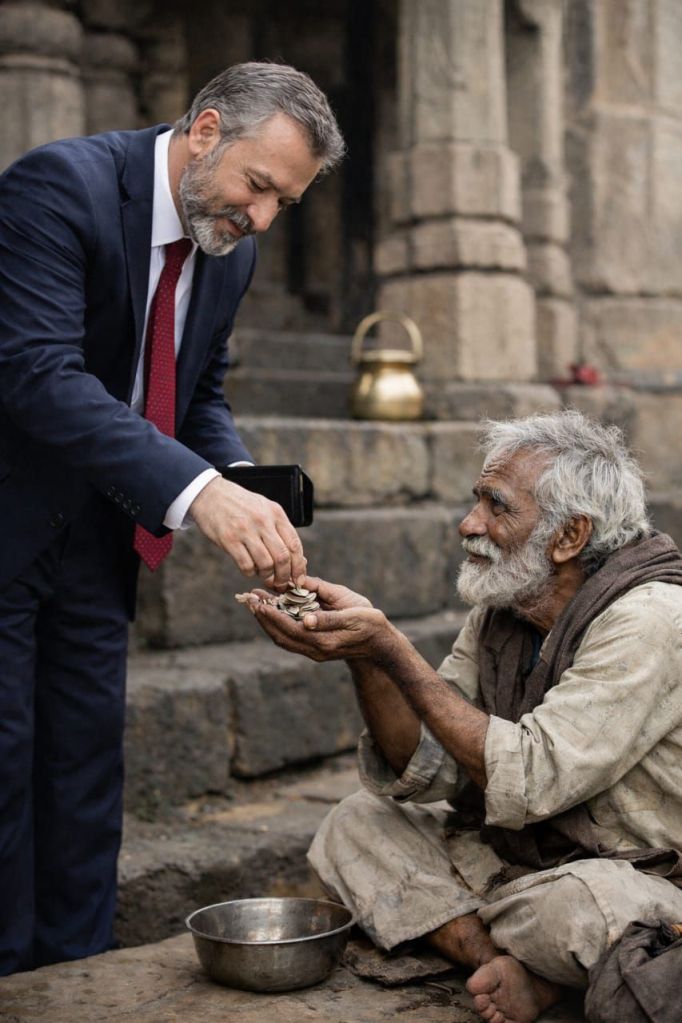
    Often, people dressed as saints or ascetics come into our streets asking for donations for temple construction, ashram construction, or other religious works. But we do not know what they actually do with that money. It is also possible that someone may misuse the funds.

    In such a situation, when they come to our doorstep, it becomes difficult to refuse them, because there is also a saying— “Who knows, Narayana may come to us in some form.”

    Because of this, a great state of confusion arises.
    What should we do in such circumstances?
    Please guide us. 🙏🙏


    Answer

    According to the Shrimad Bhagavad Gita, charity is not an optional social activity; it is an essential and sacred duty.
    Charity purifies the inner being of a person and brings balance to life.

    The Necessity of Charity — The Clear Teaching of the Gita

    Lord Shri Krishna says:

    “Yajña-dāna-tapaḥ-karma na tyājyaṁ kāryam eva tat |
    Yajño dānaṁ tapaś caiva pāvanāni manīṣiṇām ||”
    (Bhagavad Gita 18.5)

    Meaning:
    Acts of sacrifice, charity, and austerity should not be given up.
    They must certainly be performed,
    for sacrifice, charity, and austerity are actions that purify even the wise.

    This verse clearly shows that charity is not merely a means of helping others,
    but a path for one’s own purification and upliftment.

    How Much Charity Should One Give?

    The Lord has not specified an exact amount of charity.
    However, based on scriptural tradition and practical experience—

    Donating about 10% of one’s income or profit is considered a balanced and appropriate standard.

    Even today, many traders and mindful householders follow this principle.

    However—

    Those who are not accustomed to giving charity may begin with 2% or 5%.

    Gradually, it is appropriate to take it to at least 10%.

    An important practice is to set aside something every single day
    and put it into a charity box or piggy bank at home.

    This creates a daily habit of virtue.

    The Fruit of Charity

    It should be clearly understood that—

    If there is one action that increases happiness, peace, and prosperity
    both in this life and in the life to come,
    it is charity, altruism, and helping others.

    Charity does not change only the life of the receiver;
    it also transforms the life of the giver.

    Types of Charity — The Gita’s Discernment

    Regarding to whom charity should be given and in what manner,
    Lord Shri Krishna has given a very clear classification in the Gita.

    The Three Types of Charity

    “Dātavyam iti yad dānaṁ dīyate’nupakāriṇe |
    Deśe kāle ca pātre ca tad dānaṁ sāttvikaṁ smṛtam ||”
    (Gita 17.20)

    “Yattu pratyupakārārthaṁ phalam uddiśya vā punaḥ |
    Dīyate ca parikliṣṭaṁ tad dānaṁ rājasaṁ smṛtam ||”
    (Gita 17.21)

    “Adeśa-kāle yad dānam apātrebhyaś ca dīyate |
    Asatkṛtam avajñātaṁ tat tāmasam udāhṛtam ||”
    (Gita 17.22)

    Meaning:

    Sattvic charity — Charity given as a duty, to a worthy recipient, at the proper time and place, without any expectation.

    Rajasic charity — Charity given with the desire for return, fame, or out of ego.

    Tamasic charity — Charity given to an unworthy person, at an improper time or place, without respect.

    Among these, sattvic charity alone is considered superior.

    The Proper Way to Give Charity

    According to the spirit of the Gita—

    Charity should be given with respect.

    One should inwardly regard the recipient as a form of God.

    Charity should be offered as a dedication to God, not with ego.

    One should avoid the feeling, “I have given a lot of charity.”

    Charity should not be displayed or publicized.

    Even if charity is given to a beggar, it should be done with folded hands,
    so that the person does not feel humiliated by poverty and instead experiences dignity.
    Charity should never be given by destroying someone’s human self-respect.

    Should We Give Charity to an Unknown Person or One Dressed as a Sadhu?

    Now let us come to your main question.

    If a person dressed as a sadhu comes to your door and you do not have clear information about him, then—

    1. First, respectfully offer him some water.
    2. Calmly ask a few questions about his purpose.
    3. If even a little credibility is established, it is appropriate to give a small amount of charity.

    Even if it later turns out that the money was misused—

    You will still receive the merit of charity,
    because you made a sincere effort to assess the recipient from your side.

    However, large donations should always be made
    only after prior selection, examination, and trust.

    Prior Selection of Worthy Recipients

    It is best that—

    You keep a list in advance of genuinely needy sadhus or virtuous individuals.

    Similarly, select reliable institutions engaged in good work.

    Reserve a fixed portion of your charity funds for them.

    The Special Importance of Donating Sacred Scriptures

    A portion of one’s charity should certainly be used
    for the distribution of the Shrimad Bhagavad Gita.
    In the light of Gita 18.69, this makes one extremely dear to God.
    Selfless distribution and propagation of the Gita is a precise path toward liberation.

    A person who is interested in spiritual knowledge is a worthy recipient of Gita-dāna.
    But it should be given after clearly asking—

    Will you read the Gita for at least 15 minutes every day?
    Take this promise from them.

    Similarly, donating—

    Ramcharitmanas

    Shrimad Bhagavata Purana

    is also extremely useful and beneficial.

    Conclusion — The Balance of Compassion and Discernment

    For those about whom you do not have complete information,
    set aside a small portion of your charity funds,
    so that compassion remains alive and discernment also stays protected.

    This is the balanced path shown by the Gita.

    Hari Sharanam.

    Discover how to find God amidst
    household duties through the wisdom
    of the Bhagavad Gita. Learn practical
    ways of meditation, name-chanting,
    and offering daily actions as worship
    to attain peace and liberation.

    Can We Give Charity to an Unknown Person?

    Discover why God chose Bharat (India)
    for His divine incarnations. Explore the
    unique geography, spiritual heritage, and
    sacred culture that made India the eternal
    land of Vedas, sages, and divine manifestations.


  • Hari Sharanam!

    BrahmBodhi stands as a beacon in the spiritual realm, a venerated leader, accomplished author, profound thinker, and dedicated educationist. Holding the esteemed position of Founder and President of the Gita Global Family, he also champions the principles and philosophies as the Head of Bhagavad Dharma, a spiritual path deeply rooted in the teachings of the revered Bhagavad Gita.

    Under his visionary leadership, the Gita Global Family has burgeoned into an organization with far-reaching wings, including the educational pioneer Gita Global Gurukul Schools, the enlightening channel of Gita Global Publications, and the yet to be unveiled Gita Dham—a sanctuary conceived to be an amalgamation of a Gita temple, a hub dedicated to poverty alleviation, and a vibrant center promoting art and culture.

    BrahmBodhi is committed to unlocking the boundless potential within individuals and communities, propelling them towards a life rich in purpose and fulfillment. A staunch advocate for education and personal growth, he has embarked on a journey of empowerment, seeding knowledge and fostering development for years.

    We invite you to delve deeper into the multifaceted world of BrahmBodhi through this portal, designed to be a gateway to his diverse projects and his presence on various social media platforms. Herein, you will find an enriching assembly of his oeuvre, encompassing insightful articles, transformative videos, and enlightening books — all curated to guide you towards a life of heightened fulfillment and purpose.

    प्रश्न

    गुरुदेव, प्रणाम 🙏🙏

    अक्सर हमारी गलियों में साधु-महात्मा के वेश में लोग मंदिर-निर्माण, आश्रम-निर्माण या अन्य धार्मिक कार्यों के लिए चंदा माँगते हैं। लेकिन हम उनके बारे में नहीं जानते कि वे उस धन का क्या उपयोग करते हैं। यह भी संभव है कि कोई व्यक्ति उस धन का दुरुपयोग कर दे।

    ऐसी स्थिति में जब वे हमारे द्वार पर आ जाते हैं, तो उन्हें मना करना भी कठिन हो जाता है, क्योंकि यह भी कहा जाता है—
    “न जाने किस रूप में नारायण मिल जाएँ।”

    इस कारण एक बड़ी असमंजस की स्थिति बन जाती है।
    ऐसी परिस्थिति में हमें क्या करना चाहिए?
    कृपया मार्गदर्शन करें। 🙏🙏

    उत्तर (ब्रह्म बोधि)

    श्रीमद्भगवद्गीता के अनुसार दान देना कोई वैकल्पिक सामाजिक कार्य नहीं, बल्कि एक अनिवार्य पवित्र कर्तव्य है।
    दान मनुष्य के अंतःकरण को शुद्ध करता है और उसके जीवन को संतुलित करता है।

    दान की अनिवार्यता — गीता का स्पष्ट निर्देश

    भगवान श्रीकृष्ण कहते हैं—

    “यज्ञदानतपःकर्म न त्याज्यं कार्यमेव तत्। यज्ञो दानं तपश्चैव पावनानि मनीषिणाम्॥”
    (श्रीमद्भगवद्गीता 18.5)

    अर्थात—
    यज्ञ, दान और तप—इन कर्मों का त्याग नहीं करना चाहिए।
    ये अवश्य किए जाने योग्य कर्तव्य हैं,
    क्योंकि यज्ञ, दान और तप—ज्ञानी व्यक्तियों को भी पवित्र करने वाले कर्म हैं।

    यह श्लोक स्पष्ट करता है कि दान केवल किसी की सहायता करने का साधन नहीं,
    बल्कि स्वयं को शुद्ध और उन्नत करने का मार्ग है।

    दान की मात्रा कितनी हो?

    भगवान ने यह नहीं बताया कि दान कितना दिया जाए।
    परंतु शास्त्रीय परंपरा और व्यावहारिक अनुभव के आधार पर—

    आय या लाभ का लगभग 10% दान एक संतुलित और उपयुक्त मानक माना गया है।

    आज भी अनेक व्यापारी और जागरूक गृहस्थ इस सिद्धांत का पालन करते हैं।

    हालाँकि—

    जिन्हें दान देने की आदत नहीं है, वे 2% या 5% से भी प्रारंभ कर सकते हैं।

    धीरे-धीरे इसे कम से कम 10% तक ले जाना उचित है।

    एक महत्वपूर्ण अभ्यास यह है कि प्रत्येक दिन कुछ न कुछ अवश्य निकालें,
    और उसे घर की दान-पेटी या गुल्लक में डाल दें।

    इससे प्रतिदिन एक पुण्य-संस्कार बनता है।

    दान का फल

    यह भलीभाँति समझ लेना चाहिए कि—

    यदि किसी एक कर्म से इस जीवन और आने वाले जीवन—
    दोनों में सुख, शांति और समृद्धि बढ़ती है,
    तो वह है दान, परोपकार और दूसरों की सहायता।

    दान केवल लेने वाले का जीवन नहीं बदलता,
    वह देने वाले के जीवन को भी रूपांतरित करता है।

    दान के प्रकार — गीता का विवेक

    दान किसे दिया जाए और किस प्रकार दिया जाए—
    इस विषय में भगवान श्रीकृष्ण ने गीता में अत्यंत स्पष्ट वर्गीकरण किया है।

    दान के तीन प्रकार

    “दातव्यमिति यद्दानं दीयतेऽनुपकारिणे।
    देशे काले च पात्रे च तद्दानं सात्त्विकं स्मृतम्॥”
    (गीता 17.20)

    “यत्तु प्रत्युपकारार्थं फलमुद्दिश्य वा पुनः।
    दीयते च परिक्लिष्टं तद्दानं राजसं स्मृतम्॥”
    (गीता 17.21)

    “अदेशकाले यद्दानमपात्रेभ्यश्च दीयते।
    असत्कृतमवज्ञातं तत्तामसमुदाहृतम्॥”
    (गीता 17.22)

    अर्थात—

    सात्त्विक दान — कर्तव्य समझकर, योग्य पात्र को, उचित समय और स्थान पर, बिना किसी अपेक्षा के दिया गया दान।

    राजसिक दान — प्रतिफल, प्रसिद्धि या अहंकार की भावना से दिया गया दान।

    तामसिक दान — अपात्र को, अनुचित समय-स्थान पर, बिना आदर के दिया गया दान।

    इनमें सात्त्विक दान ही श्रेष्ठ है।

    दान देने की विधि

    गीता के भाव के अनुसार—

    दान आदरपूर्वक देना चाहिए।

    जिसे दान दिया जा रहा है, उसे मन-ही-मन ईश्वर का रूप मानना चाहिए।

    दान को ईश्वर को समर्पित करके देना चाहिए, न कि अहंकारपूर्वक।

    “मैंने बहुत दान कर दिया”—इस भाव से बचना चाहिए।

    दान का प्रदर्शन या प्रचार नहीं करना चाहिए।

    यदि किसी भिक्षुक को भी दान दें, तो हाथ जोड़कर दें,
    ताकि उसे अपनी निर्धनता पर ग्लानि न हो और उसे सम्मान का अनुभव हो। किसी की मानवीय गरिमा का नाश करके दान देनाउचित नहीं है।

    अंजान व्यक्ति या साधु-वेशधारी को दान देना चाहिए या नहीं?

    अब आपके मुख्य प्रश्न पर आते हैं।

    यदि कोई साधु-वेशधारी व्यक्ति आपके द्वार पर आता है और उसके विषय में आपको स्पष्ट जानकारी नहीं है, तो—

    1. पहले उसे आदरपूर्वक थोड़ा जल अवश्य दें।
    2. शांत भाव से उसके उद्देश्य के विषय में थोड़ा प्रश्न-उत्तर करें।
    3. यदि थोड़ी भी विश्वसनीयता बने, तो छोटी राशि का दान देना उचित है।

    यदि बाद में यह पता भी चले कि उस धन का दुरुपयोग हुआ—

    तब भी दान का पुण्य आपको मिलेगा, क्योंकि आपने अपनी ओर से पात्रता जाँचने का प्रयास किया था।

    हाँ, बड़ी राशि का दान
    हमेशा पूर्व-चयन, परीक्षण और विश्वास के बाद ही करना चाहिए।

    दान-पात्रों का पूर्व चयन

    उत्तम यह है कि—

    आप पहले से वास्तविक जरूरतमंद साधु या सज्जन व्यक्तियों का चयन कर रखें।

    इसी प्रकार विश्वसनीय और सत्कार्य करने वाली संस्थाओं का भी चयन पहले से ही करें।

    दान-राशि का एक निश्चित अंश उनके लिए सुरक्षित रखें।

    शास्त्र-दान का विशेष महत्व

    दान-राशि का एक अंश—

    श्रीमद्भगवद्गीता के वितरण में अवश्य लगाना चाहिए। गीता 18;,69 के आलोक में यह आपको ईश्वर का अति प्रिय बनाता है। निष्काम भाव से गीता का वितरण और प्रसार मोक्ष का एक सटीक मार्ग है

    जो व्यक्ति धर्म-ज्ञान में रुचि रखता हो, वह गीता-दान का पात्र है।
    परंतु उसे यह स्पष्ट रूप से पूछकर दें कि—

    क्या वह प्रतिदिन कम से कम 15 मिनट गीता-पाठ करेगा?
    उससे इसका वचन अवश्य लें।

    इसी प्रकार—

    रामचरितमानस,
    श्रीमद्भागवत पुराण

    का दान भी अत्यंत उपयोगी और कल्याणकारी है।

    समापन — करुणा और विवेक का संतुलन

    जिन लोगों के विषय में आपकी पूर्ण जानकारी नहीं होती, उनके लिए भी दान-राशि का एक छोटा अंश अवश्य अलग रखें,
    ताकि करुणा बनी रहे और विवेक भी सुरक्षित रहे।

    यही गीता का संतुलित मार्ग है।

    हरि शरणम्।

    Discover how to find God amidst
    household duties through the wisdom
    of the Bhagavad Gita. Learn practical
    ways of meditation, name-chanting,
    and offering daily actions as worship
    to attain peace and liberation.

    क्या अनजान व्यक्ति को दान दे सकते हैं?

    Discover why God chose Bharat (India)
    for His divine incarnations. Explore the
    unique geography, spiritual heritage, and
    sacred culture that made India the eternal
    land of Vedas, sages, and divine manifestations.


  • Hari Sharanam!

    BrahmBodhi stands as a beacon in the spiritual realm, a venerated leader, accomplished author, profound thinker, and dedicated educationist. Holding the esteemed position of Founder and President of the Gita Global Family, he also champions the principles and philosophies as the Head of Bhagavad Dharma, a spiritual path deeply rooted in the teachings of the revered Bhagavad Gita.

    Under his visionary leadership, the Gita Global Family has burgeoned into an organization with far-reaching wings, including the educational pioneer Gita Global Gurukul Schools, the enlightening channel of Gita Global Publications, and the yet to be unveiled Gita Dham—a sanctuary conceived to be an amalgamation of a Gita temple, a hub dedicated to poverty alleviation, and a vibrant center promoting art and culture.

    BrahmBodhi is committed to unlocking the boundless potential within individuals and communities, propelling them towards a life rich in purpose and fulfillment. A staunch advocate for education and personal growth, he has embarked on a journey of empowerment, seeding knowledge and fostering development for years.

    We invite you to delve deeper into the multifaceted world of BrahmBodhi through this portal, designed to be a gateway to his diverse projects and his presence on various social media platforms. Herein, you will find an enriching assembly of his oeuvre, encompassing insightful articles, transformative videos, and enlightening books — all curated to guide you towards a life of heightened fulfillment and purpose.

    Question : In order to prove oneself to be the best, which approach is more commendable—criticism, or making the finest creative effort?

    Put in simple terms, is it more worthy to erase an already drawn line and make it shorter, or to draw a longer line through one’s own creative effort?

    What view does the Shrimad Bhagavad Gita take on this matter?

    Answer:

    Nowhere does the Shrimad Bhagavad Gita convey the message that the purpose of our actions should be to prove ourselves to be ‘the best’.
    Such an objective is not presented in the Gita.

    Yes, certain specific actions—yajña (here not meaning fire-sacrifice; one should see the various forms of yajña described in the fourth chapter of the Gita), tapas (austerity), and dāna (charity)—are said to have the purpose of inner purification, as the Lord states in this verse:

    “Yajña, charity, and austerity—these indeed purify the wise.”
    (Bhagavad Gita 18.5)

    The second purpose of action, according to the Gita, is loka-saṅgraha, as the Lord clearly declares:

    “It was through action alone that Janaka and others attained perfection.
    Keeping in view the welfare and cohesion of the world, you too ought to act.”
    (Bhagavad Gita 3.20)

    Loka-saṅgraha means the welfare of society—keeping people united and maintaining social order and balance.

    The Gita also teaches that action should be free from mere desire, free from ego, and performed as an offering to God, for God:

    “Surrendering all actions to Me, with the mind focused on the Self,
    free from expectation and possessiveness, fight without inner agitation.”
    (Bhagavad Gita 3.30)

    To act with the feeling, “I am the best,” is clearly an expression of ego.

    As for the idea of drawing a longer line instead of erasing a shorter one, it must also be remembered that at times a line does need to be erased—whether it is long or short.

    The war of the Mahabharata itself was fought to erase a line of injustice and to draw a new, righteous one.
    That line deserved to be erased.

    Discover how to find God amidst
    household duties through the wisdom
    of the Bhagavad Gita. Learn practical
    ways of meditation, name-chanting,
    and offering daily actions as worship
    to attain peace and liberation.

    Drawing a Bigger Line?

    Discover why God chose Bharat (India)
    for His divine incarnations. Explore the
    unique geography, spiritual heritage, and
    sacred culture that made India the eternal
    land of Vedas, sages, and divine manifestations.


  • Hari Sharanam!

    BrahmBodhi stands as a beacon in the spiritual realm, a venerated leader, accomplished author, profound thinker, and dedicated educationist. Holding the esteemed position of Founder and President of the Gita Global Family, he also champions the principles and philosophies as the Head of Bhagavad Dharma, a spiritual path deeply rooted in the teachings of the revered Bhagavad Gita.

    Under his visionary leadership, the Gita Global Family has burgeoned into an organization with far-reaching wings, including the educational pioneer Gita Global Gurukul Schools, the enlightening channel of Gita Global Publications, and the yet to be unveiled Gita Dham—a sanctuary conceived to be an amalgamation of a Gita temple, a hub dedicated to poverty alleviation, and a vibrant center promoting art and culture.

    BrahmBodhi is committed to unlocking the boundless potential within individuals and communities, propelling them towards a life rich in purpose and fulfillment. A staunch advocate for education and personal growth, he has embarked on a journey of empowerment, seeding knowledge and fostering development for years.

    We invite you to delve deeper into the multifaceted world of BrahmBodhi through this portal, designed to be a gateway to his diverse projects and his presence on various social media platforms. Herein, you will find an enriching assembly of his oeuvre, encompassing insightful articles, transformative videos, and enlightening books — all curated to guide you towards a life of heightened fulfillment and purpose.

    Discover how to find God amidst
    household duties through the wisdom
    of the Bhagavad Gita. Learn practical
    ways of meditation, name-chanting,
    and offering daily actions as worship
    to attain peace and liberation.

    At Newark Airport: Leaving for Austin, Texas

    Discover why God chose Bharat (India)
    for His divine incarnations. Explore the
    unique geography, spiritual heritage, and
    sacred culture that made India the eternal
    land of Vedas, sages, and divine manifestations.


  • Hari Sharanam!

    BrahmBodhi stands as a beacon in the spiritual realm, a venerated leader, accomplished author, profound thinker, and dedicated educationist. Holding the esteemed position of Founder and President of the Gita Global Family, he also champions the principles and philosophies as the Head of Bhagavad Dharma, a spiritual path deeply rooted in the teachings of the revered Bhagavad Gita.

    Under his visionary leadership, the Gita Global Family has burgeoned into an organization with far-reaching wings, including the educational pioneer Gita Global Gurukul Schools, the enlightening channel of Gita Global Publications, and the yet to be unveiled Gita Dham—a sanctuary conceived to be an amalgamation of a Gita temple, a hub dedicated to poverty alleviation, and a vibrant center promoting art and culture.

    BrahmBodhi is committed to unlocking the boundless potential within individuals and communities, propelling them towards a life rich in purpose and fulfillment. A staunch advocate for education and personal growth, he has embarked on a journey of empowerment, seeding knowledge and fostering development for years.

    We invite you to delve deeper into the multifaceted world of BrahmBodhi through this portal, designed to be a gateway to his diverse projects and his presence on various social media platforms. Herein, you will find an enriching assembly of his oeuvre, encompassing insightful articles, transformative videos, and enlightening books — all curated to guide you towards a life of heightened fulfillment and purpose.

    Snowfall in New York

    Discover how to find God amidst
    household duties through the wisdom
    of the Bhagavad Gita. Learn practical
    ways of meditation, name-chanting,
    and offering daily actions as worship
    to attain peace and liberation.

    Discover why God chose Bharat (India)
    for His divine incarnations. Explore the
    unique geography, spiritual heritage, and
    sacred culture that made India the eternal
    land of Vedas, sages, and divine manifestations.


  • Hari Sharanam!

    BrahmBodhi stands as a beacon in the spiritual realm, a venerated leader, accomplished author, profound thinker, and dedicated educationist. Holding the esteemed position of Founder and President of the Gita Global Family, he also champions the principles and philosophies as the Head of Bhagavad Dharma, a spiritual path deeply rooted in the teachings of the revered Bhagavad Gita.

    Under his visionary leadership, the Gita Global Family has burgeoned into an organization with far-reaching wings, including the educational pioneer Gita Global Gurukul Schools, the enlightening channel of Gita Global Publications, and the yet to be unveiled Gita Dham—a sanctuary conceived to be an amalgamation of a Gita temple, a hub dedicated to poverty alleviation, and a vibrant center promoting art and culture.

    BrahmBodhi is committed to unlocking the boundless potential within individuals and communities, propelling them towards a life rich in purpose and fulfillment. A staunch advocate for education and personal growth, he has embarked on a journey of empowerment, seeding knowledge and fostering development for years.

    We invite you to delve deeper into the multifaceted world of BrahmBodhi through this portal, designed to be a gateway to his diverse projects and his presence on various social media platforms. Herein, you will find an enriching assembly of his oeuvre, encompassing insightful articles, transformative videos, and enlightening books — all curated to guide you towards a life of heightened fulfillment and purpose.

    यात्रा-वृतांत : मेरे होस्ट और मित्र राहुल सूर
    5, 6 दिसंबर, 2025

    सूरज धीरे-धीरे ऊपर चढ़ रहा है।

    यूरोप और अमेरिका में लगभग सभी घरों में हीटिंग होती है, इसलिए बाहर की ठंड का अनुमान घर के भीतर नहीं होता; जैसे ही बाहर निकलते हैं, मौसम का असली स्वरूप सामने आ जाता है—दिसंबर की रातों में तापमान कई बार शून्य से नीचे।

    आज, कमरे की बड़ी-बड़ी खिड़कियों से उज्ज्वल धूप भीतर आ रही है और वातावरण को गरमाहट दे रही है।

    राहुल अभी थोड़ी देर के लिए बाहर गए हैं। मैं ड्रॉइंग रूम में बैठा हूँ और राहुल जी की श्रीमती, मीना जी, किचन में हल्का-फुलका काम कर रही हैं। किचन, ड्रॉइंग रूम का ही एक हिस्सा है।

    मीना जी, संयुक्त राष्ट्र के न्यूयॉर्क स्थित मुख्यालय में कार्यरत हैं—सप्ताह में तीन-चार दिन कार्यालय जाती हैं और शेष दिनों में घर से काम करती हैं।

    राहुल जी की अनुपस्थिति में अपने एक संबंधी की बात करते हुए हँसते हुए कहती हैं—
    “जरा सोचिए, कोई अतिथि शाम को घर आए और कोई आदमी बिना वाई-फाई का पासवर्ड दिए सोने चला जाए—क्या यह समझदारी है? मेरे भाई ने एक बार ऐसा ही किया। पता नहीं, आदमियों को अक़्ल कब आएगी!”
    “आदमी” से उनका आशय, स्पष्टतः, पुरुषों से है।

    मैं मन ही मन सोचता हूँ—कल रात यही काम तो उनके पति, मेरे मित्र राहुल ने भी मेरे साथ किया था! क्या यह तीर अप्रत्यक्ष रूप से उन्हीं पर चलाया गया है? निश्चय ही चलाया गया है।

    कल रात, बिना वाई-फाई पासवर्ड दिए वे सोने चले गए, और मैं अपने लंदन या भारत के परिजनों को यह सूचना अभी तक न दे सका कि मैं सुरक्षित न्यूयॉर्क पहुँच गया हूँ।

    मीना जी की बात का समर्थन करते हुए मैं कह देता हूँ कि—
    “सचमुच, आदमियों को ईश्वर ने कॉमन सेंस थोड़ी कम ही दी है, चाहे वे अपने पेशे में कितने ही दक्ष क्यों न हों।”

    पर उसी क्षण याद आता है— सर्वतोऽक्‍षि-शिरोमुखम्—ईश्वर की आँखें और कान हर ओर हैं। वे यह सब देख-सुन रहे होंगे कि मैं मीना जी का समर्थन कर अपने ही मित्र को उनकी अनुपस्थिति में लक्ष्य बना रहा हूँ—और साथ ही, सारे “आदमियों” को भी! और ईश्वर का कृष्ण रूप तो अत्यंत नटखट है। उनके साथ मेरा थोड़ा मित्र भाव भी रहता है।

    थोड़ी देर बाद मैं अपने कमरे में जाकर अपना सूटकेस खोलने का प्रयास करता हूँ क्योंकि मेरे सारे कपड़े उसी में बंद हैं। सूटकेस में वह ताला है, जिसे दबाते ही लॉक हो जाता है—चाबी घुमानी नहीं पड़ती। इसकी छोटी-सी चाबी मेरे हैंडबैग में रहती थी, मगर अब उसमें मिल ही नहीं रही।

    मैं मीना जी से ताला तोड़ने के लिए कोई औज़ार माँगता हूँ। वे ताला तोड़ने से मना करती हैं और कहती हैं—
    “छोटे ताले प्रायः एक ही चाबी से खुल जाते हैं।”
    वे एक छोटी चाबी ला कर मुझे देती हैं—और सचमुच, ताला खुल जाता है!

    मैं पाता हूँ कि मैंने वही चाबी, अनजाने में, सूटकेस के भीतर ही रख दी थी—और बाहर से ताला बंद कर दिया था।
    जो टिप्पणी “आदमियों” पर की गई थी और जिसे मैंने राहुल की ओर मोड़ दिया था—भगवान ने तुरंत दिखा दिया कि वह केवल राहुल पर लागू नहीं होती।

    मैं मीना जी से विनती करता हूँ—
    “कृपया मेरी इस हरकत की सूचना घर पर न भेज दीजिएगा। वहाँ तो पहले से मेरे ऐसे कई विचित्र कृत्यों की लंबी सूची रखी हुई है—इसमें एक और कथा जुड़ जाएगी – चाबी बक्से के अंदर रखकर बाहर से वही ताला बंद।”

    कुछ महीने पहले राहुल सूर जी भारत आए थे और मुझसे मिलने वृंदावन भी पहुँचे थे। न्यूयॉर्क आने का मुझे निमंत्रण भी कई बार दिया। निमंत्रण देते समय मैंने उनसे पूछा था—
    “क्या आपके पास वहाँ कोई ड्राइवर है?”
    उन्होंने कहा—“ना ड्राइवर है, ना कार। कार पार्क करने का शुल्क ही 500 डॉलर प्रतिमाह है—यानी लगभग पचास हजार रुपए। यह सब अधिकारी-वर्ग के वश की बात नहीं।”

    फिर मैंने पूछा—“कोई हाउस-हेल्प?”
    वे बोले—“मीना ऑफिस जाती हैं, मैं रिटायर्ड हूं। अतः बाकी धर का, बाजार का काम मैं ही करता हूँ। मैं ही ‘बहादुर’ हूँ।”
    तब मुझे विश्वास नहीं हुआ था। पर यहाँ आकर देख रहा हूँ कि यह बिल्कुल सही है।

    अभी मीना जी घर में हैं। राहुल सब्जियाँ काट रहे हैं और मीना जी भोजन बना रही हैं। सचमुच, वे वही बहादुरी का काम कर रहे हैं जिसका दावा उन्होंने किया था।

    खिचड़ी और राहुल की ‘कुकर-कथा’

    मीना जी कार्यालय चली जाती हैं। मैं और राहुल घर में हैं। हालांकि मीना जी खाना बना कर गई हैं लेकिन मुझे खिचड़ी खाने की इच्छा हो रही है—इंग्लैंड में एक दिन भी नहीं मिली।

    एक और कारण है—वृंदावन में राहुल ने पहली बार आलू का चोखा खाया था और इतना पसंद किया कि सब खत्म कर दिया। मैंने हल्की-सी चुटकी ली थी—“थोड़ा मेरे लिए भी छोड़ देते तो अच्छा होता।”

    आज मैं स्वयं खिचड़ी और चोखा बनाकर अपने मित्र को खिलाना चाहता हूँ। उन्हें ना तो खिचड़ी बनाने आती है ना चोखा बनाने। पंजाब के लोग हैं, और शायद पंजाब में इन चीजों का प्रचलन नहीं। मगर राहुल को दोनों चीजें बहुत पसंद है।
    मुझे खाद्य पदार्थों में सिर्फ खिचड़ी बनाने आती है।

    मैं उनसे कुकर लाने को कहता हूँ। वे तीन कुकर ले आते हैं। मैं एक में दाल-चावल डालता हूँ, दूसरे में आलू।
    वे खिचड़ी बनाना सीखने को उत्सुक हैं। मैं उन्हें सिखाता हूँ—

    दो मुट्ठी भर दाल और एक मुट्ठी भर चावल

    नमक, हल्दी

    पानी दाल-चावल की सतह से एक इंच ऊपर

    एक तेज सिटी, फिर दो मध्यम सिटी

    दस मिनट में खिचड़ी तैयार हो जानी चाहिए।

    परंतु…
    बीस मिनट बीत जाते हैं—किसी कुकर से सिटी की आवाज नहीं।
    कोई भी कुकर स्टीम पकड़ने को तैयार नहीं।

    राहुल तीसरा कुकर लाते हैं—उसकी सीटी इस पर, उसकी रबर-रिंग उस पर…
    यह अदला-बदली कई बार चलती है—फिर भी सभी कुकर एक समान शांत।

    “मीना तो कुकर में ही पकाती हैं। पता नहीं क्या हो गया इन्हें”, वे बुदबुदाते हैं।
    वे कहते है कि तीनों कुकर वे फेंक देंगे। मैं उन्हें समझाता हूं कि कभी-कभी कुकर में नहीं कुक में दिक्कत होती है।

    मैं कहता हूँ—
    “रहने दीजिए भाई, बिना सिटी के ही पकने दीजिए—जैसे पुराने ज़माने में होता था।”

    एक घंटे बाद खिचड़ी तैयार।
    ओवरकुक्ड—पर अपनी बनाई हुई थी है, इसलिए स्वादिष्ट।
    चोखा भी ठीक-ठाक—आलू पुराने थे।

    आइसक्रीम और ‘बोधिवृक्ष’ का रहस्य

    तीसरे दिन राहुल बाजार जा रहे थे। मैं साथ हो लिया। देखूं, न्यूयॉर्क का बाजार कैसा होता है! लौटते वक्त
    उनके हाथ में तीन झोले—मैं एक थाम लेता हूँ।

    कृतज्ञता-स्वरूप वे मुझे रास्ते में एक आइसक्रीम पार्लर में ले जाते हैं।
    “कौन सी आइसक्रीम खाएंगे आप”, वह पूछते हैं।
    मैं कहता हूँ—“कोई भी वेज आइसक्रीम।”
    वे दो अलग-अलग प्रकार की आइसक्रीम की कप ले आते हैं।

    दोनों अपने-अपने कप लेकर बैठ जाते हैं।
    राहुल एक चम्मच खाते हैं—
    “नॉट ए गुड टेस्ट।”
    फिर मुझसे कहते हैं—
    “मुझे पसंद नहीं आई। क्या आप अपनी वाली देंगे? आप मेरी ले लीजिए।” फिर वे अपनी कप मेरी ओर बढ़ा देते हैं।

    मैं उनकी और आश्चर्य और अविश्वास की नजर से देखता हूं!

    और उसी क्षण मुझे समझ आता है कि उनकी श्रीमती जी ने उनकी कुर्सी के ऊपर बोधि-वृक्ष क्यों लगा रखा है! और किस आशा में!

    Discover how to find God amidst
    household duties through the wisdom
    of the Bhagavad Gita. Learn practical
    ways of meditation, name-chanting,
    and offering daily actions as worship
    to attain peace and liberation.

    यात्रा वृतांत : मेरे होस्ट और मित्र राहुल सूर

    Discover why God chose Bharat (India)
    for His divine incarnations. Explore the
    unique geography, spiritual heritage, and
    sacred culture that made India the eternal
    land of Vedas, sages, and divine manifestations.


  • Hari Sharanam!

    BrahmBodhi stands as a beacon in the spiritual realm, a venerated leader, accomplished author, profound thinker, and dedicated educationist. Holding the esteemed position of Founder and President of the Gita Global Family, he also champions the principles and philosophies as the Head of Bhagavad Dharma, a spiritual path deeply rooted in the teachings of the revered Bhagavad Gita.

    Under his visionary leadership, the Gita Global Family has burgeoned into an organization with far-reaching wings, including the educational pioneer Gita Global Gurukul Schools, the enlightening channel of Gita Global Publications, and the yet to be unveiled Gita Dham—a sanctuary conceived to be an amalgamation of a Gita temple, a hub dedicated to poverty alleviation, and a vibrant center promoting art and culture.

    BrahmBodhi is committed to unlocking the boundless potential within individuals and communities, propelling them towards a life rich in purpose and fulfillment. A staunch advocate for education and personal growth, he has embarked on a journey of empowerment, seeding knowledge and fostering development for years.

    We invite you to delve deeper into the multifaceted world of BrahmBodhi through this portal, designed to be a gateway to his diverse projects and his presence on various social media platforms. Herein, you will find an enriching assembly of his oeuvre, encompassing insightful articles, transformative videos, and enlightening books — all curated to guide you towards a life of heightened fulfillment and purpose.


    5–6 December, 2025

    The sun is slowly climbing upward.

    In Europe and America, almost all homes have central heating, so one does not feel the cold from outside while indoors. But the moment you step out, the true nature of the weather reveals itself—December nights often fall well below zero.

    This morning, bright sunlight is streaming in through the large windows and warming the room.

    Rahul has stepped out for a short while. I am seated in the drawing room, and his wife, Meena, is doing some light work in the kitchen. The kitchen is a part of the same open space.

    Meena ji works at the United Nations Headquarters in New York at a high level—she goes to the office three or four days a week and works from home on the others.

    In Rahul’s absence, speaking of one of her relatives, she says with a laugh,
    “Just imagine—an evening guest arrives, and the man of the house goes to sleep without giving him the Wi-Fi password. What kind of sense is that? My brother once did exactly this. I don’t know when men will learn!”
    By “men” she clearly means males.

    I think to myself—her husband, my friend Rahul, did precisely this to me last night! Was that remark aimed indirectly at him? Certainly it was.

    Since I had no Wi-Fi password, I could not inform my family and well-wishers in London or India last evening that I had reached New York safely.

    (In fact, till now I do not have the pass word with me. Meena ji alone remembers the pass word, which she gives me).

    Supporting her comment, I say,
    “It is true—God seems to have given men a little less common sense, no matter how competent they may be in their professions.”

    And immediately I remember—sarvato’kṣi-śiro-mukham—God’s eyes and ears are everywhere. He must be listening to me siding with Meena and making her husband the target in his absence—and along with him, all “men”! And Krishna, in particular, is delightfully playful. My relationship with Him carries a trace of friendly familiarity.

    A little later, I go to my room and try to open my suitcase, because all my clothes are inside. The suitcase is secured with a lock that snaps shut with pressure—no key-turning required. Its small key normally stays in my handbag, but now I cannot find it.

    I ask Meena ji for some tool to break the lock. She refuses and says,
    “Small locks often open with the same kind of key.”
    She brings a tiny key—
    and to my surprise, the lock opens instantly.

    I discover that I had unknowingly placed the original key inside the suitcase and then shut the lock from outside.
    The remark made about “men”—which I had neatly redirected towards Rahul—was shown by God to apply equally to me!

    I request Meena ji,
    “Please don’t send news of this incident home. They already maintain a long list of my peculiar blunders. This will become one more addition—the key inside the box and the lock outside!”

    A few months earlier, Rahul had visited India and come to meet me in Vrindavan. He had invited me to New York many times. While accepting the invitation, I had asked him,
    “Do you have a driver there?”
    He said, “Neither a driver nor a car. Parking alone costs 500 dollars a month—around fifty thousand rupees. This is not something even high officials can easily afford.”

    Then I asked, “Any house-help?”
    He replied, “Meena goes to the office, and I am retired. So I handle the housework and the shopping. I am the ‘bahadur’.” (“Bahadurs” are house helps and house guards from a neighboring country, whose names often carry the surname “Bahadur”.)
    I didn’t quite believe this then. But now, seeing him at work here, I realise it was entirely true.

    Today, Meena ji is at home. Rahul is cutting vegetables while she prepares the meal. Indeed, he is doing exactly the “bahadur’s” work he claimed.


    Khichdi and Rahul’s ‘Cooker Chronicle’

    The next morning, Meena ji leaves for the office while Rahul ji and I remain at home. Although she has already cooked for the whole day, I feel like eating khichdi—I didn’t get it even once in England.

    There is another reason—when Rahul visited Vrindavan, he tasted aloo ka chokha (potato mash) for the first time and liked it so much that he finished it all. I had jokingly teased him, “It would have been nice if you had left a little for me!”

    Today I want to cook khichdi and chokha myself and serve my friend. Rahul does not know how to make either dish. Being from Punjab, perhaps these items are not common there. But he loves both.
    As for me, the only thing I can cook well is khichdi.

    I ask him to bring a pressure cooker. He brings three of them. I put dal and rice in one, and potatoes in another.
    He is keen to learn how to make khichdi. I explain:

    Two handfuls of dal and one of rice

    Salt and turmeric

    Water one inch above the grains

    One strong whistle, then two gentle ones

    In ten minutes the khichdi should be ready.

    But…
    Twenty minutes pass—no whistle from any cooker.
    None of them is able to build steam.

    Rahul brings the third cooker—puts its whistle on the first, its rubber ring on the second…
    This swapping operation continues several times, but all cookers remain equally silent.

    “Meena cooks in these very cookers. I don’t know what’s wrong with them today,” he mutters. “I will throw them out today itself.”

    “The fault may not be with the cookers; it may be with the cooks,” I say.

    I further say,
    “Let it be, brother. Let it cook without whistles—just like in the old days.”

    After one hour, the khichdi is finally ready.
    Overcooked—but tasty, because we made it ourselves.
    The chokha too is decent, though the potatoes were a bit old.


    Ice Cream and the Secret of the Bodhi Tree

    On the third day, Rahul was going to the market. I joined him—I wanted to see what a New York market looks like.
    On the way back, he is carrying three heavy shopping bags; I take one from him.

    Perhaps in appreciation, he stops at an ice cream parlour and offers to treat me.
    “What flavour would you like?” he asks.
    “Any vegetarian ice cream, without eggs,” I say.
    He brings two cups—two different flavours.

    We sit down with our ice creams.
    Rahul takes one spoonful—
    “Not a good taste,” he declares.
    Then he says,
    “I didn’t like mine. Will you give me yours? You can take mine,” and extends his cup towards me.

    I look at him in disbelief.

    The empirically verified non-tasty ice cream—to a guest?

    At that moment I finally understand the real reason for Meena ji placing a Bodhi Tree above his chair!

    (The “Bodhi Vriksha” is the tree under which Buddha got enlightenment.”)

    Discover how to find God amidst
    household duties through the wisdom
    of the Bhagavad Gita. Learn practical
    ways of meditation, name-chanting,
    and offering daily actions as worship
    to attain peace and liberation.

    Travelogue: My Host and Friend, Rahul Sur

    Discover why God chose Bharat (India)
    for His divine incarnations. Explore the
    unique geography, spiritual heritage, and
    sacred culture that made India the eternal
    land of Vedas, sages, and divine manifestations.


/* Remove extra space under images in post cards */ .wp-block-post-template .wp-block-image { margin-bottom: 0; } .wp-block-image figcaption:empty { display: none; } /* If you’re using Gallery for the thumbnail grid */ .wp-block-gallery { gap: 0; } .wp-block-gallery.has-nested-images figure.wp-block-image { margin: 0; }