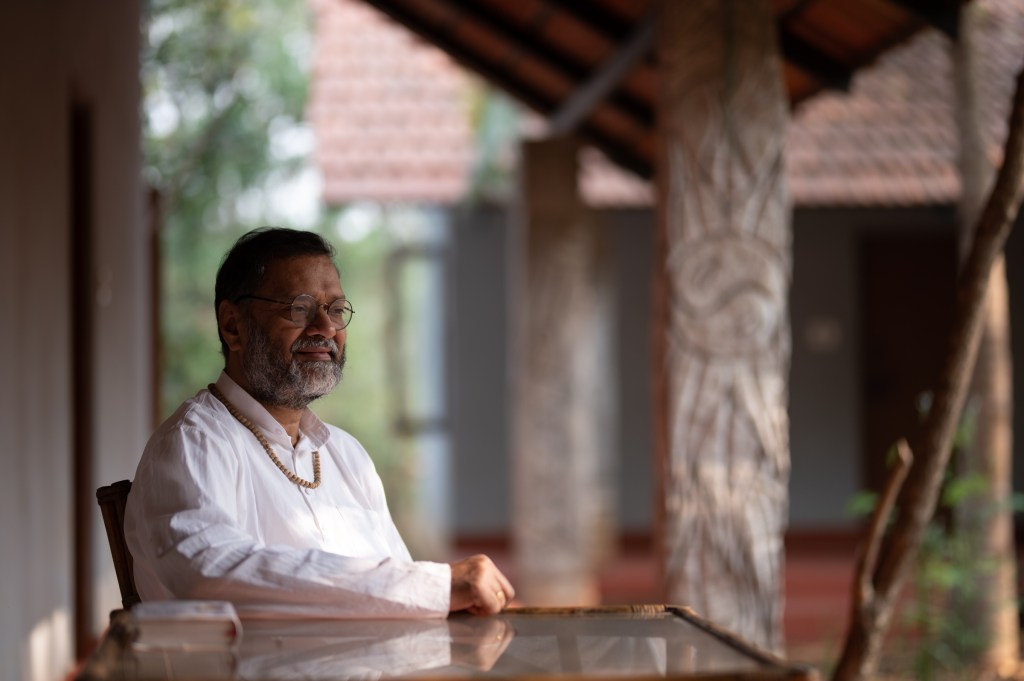
BrahmBodhi stands as a beacon in the spiritual realm, a venerated leader, accomplished author, profound thinker, and dedicated educationist. Holding the esteemed position of Founder and President of the Gita Global Family, he also champions the principles and philosophies as the Head of Bhagavad Dharma, a spiritual path deeply rooted in the teachings of the revered Bhagavad Gita.
Under his visionary leadership, the Gita Global Family has burgeoned into an organization with far-reaching wings, including the educational pioneer Gita Global Gurukul Schools, the enlightening channel of Gita Global Publications, and the yet to be unveiled Gita Dham—a sanctuary conceived to be an amalgamation of a Gita temple, a hub dedicated to poverty alleviation, and a vibrant center promoting art and culture.
BrahmBodhi is committed to unlocking the boundless potential within individuals and communities, propelling them towards a life rich in purpose and fulfillment. A staunch advocate for education and personal growth, he has embarked on a journey of empowerment, seeding knowledge and fostering development for years.
We invite you to delve deeper into the multifaceted world of BrahmBodhi through this portal, designed to be a gateway to his diverse projects and his presence on various social media platforms. Herein, you will find an enriching assembly of his oeuvre, encompassing insightful articles, transformative videos, and enlightening books — all curated to guide you towards a life of heightened fulfillment and purpose.
Question: Belief in reincarnation seems difficult without direct evidence. Can you clarify this mystery?
Answer (Brahm Bodhi): In the scriptures of religion and spirituality, there are many statements that cannot be verified physically. At the same time, there are also certain claims that can be tested through experiential verification. For example, whether the Earth is round or flat—this was once difficult to establish through direct experience; but today it has become possible. One can travel into space and see for oneself whether the Earth is spherical or flat like a plate. In this way, those scriptures (such as the Bible) that described the Earth as flat have been proven wrong by science.
In a similar manner, the question of whether there is reincarnation after death has now become a subject of scientific inquiry. Many well-known psychologists have carried out personal research on this matter. Yet, the most significant study is the one conducted institutionally by the University of Virginia in the United States. It was a funded project that continued for nearly thirty years.
During these three decades, many individuals reported experiencing memories of their previous lives—where they lived, what their names were, and so forth. The University of Virginia carefully documented the accounts of children, about six years old, whose statements could not reasonably be dismissed as fabrication.
The university studied about 3,000 such cases. The researchers took these children to the places or homes they had described as belonging to their former lives, and verified whether there had indeed been a child or a person of that name, and whether the parents they mentioned really existed. This verification showed that, in most cases, the children’s statements proved to be true.
Thus, from this research it was scientifically concluded that the possibility of reincarnation can no longer be easily denied. For further details, you may search online for Virginia University Reincarnation Research.
Discover how to find God amidst household duties through the wisdom of the Bhagavad Gita. Learn practical ways of meditation, name-chanting, and offering daily actions as worship to attain peace and liberation.
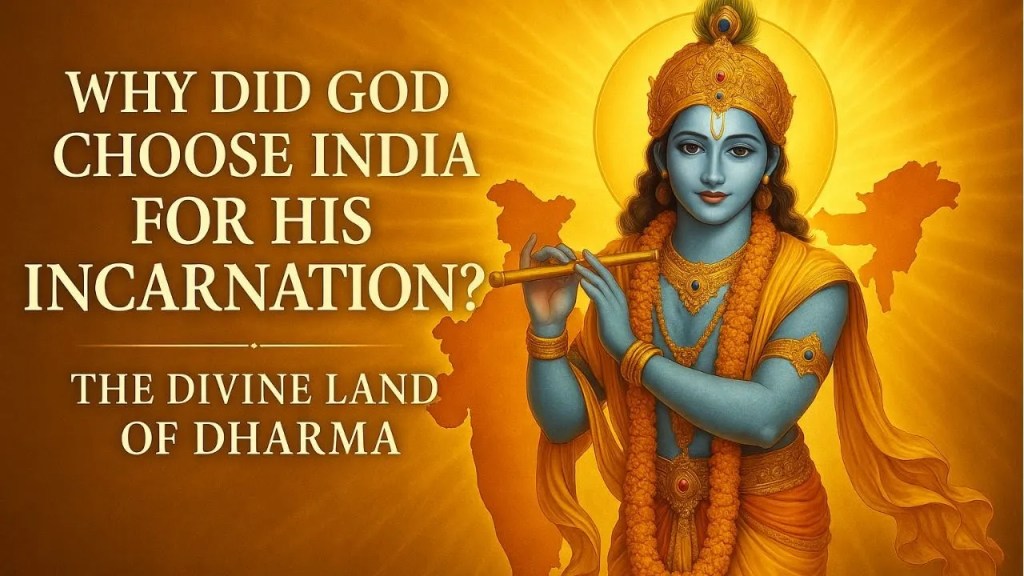
Discover why God chose Bharat (India) for His divine incarnations. Explore the unique geography, spiritual heritage, and sacred culture that made India the eternal land of Vedas, sages, and divine manifestations.
Hari Sharanam!
BrahmBodhi stands as a beacon in the spiritual realm, a venerated leader, accomplished author, profound thinker, and dedicated educationist. Holding the esteemed position of Founder and President of the Gita Global Family, he also champions the principles and philosophies as the Head of Bhagavad Dharma, a spiritual path deeply rooted in the teachings of the revered Bhagavad Gita.
Under his visionary leadership, the Gita Global Family has burgeoned into an organization with far-reaching wings, including the educational pioneer Gita Global Gurukul Schools, the enlightening channel of Gita Global Publications, and the yet to be unveiled Gita Dham—a sanctuary conceived to be an amalgamation of a Gita temple, a hub dedicated to poverty alleviation, and a vibrant center promoting art and culture.
BrahmBodhi is committed to unlocking the boundless potential within individuals and communities, propelling them towards a life rich in purpose and fulfillment. A staunch advocate for education and personal growth, he has embarked on a journey of empowerment, seeding knowledge and fostering development for years.
We invite you to delve deeper into the multifaceted world of BrahmBodhi through this portal, designed to be a gateway to his diverse projects and his presence on various social media platforms. Herein, you will find an enriching assembly of his oeuvre, encompassing insightful articles, transformative videos, and enlightening books — all curated to guide you towards a life of heightened fulfillment and purpose.
Revered Gurudev, pranam 🙏🙏
How should a follower of Bhagavad Dharma undertake self-evaluation in order to know his true position in spiritual life?
And Gurudev, should we necessarily live our lives strictly according to the four stages — Brahmacharya (0–25 years), Gṛhastha (26–50 years), Vānaprastha (51–75 years), and Sannyāsa (76–100 years)?
Kindly guide us, Gurudev. 🙏🙏
Answer (Brahm Bodhi) : We find that although Hindu Dharma is also called Varna-Āshrama-Dharma, in practice it has largely been limited to the observance of Varna-Dharma. The Āshrama system—which means the first 25 years for Brahmacharya, the next 25 years for Gṛhastha, the following 25 years for Vānaprastha, and the last 25 years for Sannyāsa—is mentioned here and there, but it was never universally practiced. In the early period, some people did adopt it, but in the lives of the principal guiding personalities of Dharma, we rarely find its observance. For example, Shri Rama did not enter Vānaprastha or Sannyāsa. Shri Krishna also did not. Nor did Arjuna, Bhishma, or Drona.
Thus, it is clear that in Sanātana Dharma the system of four āshramas was never compulsory.
Another point is that the depiction of Vānaprastha Āshrama in certain scriptures carries elements of extreme self-mortification. But the Bhagavad Gita is against self-torture of the body:
“nātyaśnatastu yogo’sti na caikāntam anashnataḥ na cāti-svapna-śīlasya jāgrato naiva cārjuna” (Gita 6.16)
Meaning: O Arjuna, yoga is not for one who eats too much or too little, nor for one who sleeps too much or too little.
The Bhagavad Gita does mention Varna, but it does not endorse a caste-based, birth-determined Varna system. The Lord explicitly connects Varna with qualities (guṇa), actions (karma), and disposition (svabhāva)—not with birth:
As for the four āshramas, that is, the 25–25 year stages of life, there is no mention or approval of them in the Gita.
Brahmacharya Āshrama was indeed a noble arrangement, devoted to study and preparation for life. The Gṛhastha Āshrama too was appropriate, though not mandatory. Many great souls went directly from Brahmacharya to Sannyāsa—for example, Ādi Śaṅkarācārya. Many ancient ṛṣis too never entered the household stage.
Yes, it is true that after the age of fifty, one must turn with greater intensity towards spirituality. But turning towards spirituality does not necessarily mean taking formal Sannyāsa. The Lord Himself states in the Gita:
“anāśritaḥ karma-phalaṁ kāryaṁ karma karoti yaḥ sa sannyāsī ca yogī ca na niragnir na cākriyaḥ” (Gita 6.1)
Meaning: He who performs his duty without attachment to the fruits of action—he is a sannyāsī and a yogi, not the one who has merely renounced fire or external acts.
As life advances, human nature itself changes. In childhood, toys are objects of delight; in youth, men and women are drawn to each other; but in old age, these attractions wane and the mind naturally inclines towards God. Therefore, the Gita teaches that not only in old age, but throughout life, one should gradually reduce attachment to worldly pleasures and turn towards God:
“antakāle ca mām eva smaran muktvā kalevaram yaḥ prayāti sa mad-bhāvaṁ yāti nāsty atra saṁśayaḥ” (Gita 8.5)
Now that the average human lifespan is limited to 75–80 years, it becomes all the more important that after fifty, a person should intensify the pursuit of God-realization and liberation, withdrawing the mind from sensory objects and moving towards self-fulfilment.
Discover how to find God amidst household duties through the wisdom of the Bhagavad Gita. Learn practical ways of meditation, name-chanting, and offering daily actions as worship to attain peace and liberation.
Discover why God chose Bharat (India) for His divine incarnations. Explore the unique geography, spiritual heritage, and sacred culture that made India the eternal land of Vedas, sages, and divine manifestations.
Hari Sharanam!
BrahmBodhi stands as a beacon in the spiritual realm, a venerated leader, accomplished author, profound thinker, and dedicated educationist. Holding the esteemed position of Founder and President of the Gita Global Family, he also champions the principles and philosophies as the Head of Bhagavad Dharma, a spiritual path deeply rooted in the teachings of the revered Bhagavad Gita.
Under his visionary leadership, the Gita Global Family has burgeoned into an organization with far-reaching wings, including the educational pioneer Gita Global Gurukul Schools, the enlightening channel of Gita Global Publications, and the yet to be unveiled Gita Dham—a sanctuary conceived to be an amalgamation of a Gita temple, a hub dedicated to poverty alleviation, and a vibrant center promoting art and culture.
BrahmBodhi is committed to unlocking the boundless potential within individuals and communities, propelling them towards a life rich in purpose and fulfillment. A staunch advocate for education and personal growth, he has embarked on a journey of empowerment, seeding knowledge and fostering development for years.
We invite you to delve deeper into the multifaceted world of BrahmBodhi through this portal, designed to be a gateway to his diverse projects and his presence on various social media platforms. Herein, you will find an enriching assembly of his oeuvre, encompassing insightful articles, transformative videos, and enlightening books — all curated to guide you towards a life of heightened fulfillment and purpose.
Is man a puppet in the hands of fate or God—or does he have the freedom of will?
Is man a slave of fate, helpless, a mere puppet in the hands of God? Or does he hold his destiny in his own hands, with the freedom of will? Discover what the Bhagavad Gita says on these profound questions.
Ready to transcend suffering and live a life of inner peace? Join our exclusive group, where you can dive deeper into the profound teachings of the Bhagavad Gita. Every Sunday morning, the group opens for Q&A sessions, where you’ll have the opportunity to ask questions and receive guidance from renowned spiritual guide, Shriyut Brahm Bodhi. Over the next six days, you’ll receive personalized insights and wisdom to transform your life. Click the link to join and embark on a journey to a misery-free life! 👉 Join now: https://chat.whatsapp.com/GbbLZJJ4y0SIV9VdGIEOhl
Discover how to find God amidst household duties through the wisdom of the Bhagavad Gita. Learn practical ways of meditation, name-chanting, and offering daily actions as worship to attain peace and liberation.
Discover why God chose Bharat (India) for His divine incarnations. Explore the unique geography, spiritual heritage, and sacred culture that made India the eternal land of Vedas, sages, and divine manifestations.
Hari Sharanam!
BrahmBodhi stands as a beacon in the spiritual realm, a venerated leader, accomplished author, profound thinker, and dedicated educationist. Holding the esteemed position of Founder and President of the Gita Global Family, he also champions the principles and philosophies as the Head of Bhagavad Dharma, a spiritual path deeply rooted in the teachings of the revered Bhagavad Gita.
Under his visionary leadership, the Gita Global Family has burgeoned into an organization with far-reaching wings, including the educational pioneer Gita Global Gurukul Schools, the enlightening channel of Gita Global Publications, and the yet to be unveiled Gita Dham—a sanctuary conceived to be an amalgamation of a Gita temple, a hub dedicated to poverty alleviation, and a vibrant center promoting art and culture.
BrahmBodhi is committed to unlocking the boundless potential within individuals and communities, propelling them towards a life rich in purpose and fulfillment. A staunch advocate for education and personal growth, he has embarked on a journey of empowerment, seeding knowledge and fostering development for years.
We invite you to delve deeper into the multifaceted world of BrahmBodhi through this portal, designed to be a gateway to his diverse projects and his presence on various social media platforms. Herein, you will find an enriching assembly of his oeuvre, encompassing insightful articles, transformative videos, and enlightening books — all curated to guide you towards a life of heightened fulfillment and purpose.
How should a Bhagavad-dharmi conduct self-evaluation in order to know his true position on the spiritual path?
And, Gurudev, should we live our lives according to the four stages—Brahmacharya (0–25 years), Grihastha (26–50 years), Vanaprastha (51–75 years), and Sannyasa (76–100 years)?
Kindly guide us. 🙏🙏
Answer (Brahm Bodhi):
Two Questions
You have asked two questions:
How should one evaluate oneself?
How should one adopt different lifestyles at different stages of life?
In this post, I will address your first question—Self-Evaluation.
The Need for Self-Evaluation
The fundamental difference between animals and human beings is that animals cannot practice self-reflection, introspection, or self-evaluation. Man, however, can. And the one who engages in self-reflection and self-evaluation is able to correct his mistakes and thereby advance more rapidly. That is why all seekers and devotees must practice self-evaluation from time to time.
The Basis of Self-Evaluation – Buddhi (Intellect)
According to the Bhagavad Gita, the essential instrument for self-evaluation is buddhi (intellect).
Meaning: O Krishna, by what is man impelled to commit sin, even against his own will, as if constrained by force?
Desire and Anger – The Root of Sin
In reply, Lord Krishna declares that uncontrolled desire (kama) and anger (krodha) force a man into sinful action, even against his will (3.37).
He further explains that the dwelling places of these forces are the senses, the mind, and the intellect. Yet, among these, the intellect is supreme. Therefore, the solution must come through the intellect.
The Supremacy of Intellect
At the conclusion of Chapter 3, Lord Krishna explains:
Meaning: The senses are superior to the gross body. Higher than the senses is the mind, higher than the mind is the intellect, and higher than the intellect is the soul.
Meaning: Thus, knowing the soul to be beyond intellect, and controlling the mind by the intellect, O mighty-armed Arjuna, slay this formidable enemy in the form of desire.
The Unique Perspective of the Gita
Many religious scriptures set intellect aside in matters of faith and spirituality. But the Bhagavad Gita is unique—it emphasizes the use of intellect to uplift life and to gain true knowledge.
Though intellect alone cannot fully comprehend the Absolute, God, or the soul, it can lead us very far on the path. Ultimately, there comes a stage in higher spiritual practice where one must go beyond intellect. But until that stage, it is intellect that guides us. And here, intellect is not mere “intelligence”—it includes knowledge and discrimination (viveka) as well.
Thus, intellect is the tool for self-evaluation.
The Tools of Self-Evaluation
The question then arises: through intellect, what aspects should we evaluate?
Based on the Bhagavad Gita, Bhagavad Dharma has developed eight tools of self-evaluation. A seeker should employ these at least once a month, preferably once every week. One should begin with a single tool, and then gradually expand to all.
Key Points for Self-Evaluation
How much progress have I made towards steadiness of wisdom (sthitaprajñata)? (Chapter 2)
How dear have I become to God? (Chapter 12)
How many marks of knowledge have manifested in me? (Chapter 13)
How many signs of the transcendence of the three gunas are visible in me? (Chapter 14)
Am I moving towards heaven or towards hell? (Chapter 16)
How close am I to pure sattva? (Chapter 18)
A general monthly self-review.
Conclusion
Thus, the essential instrument for self-evaluation is intellect. When we employ intellect in regular self-review, only then can we correct our faults and steadily progress upon the spiritual path.
Discover how to find God amidst household duties through the wisdom of the Bhagavad Gita. Learn practical ways of meditation, name-chanting, and offering daily actions as worship to attain peace and liberation.
Discover why God chose Bharat (India) for His divine incarnations. Explore the unique geography, spiritual heritage, and sacred culture that made India the eternal land of Vedas, sages, and divine manifestations.
Hari Sharanam!
BrahmBodhi stands as a beacon in the spiritual realm, a venerated leader, accomplished author, profound thinker, and dedicated educationist. Holding the esteemed position of Founder and President of the Gita Global Family, he also champions the principles and philosophies as the Head of Bhagavad Dharma, a spiritual path deeply rooted in the teachings of the revered Bhagavad Gita.
Under his visionary leadership, the Gita Global Family has burgeoned into an organization with far-reaching wings, including the educational pioneer Gita Global Gurukul Schools, the enlightening channel of Gita Global Publications, and the yet to be unveiled Gita Dham—a sanctuary conceived to be an amalgamation of a Gita temple, a hub dedicated to poverty alleviation, and a vibrant center promoting art and culture.
BrahmBodhi is committed to unlocking the boundless potential within individuals and communities, propelling them towards a life rich in purpose and fulfillment. A staunch advocate for education and personal growth, he has embarked on a journey of empowerment, seeding knowledge and fostering development for years.
We invite you to delve deeper into the multifaceted world of BrahmBodhi through this portal, designed to be a gateway to his diverse projects and his presence on various social media platforms. Herein, you will find an enriching assembly of his oeuvre, encompassing insightful articles, transformative videos, and enlightening books — all curated to guide you towards a life of heightened fulfillment and purpose.
क्या मनुष्य भाग्य या ईश्वर के हाथ की कठपुतली है? या फ्रीडम ऑफ बिल भी है?
क्या मनुष्य भाग्य का गुलाम है, बेबस है, ईश्वर के हाथ की कठपुतली है? या उसके हाथों में अपना भाग्य है, फ्रीडम का विल है? भगवत गीता में ईश्वर इन विषयों में क्या कहते हैं, यह जानिए।
भगवद गीता की गहन शिक्षाओं में गहराई से जाने के लिए हमारे एक खास समूह में आप शामिल हो सकते हैं। यह ग्रुप सिर्फ उन लोगों के लिए विशेष तौर पर बनाया गया है जो अपनी आध्यात्मिक प्रगति और जीवन निर्माण के प्रति गंभीर हैं। हर रविवार की सुबह, ग्रुप प्रश्नोत्तर सत्र के लिए खुलता है, जहाँ आप जीवन निर्माण अथवा धर्म और अध्यात्म से संबंधित कोई भी प्रश्न पूछ सकते हैं। आपके प्रश्नों के उत्तर एक एक कर प्रसिद्ध आध्यात्मिक मार्गदर्शक श्रीयुत ब्रह्मबोधी द्वारा दिया जाएगा। जुड़ने के लिए लिंक पर क्लिक करें और अपनी नई अध्यात्म-यात्रा की शुरू करें। https://chat.whatsapp.com/BtWT19h1bq812WY6SvwCWc
Discover how to find God amidst household duties through the wisdom of the Bhagavad Gita. Learn practical ways of meditation, name-chanting, and offering daily actions as worship to attain peace and liberation.
Discover why God chose Bharat (India) for His divine incarnations. Explore the unique geography, spiritual heritage, and sacred culture that made India the eternal land of Vedas, sages, and divine manifestations.
Hari Sharanam!
BrahmBodhi stands as a beacon in the spiritual realm, a venerated leader, accomplished author, profound thinker, and dedicated educationist. Holding the esteemed position of Founder and President of the Gita Global Family, he also champions the principles and philosophies as the Head of Bhagavad Dharma, a spiritual path deeply rooted in the teachings of the revered Bhagavad Gita.
Under his visionary leadership, the Gita Global Family has burgeoned into an organization with far-reaching wings, including the educational pioneer Gita Global Gurukul Schools, the enlightening channel of Gita Global Publications, and the yet to be unveiled Gita Dham—a sanctuary conceived to be an amalgamation of a Gita temple, a hub dedicated to poverty alleviation, and a vibrant center promoting art and culture.
BrahmBodhi is committed to unlocking the boundless potential within individuals and communities, propelling them towards a life rich in purpose and fulfillment. A staunch advocate for education and personal growth, he has embarked on a journey of empowerment, seeding knowledge and fostering development for years.
We invite you to delve deeper into the multifaceted world of BrahmBodhi through this portal, designed to be a gateway to his diverse projects and his presence on various social media platforms. Herein, you will find an enriching assembly of his oeuvre, encompassing insightful articles, transformative videos, and enlightening books — all curated to guide you towards a life of heightened fulfillment and purpose.
Question: When Maya (the created universe) and the Jiva (individual soul) are both forms of the same Brahman, then why is it that a person who remains attached to sense pleasures, following the activities of Maya-created nature (Prakriti), while remaining detached from the other form of Brahman (the soul aspect), does not attain liberation (Moksha) but is instead subject to rebirth; whereas a person who considers the Maya-created universe or Prakriti as false and illusory, and recognizes only the soul (Atma) as the true form of Brahman, remaining attached to that alone, receives the reward of Moksha (liberation)?
Answer (by Brahm Bodhi) You have asked a very serious question! When the inquiry into Brahman (Brahma Jijnasa) arises in the mind, the journey toward liberation (Moksha) begins. Small questions keep arising in the mind all the time, but this fundamental inquiry into Brahman arises less often.
First, let us understand what the process of understanding something is. We understand a new thing by comparing it with some prior experience we have already had. For example, when someone tells us that the Taj Mahal is white in color and has domes, we already know what the color white is and what a dome looks like. But if we tell a person who has been blind since birth that the Taj Mahal is white, what will they understand? They have never seen colors. Therefore, they do not understand what color is. Similarly, their understanding of shapes and forms is limited.
God is a reality, especially in His formless (Nirakar) and attributeless (Nirguna) aspect, that is extremely difficult for a human being to understand. Yet, some understanding of it is possible.
Look, the truth is that existence is only one, and that is God – formless and attributeless.
Until creation arises, God remains alone. When He decides to create, He uses His own power called Maya, which is also called Prakriti (Nature). Maya is not an independent reality but is inherent in God.
You must have seen projectors in cinema halls. Light comes from inside the projector and creates a whole world on the screen. As long as we watch that world for three hours, we become absorbed in it. We laugh, cry, and feel joy or sorrow in that world, believing the events are real. Occasionally, a thought arises, “Oh, this was not real!” But until that awareness fully dawns, the movie world remains real for us.
Similarly, the world of nature is like that. In the Gita, two kinds of Prakriti are mentioned – Para Prakriti and Apara Prakriti. Apara Prakriti means the manifest, the directly perceivable part. All the mountains, stones, objects, the body, air, and smell that we see, hear, and experience belong to Apara Prakriti – the gross or manifest nature.
Behind it lies the invisible Para Prakriti, which is unmanifest, formless, and subtle. That Para Prakriti is called God’s Maya.
So, when the world is called “Mithya” (unreal or illusory), it does not mean it does not exist at all. Rather, the existence of this visible world is “Asampratishthita” – not firmly established. Just like the colorful world inside a movie on a cinema screen, it is both “is” and “is not” at the same time.
That is why it is called Maya. Because it has no independent existence and is born from Brahman, it is considered a form of Brahman itself. There is no existence apart from Brahman. It is a mere illusion, just like a rope appears as a snake in the darkness.
That is why it is said – live in this world (which is Prakriti), but do not become attached to it. Search for the source of this world. Carve a path toward that source, which is the Supreme Brahman (Parabrahma). This should be the goal of life. These truths are explained in Chapter 15 of the Gita.
You should study seriously the 13th and 14th chapters of the Gita, where the difference between Prakriti (Nature) and Purusha (the Soul or God) is explained. After that, study the 15th chapter.
Discover how to find God amidst household duties through the wisdom of the Bhagavad Gita. Learn practical ways of meditation, name-chanting, and offering daily actions as worship to attain peace and liberation.
Discover why God chose Bharat (India) for His divine incarnations. Explore the unique geography, spiritual heritage, and sacred culture that made India the eternal land of Vedas, sages, and divine manifestations.
Hari Sharanam!
BrahmBodhi stands as a beacon in the spiritual realm, a venerated leader, accomplished author, profound thinker, and dedicated educationist. Holding the esteemed position of Founder and President of the Gita Global Family, he also champions the principles and philosophies as the Head of Bhagavad Dharma, a spiritual path deeply rooted in the teachings of the revered Bhagavad Gita.
Under his visionary leadership, the Gita Global Family has burgeoned into an organization with far-reaching wings, including the educational pioneer Gita Global Gurukul Schools, the enlightening channel of Gita Global Publications, and the yet to be unveiled Gita Dham—a sanctuary conceived to be an amalgamation of a Gita temple, a hub dedicated to poverty alleviation, and a vibrant center promoting art and culture.
BrahmBodhi is committed to unlocking the boundless potential within individuals and communities, propelling them towards a life rich in purpose and fulfillment. A staunch advocate for education and personal growth, he has embarked on a journey of empowerment, seeding knowledge and fostering development for years.
We invite you to delve deeper into the multifaceted world of BrahmBodhi through this portal, designed to be a gateway to his diverse projects and his presence on various social media platforms. Herein, you will find an enriching assembly of his oeuvre, encompassing insightful articles, transformative videos, and enlightening books — all curated to guide you towards a life of heightened fulfillment and purpose.
Question: Guruji, I want to ask you something. My tongue keeps repeating the Name, but inside my mind many other things keep running. What should I do?
Answer (by Brahmabodhi):
Household Life and Spiritual Practice Responsibilities of a Householder and Name-Repetition
In the householder’s stage of life, there are numerous duties and responsibilities that must be fulfilled. For practitioners who have developed the habit of continuous repetition of God’s Name, it is natural that the Name continues while the mind, at times, also attends to household or professional tasks. This is not something to be worried about.
A Fixed Time for Focused Repetition
Still, two things are important:
Dedicated Practice Time Every day set aside some time—half an hour or one hour—when the repetition of the Name is done without the mind wandering elsewhere. This should be a time when you have no household or office duties.
Early morning, when all are asleep.
At night, after all duties are finished.
After a meal, when the house is quiet.
The best time, however, is early morning when the mind is fresh.
Methods to Improve Concentration
Fix your gaze on an image of God while repeating the Name.
Or practice repetition along with an audio-guided meditation.
Synchronize the Name with your breath: as the breath goes out, silently say “Rama,” as it comes in, again say “Rama.”
Gently turn the pupils toward the lower part of the nose, as far as is comfortable.
Sitting in lotus posture is not necessary; one may sit on a chair or even on a bed, depending on age and comfort.
By such practice, the tendency of the mind to wander will be checked, and the repetition will become deeper and more intense.
Importance and Limits of Name-Repetition
The repetition of God’s Name is of great importance, but it is not the only means of spiritual practice. It is one among many. In the Bhagavad Gita, God gives householders clear instruction that all their activities—whether of the home or of the office—should be done with the spirit of offering them to God.
The Gita’s Teaching: The Superiority of Karma-Yoga
God declares that Karma-Yoga is superior to renunciation. Why?
Because renunciates, being free from worldly duties, can easily meditate in seclusion.
But for householders, such one-pointed meditation in solitude is very difficult.
Therefore, God advised householders to dedicate all their work to Him.
👉 Those devotees who dedicate all their actions to Me and worship Me, meditating on Me with undivided devotion, I quickly deliver them from the ocean of birth and death.
For the Householder, Work Itself Becomes Worship
Even household and professional duties, if performed with the spirit of offering them to God, become a profound spiritual practice.
Verses from the Gita
“Yataḥ pravṛttir bhūtānāṁ yena sarvam idaṁ tatam, sva-karmaṇā tam abhyarcya siddhiṁ vindati mānavaḥ (18.46)” 👉 From whom all beings arise and by whom the universe is pervaded, by worshiping Him through one’s own duties a person attains perfection.
“Sve sve karmaṇy abhirataḥ saṁsiddhiṁ labhate naraḥ, sva-karma-nirataḥ siddhiṁ yathā vindati tac chṛṇu (18.45)” 👉 By being devoted to one’s own duties, a person attains perfection. Hear how one attains success by engaging faithfully in one’s work.
“Muktasaṅgo’nahaṁvādī dhṛtyutsāha-samanvitaḥ, siddhy-asiddhyor nirvikāraḥ kartā sāttvika ucyate (18.26)” 👉 A doer who is free from attachment and ego, endowed with firmness and enthusiasm, and undisturbed in success and failure, is called a sattvic worker.
Conclusion
If householders perform all their duties—domestic or professional—with the attitude of offering them to God, then their entire life becomes a profound spiritual practice. In this way, work itself becomes yoga, a means of spiritual progress, and ultimately a path to liberation.
Discover how to find God amidst household duties through the wisdom of the Bhagavad Gita. Learn practical ways of meditation, name-chanting, and offering daily actions as worship to attain peace and liberation.
Discover why God chose Bharat (India) for His divine incarnations. Explore the unique geography, spiritual heritage, and sacred culture that made India the eternal land of Vedas, sages, and divine manifestations.
Hari Sharanam!
BrahmBodhi stands as a beacon in the spiritual realm, a venerated leader, accomplished author, profound thinker, and dedicated educationist. Holding the esteemed position of Founder and President of the Gita Global Family, he also champions the principles and philosophies as the Head of Bhagavad Dharma, a spiritual path deeply rooted in the teachings of the revered Bhagavad Gita.
Under his visionary leadership, the Gita Global Family has burgeoned into an organization with far-reaching wings, including the educational pioneer Gita Global Gurukul Schools, the enlightening channel of Gita Global Publications, and the yet to be unveiled Gita Dham—a sanctuary conceived to be an amalgamation of a Gita temple, a hub dedicated to poverty alleviation, and a vibrant center promoting art and culture.
BrahmBodhi is committed to unlocking the boundless potential within individuals and communities, propelling them towards a life rich in purpose and fulfillment. A staunch advocate for education and personal growth, he has embarked on a journey of empowerment, seeding knowledge and fostering development for years.
We invite you to delve deeper into the multifaceted world of BrahmBodhi through this portal, designed to be a gateway to his diverse projects and his presence on various social media platforms. Herein, you will find an enriching assembly of his oeuvre, encompassing insightful articles, transformative videos, and enlightening books — all curated to guide you towards a life of heightened fulfillment and purpose.
Question : Gurudev, Pranam 🙏🙏 Today is a lunar eclipse, and its Sutak period has started from 1 PM… What should be done and what should be avoided during this time? Please guide me. 🙏🙏
Answer (by Brahm Bodhi) Do nothing. Give up fear and anxiety. One must always take the name of God—continue doing so today as you always have.
Such fear-based rituals have been created by certain scriptures. They are designed to keep you in a constant state of fear and apprehension.
Any religion that frightens you with anything other than your own misdeeds is a religion or belief system worth abandoning.
Devotees who have surrendered to God are not afraid of planets or stars—not even of cosmic dissolution (pralaya). Saturn (Shani), Rahu, Ketu, or any other celestial influences cannot harm them.
Look—at the beginning of Chapter 16 of the Bhagavad Gita, the Lord has described the qualities of divine nature (Daivi Sampada). The very first among them is ‘Fearlessness’ (Abhaya).
So eat, drink, and live peacefully. Forget about the eclipse. If you have attained complete surrender, there is nothing more to do. If you’re still developing partial surrender, then continue chanting the divine names of the Lord—not out of fear, but out of joy.
Today is Sunday, a good time—so devotees may go to Vaikuntha (the eternal divine realm) and enjoy the pastimes of Lord Hari there. Devotees of Krishna may go to Goloka, a division of Vaikuntha, and play with the Lord. Devotees of Shri Ram may go to Saket, another division of Vaikuntha, and rest at the feet of Lord Ram and Goddess Sita, who are non-different from Vishnu and Lakshmi.
All these divine realms lie far above the Sun and Moon, beyond even their light.
Discover how to find God amidst household duties through the wisdom of the Bhagavad Gita. Learn practical ways of meditation, name-chanting, and offering daily actions as worship to attain peace and liberation.
Discover why God chose Bharat (India) for His divine incarnations. Explore the unique geography, spiritual heritage, and sacred culture that made India the eternal land of Vedas, sages, and divine manifestations.
Hari Sharanam!
BrahmBodhi stands as a beacon in the spiritual realm, a venerated leader, accomplished author, profound thinker, and dedicated educationist. Holding the esteemed position of Founder and President of the Gita Global Family, he also champions the principles and philosophies as the Head of Bhagavad Dharma, a spiritual path deeply rooted in the teachings of the revered Bhagavad Gita.
Under his visionary leadership, the Gita Global Family has burgeoned into an organization with far-reaching wings, including the educational pioneer Gita Global Gurukul Schools, the enlightening channel of Gita Global Publications, and the yet to be unveiled Gita Dham—a sanctuary conceived to be an amalgamation of a Gita temple, a hub dedicated to poverty alleviation, and a vibrant center promoting art and culture.
BrahmBodhi is committed to unlocking the boundless potential within individuals and communities, propelling them towards a life rich in purpose and fulfillment. A staunch advocate for education and personal growth, he has embarked on a journey of empowerment, seeding knowledge and fostering development for years.
We invite you to delve deeper into the multifaceted world of BrahmBodhi through this portal, designed to be a gateway to his diverse projects and his presence on various social media platforms. Herein, you will find an enriching assembly of his oeuvre, encompassing insightful articles, transformative videos, and enlightening books — all curated to guide you towards a life of heightened fulfillment and purpose.
Brahm Bodhi, President, Gita Global Family
Head of Bhagavad Dharma Spiritual Order Gopala 2c, 001, Omaxe, Vrindavan
Mathura, UP India
Date: 6 September,2025
To Mr. Donald J. Trump President of the United States
Dear Atman Trump,
My heartfelt greetings to you!
Right now, you are at the centre of the world’s attention—not only by virtue of being the prime leader of the most powerful democratic nation of the world, the USA, but also due to your distinct style of carrying out your business of governance and foreign policy.
There are many things being talked about you, by different people at home and abroad; but I see in you a person who has immense courage to take decisions. I can see only two democratically elected country leaders, on the world stage today, who have the courage to take bold decisions—one is you, Mr. Donald Trump, and another, Mr. Narendra Modi, the Prime Minister of India. No wonder that both of you have been, in the past and for quite long, extremely good friends.
Usually, the political leaders at the helm of affairs are always afraid of departing from set protocols, and always wary of taking decisions that might invite trouble and adverse reaction from very large and powerful groups of people.
A leader must be truly decisive, and should not be afraid of the common opinion.
In your own country, the United States, there was a President, Abraham Lincoln, who stood for the abolition of the slavery system. This invited unprecedented protest from a huge number of powerful people of America, who favoured the continuation of the slave system. But he stood his ground, and he is remembered today the world over as one of the most towering figures, not only of the USA, but of the whole world in the modern era. He is among the resolute leaders who had the courage to fight injustice, even at the cost of their own self and life.
I can see the same courage in you. If this courage is tempered with wisdom and compassion, as was the case with President Lincoln, there is little doubt that posterity would remember you with great love and respect.
There is always scope for a change at any moment of a person’s life. I head a denomination, or branch, of Hinduism which has as its sole guiding scripture the Bhagavad Gita, supplemented by the Ramayana, which contains the story of Lord Rama.
I would advise you, very sincerely, to start reading the Bhagavad Gita every morning for just 15 minutes, and the Ramayana for another 15 minutes. Though it is difficult for a President of the United States to snatch 30 minutes from his extremely busy schedule, I can assure you that these 30 minutes can temper the rest of your twenty-three and a half hours with a great deal of wisdom and inspiration, and show you the higher path.
You are a leader, and Lord Rama was also a leader. What is important to study is how Lord Rama conducted himself as a leader, right from his adolescent times to his maturer days. He was always victorious, but that victory was not a product of either anger or ego. He taught that a leader must not be driven by anger, but by pure calculation and strategy, tempered with compassion.
In the Bhagavad Gita, you would find verses which are extremely relevant to you at the moment. I will help you with some of them today:
Discover how to find God amidst household duties through the wisdom of the Bhagavad Gita. Learn practical ways of meditation, name-chanting, and offering daily actions as worship to attain peace and liberation.
Discover why God chose Bharat (India) for His divine incarnations. Explore the unique geography, spiritual heritage, and sacred culture that made India the eternal land of Vedas, sages, and divine manifestations.
Hari Sharanam!
BrahmBodhi stands as a beacon in the spiritual realm, a venerated leader, accomplished author, profound thinker, and dedicated educationist. Holding the esteemed position of Founder and President of the Gita Global Family, he also champions the principles and philosophies as the Head of Bhagavad Dharma, a spiritual path deeply rooted in the teachings of the revered Bhagavad Gita.
Under his visionary leadership, the Gita Global Family has burgeoned into an organization with far-reaching wings, including the educational pioneer Gita Global Gurukul Schools, the enlightening channel of Gita Global Publications, and the yet to be unveiled Gita Dham—a sanctuary conceived to be an amalgamation of a Gita temple, a hub dedicated to poverty alleviation, and a vibrant center promoting art and culture.
BrahmBodhi is committed to unlocking the boundless potential within individuals and communities, propelling them towards a life rich in purpose and fulfillment. A staunch advocate for education and personal growth, he has embarked on a journey of empowerment, seeding knowledge and fostering development for years.
We invite you to delve deeper into the multifaceted world of BrahmBodhi through this portal, designed to be a gateway to his diverse projects and his presence on various social media platforms. Herein, you will find an enriching assembly of his oeuvre, encompassing insightful articles, transformative videos, and enlightening books — all curated to guide you towards a life of heightened fulfillment and purpose.
कैसे मुक्ति पाएं काम वासना से? (एक जिज्ञासु आत्मा की सच्ची पुकार और शास्त्रसम्मत समाधान)
प्रश्न: जय श्री राधे गुरुजी। मेरा मन कामवासना में फंसा हुआ है। बड़ी टेंशन रहती है। नाम जप करने की सोचता हूँ पर होता नहीं। दो साल पहले एक विवाहित स्त्री से प्रेम हुआ था, उसके बच्चे भी हैं। आज भी कभी-कभी उससे बात हो जाती है, मैं उसे भूल नहीं पा रहा हूँ। जैसे ही नाम जप करने बैठता हूँ, उसी की याद आने लगती है। मैंने अपने दिल की बात आपसे कह दी। कृपया बताएं मुझे क्या करना चाहिए? 🙏
उत्तर: (ब्रह्म बोधि) आत्मन, आपका प्रश्न बहुत ही गम्भीर और सच्चे अंतःकरण से निकला हुआ है। सबसे पहले यह समझिए कि आप अकेले नहीं हैं जो इस प्रकार की मानसिक और भावनात्मक उलझनों से जूझ रहे हैं। आज के युग में यह एक आम और गहरी समस्या है — लेकिन लोग इसे समस्या मानते ही नहीं। आपकी जागरूकता ही पहला कदम है मुक्ति की ओर। यही भाव आपको इस बंधन से बाहर ले जाएगा, क्योंकि आपने सत्य को स्वीकार किया है और समाधान की खोज में हैं।
📿 शरणागति समाधान है
भगवान श्रीकृष्ण गीता में कहते हैं:
दैवी ह्येषा गुणमयी मम माया दुरत्यया। मामेव ये प्रपद्यन्ते मायामेतां तरन्ति ते॥ (भगवद्गीता 7.14)
👉 यह मेरी माया त्रिगुणमयी (सत्त्व, रज, तम) बड़ी दुस्तर है, पर जो मेरी शरण में आ जाते हैं, वे इस माया को पार कर जाते हैं।
🔑 अतः समाधान का मार्ग है – भगवद्शरणागति। आप इस ग्रुप में बने हुए हैं, यह प्रमाण है कि ईश्वर की कृपा आप पर प्रारंभ हो चुकी है।
कामवासना से कैसे बचें? भय और प्रेरणा से
मनुष्य दो कारणों से पाप से दूर होता है:
भय से, जब वह उसके भयंकर परिणामों को जानता है।
प्रेरणा से, जब वह ऊँचे आध्यात्मिक लक्ष्यों को पाना चाहता है।
कामवासना, विशेषकर किसी विवाहित स्त्री से संबंध, केवल मानसिक अशांति ही नहीं, बल्कि पारलौकिक दृष्टि से भी गंभीर पाप है।
महाभारत में कथा आती है – राजा नहुष एक तेजस्वी और धर्मात्मा राजा थे, जिन्हें एक बार इंद्र का पद भी मिला। लेकिन वे इंद्र की पत्नी शची के प्रति कामवासना से ग्रस्त हो गए। इस अधर्म का परिणाम यह हुआ कि अगले जन्म में वे अजगर बने। कल्पना कीजिए — एक राजा से अजगर बनने तक का पतन!
काम भावना को कैसे नियंत्रित करें?
बाह्य उद्दीपक से बचिए – कामुक वीडियो, चित्र, साहित्य आदि से पूरी तरह दूर रहिए। यह काम की आग को बढ़ाते हैं।
शास्त्र और कथा का अध्ययन करें – रामायण, गीता और भागवत का नित्य पाठ करें। श्रीराम का चरित्र पढ़िए, यह अत्यंत पावन है और मन को निर्मल करता है।
भगवन्नाम जप के समय – भगवान की तस्वीर सामने रखें, उन्हीं को देखें। मन जब भटके, आंखें फिर से तस्वीर पर टिकाइए।
स्त्री का ध्यान आए तो उसे देवी रूप में देखिए – साधक जब स्त्री में आकर्षण अनुभव करते हैं, तो उसे माँ दुर्गा के रूप में देखने की साधना करते हैं। यह अभ्यास मन को अधोगति से बचाता है।
-काम – यदि धर्म के विरुद्ध न हो, तो वह भी भगवान का रूप है
Discover how to find God amidst household duties through the wisdom of the Bhagavad Gita. Learn practical ways of meditation, name-chanting, and offering daily actions as worship to attain peace and liberation.
Discover why God chose Bharat (India) for His divine incarnations. Explore the unique geography, spiritual heritage, and sacred culture that made India the eternal land of Vedas, sages, and divine manifestations.
/* Remove extra space under images in post cards */
.wp-block-post-template .wp-block-image { margin-bottom: 0; }
.wp-block-image figcaption:empty { display: none; }
/* If you’re using Gallery for the thumbnail grid */
.wp-block-gallery { gap: 0; }
.wp-block-gallery.has-nested-images figure.wp-block-image { margin: 0; }



 Swami Brahm Bodhi